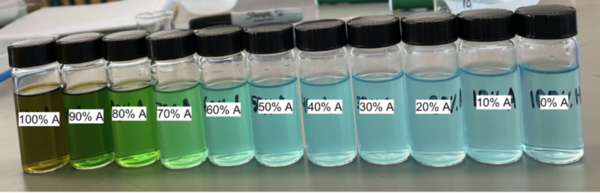
In this study, the authors investigate the effects of acetone on the color of copper chloride (CuCl2) solution, which has important implications for detecting copper in the environment.
Read More...A colorimetric investigation of copper(II) solutions
In this study, the authors investigate the effects of acetone on the color of copper chloride (CuCl2) solution, which has important implications for detecting copper in the environment.
Read More...The effect of chondroitin sulfate on the development of plants grown in roadside soil
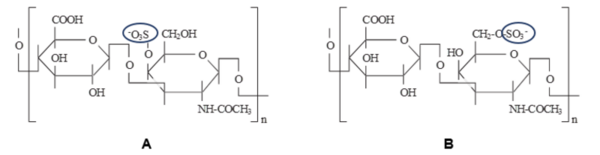
Heavy metal contamination from transportation can damage soil and vegetation by increasing oxidative stress, disrupting enzymes, and impairing photosynthesis. This study investigated whether chondroitin sulfate (CS) could reduce the harmful effects of contaminated roadside soil on plant growth by binding with metal ions.
Read More...Electrocatalytic oxidation of furfural on Co3O4/nickel foam catalyst: performance and mechanistic study

In this study, the authors hypothesized that the unique redox properties of cobalt oxide (Co3O4), combined with the conductive nature of the nickel foam (NF) substrate, synergistically enhances the catalytic performance for furfural oxidation. The study showed successful synthesis of Co3O4 nanoflowers directly grown on NF and tested their capacity to serve as a highly efficient electrocatalyst for furfural oxidation. Beyond furfural oxidation, this study also offers broader implications for sustainable chemistry by establishing design principles for efficient nucleophilic oxidation reaction catalysts, demonstrating an energy-saving alternative to conventional oxygen evolution reaction-coupled processes, and showcasing how biomass conversion can be integrated with renewable energy systems.
Read More...Impact of light intensity and electrolyte volume on performance of photo-electrochemical (PEC) solar cell

Here, seeking to develop more efficient solar cells, the authors investigated photo-electrochemical (PEC) solar cells, specifically molybdenum diselenide (MoSe2) based on its high resistance to corrosion. They found that the percentage efficiency of these PEC solar cells was proportional to light intensity–0.9 and that performance was positively influenced by increasing the electrolyte volume. They suggest that studies such as these can lead to new insight into reaction-based solar cells.
Read More...Health services in Iraq - A cross-sectional survey of adolescents in Basra

This study is a cross-sectional survey of adolescents in Basra, Iraq, from November 2020 to March 2021 about types of adolescent problems, the individuals and institutions adolescents turn to, and the role of public health centers in dealing with their problems. The survey found that psychological problems represent the largest proportion of health problems, and most adolescents turn to their parents to discuss their problems. The work indicates that there is an urgent need to pay attention to public health centers and provide health and psychological support to adolescents.
Read More...Large Language Models are Good Translators
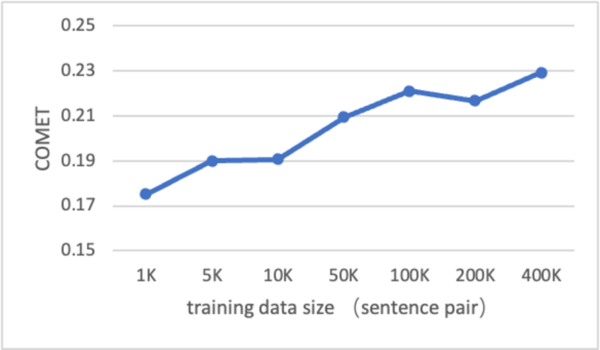
Machine translation remains a challenging area in artificial intelligence, with neural machine translation (NMT) making significant strides over the past decade but still facing hurdles, particularly in translation quality due to the reliance on expensive bilingual training data. This study explores whether large language models (LLMs), like GPT-4, can be effectively adapted for translation tasks and outperform traditional NMT systems.
Read More...Assessing and Improving Machine Learning Model Predictions of Polymer Glass Transition Temperatures
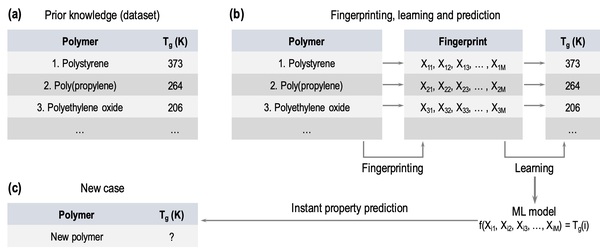
In this study, the authors test whether providing a larger dataset of glass transition temperatures (Tg) to train the machine-learning platform Polymer Genome would improve its accuracy. Polymer Genome is a machine learning based data-driven informatics platform for polymer property prediction and Tg is one property needed to design new polymers in silico. They found that training the model with their larger, curated dataset improved the algorithm's Tg, providing valuable improvements to this useful platform.
Read More...Starts and Stops of Rhythmic and Discrete Movements: Modulation in the Excitability of the Corticomotor Tract During Transition to a Different Type of Movement

Control of voluntary and involuntary movements is one of the most important aspects of human neurological function, but the mechanisms of motor control are not completely understood. In this study, the authors use transcranial magnetic stimulation (TMS) to stimulate a portion of the motor cortex while subjects performed either discrete (e.g. throwing) or rhythmic (e.g. walking) movements. By recording electrical activity in the muscles during this process, the authors showed that motor evoked potentials (MEPs) measured in the muscles during TMS stimulation are larger in amplitude for discrete movements than for rhythmic movements. Interestingly, they also found that MEPs during transitions between rhythmic and discrete movements were nearly identical and larger in amplitude than those recorded during either rhythmic or discrete movements. This research provides important insights into the mechanisms of neurological control of movement and will serve as the foundation for future studies to learn more about temporal variability in neural activity during different movement types.
Read More...Impact of Kindles4Covid Virtual Reading Buddies Program on reading frequency and social connections

With the COVID-19 pandemic necessitating the transition to remote learning, disruption to daily school routine has impacted educational experiences on a global scale. As a result, it has potentially worsened reading achievement gaps typically exacerbated by long summer months. To address literacy skill retention and pandemic-induced social isolation, the non-profit organization ByKids4Kids has created a reading program, “Kindles4Covid Virtual Reading Buddies Program,” to instill a structure for youth to read together and connect with the convenience of Amazon Kindle devices. In this article, the authors determine the efficacy of their invaluable program by assessing changes in reading frequency and self-reported connectedness among program participants.
Read More...Optimizing surface contact area and electrolyte type to develop a more effective rechargeable battery
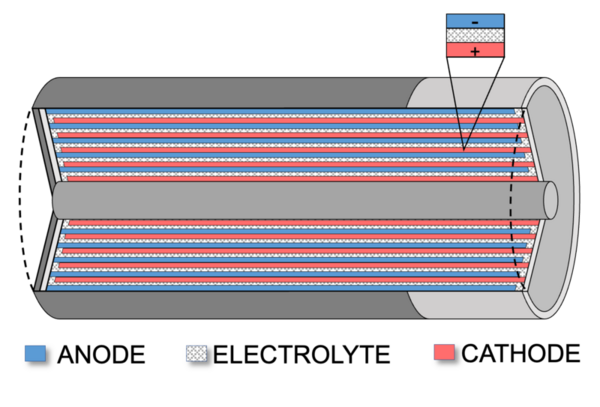
Rechargeable batteries are playing an increasingly prominent role in our lives due to the ongoing transition from fossil energy sources to green energy. The purpose of this study was to investigate variables that impact the effectiveness of rechargeable batteries. Alkaline (non-rechargeable) and rechargeable batteries share common features that are critical for the operation of a battery. The positive and negative electrodes, also known as the cathode and anode, are where the energy of the battery is stored. The electrolyte is what facilitates the transfer of cations and anions in a battery to generate electricity. Due to the importance of these components, we felt that a systematic investigation examining the surface area of the cathode and anode as well the impact of electrolytes with different properties on battery performance was justified. Utilizing a copper cathode and aluminum anode coupled with a water in salt electrolyte, a model rechargeable battery system was developed to test two hypotheses: a) increasing the contact area between the electrodes and electrolyte would improve battery capacity, and b) more soluble salt-based electrolytes would improve battery capacity. After soaking in an electrolyte solution, the battery was charged and the capacity, starting voltage, and ending voltage of each battery were measured. The results of this study supported our hypothesis that larger anode/cathodes surface areas and more ionic electrolytes such as sodium chloride, potassium chloride and potassium sulfate resulted in superior battery capacity. Incorporating these findings can help maximize the efficiency of commercial rechargeable batteries.
Read More...