
The COVID-19 pandemic has caused disruption in social interactions. In this study, the authors tested if walking a dog will change human interactions and found that walking with a dog increased social interaction.
Read More...The role of furry friends in facilitating social interaction during the COVID-19 pandemic
The COVID-19 pandemic has caused disruption in social interactions. In this study, the authors tested if walking a dog will change human interactions and found that walking with a dog increased social interaction.
Read More...The effect of the pandemic on the behavior of junior high school students

Here, seeking to understand how the COVID-19 pandemic affected the social interactions of junior high school students, the authors surveyed students, teachers, and parents. Contrary to their initial hypotheses, the authors found positive correlation between increased virtual contact during social isolation and in-person conflict and disregard for social norms after the pandemic. While the authors identified the limitations of their study, they suggest that further research into the effect of online interactions is becoming increasingly important.
Read More...Analyzing the Relationships Between Internet Usage, Social Skill, and Anxiety Severity in Adults with Autism Spectrum Disorder
.jpg)
Here the authors investigate the use of social media in adults with Autism Spectrum Disorder (ASD) in affecting their ability and opportunities to interact with others. They found that higher usage of Internet correlated with less severe anxiety symptoms and improved social skills.
Read More...Are Age and Sex Related to Emotion Recognition Ability in Children and Teenagers?
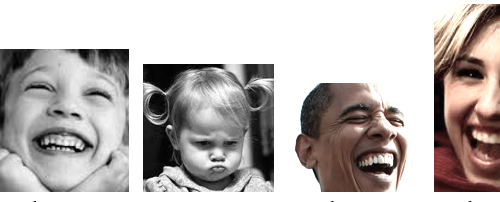
Humans have a natural ability to recognize emotional cues from the facial expressions of others, as a crucial evolutionary trait to navigate social interactions. This ability likely develops through normal development and social experience, but it is unclear how much influence age and sex have in emotional facial recognition (EFR). In this study, the authors investigate EFR in children and teenagers, and look at whether accurate emotional recognition does occur more in males or females.
Read More...Genetic underpinnings of the sex bias in autism spectrum disorder

Here, seeking to identify a possible explanation for the more frequent diagnosis of autism spectrum disorder (ASD) in males than females, they sought to investigate a potential sex bias in the expression of ASD-associated genes. Based on their analysis, they identified 17 ASD-associated candidate genes that showed stronger collective sex-dependent expression.
Read More...Functional Network Connectivity: Possible Biomarker for Autism Spectrum Disorders (ASD)
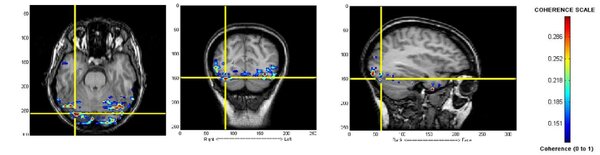
Autism spectrum disorder (ASD) is a complex neurodevelopmental disorder and is difficult to diagnose in young children. Here magnetoencephalography was used to compare the brain activity in patients with ASD to patients in a control group. The results show that patients with ASD have a high level of activity in different areas of the brain than those in the control group.
Read More...Obscurity of eyebrows influences recognition of human emotion and impacts older adolescents

Here, seeking to better understand how facial features provide important visual cues to help convey emotions, the authors evaluated the accuracy and reaction time of participants in regards to experimental photographs where a person's eyebrows were obscured and ones where they were not. Their findings revealed that removing eyebrows resulted in a significant decrease in a participant's ability to recognize anger, with adolescents most likely to misidentify emotions.
Read More...Effects of social support on adolescent identity development
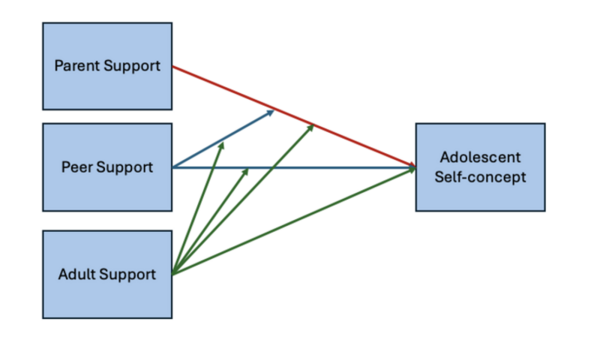
Adolescence is a critical period for self-identity formation, heavily influenced by feedback from social networks. This research examined the interplay between social support from parents and peers and self-concept development in adolescents using data from the National Longitudinal Study of Adolescent to Adult Health. While individual support from parents and peers did not directly impact self-concept, their combined interaction significantly influenced it, highlighting the importance of various social supports in fostering healthy self-concept development and overall adolescent well-being.
Read More...It's better than me: Investigating the psychological risks of AI on self-esteem
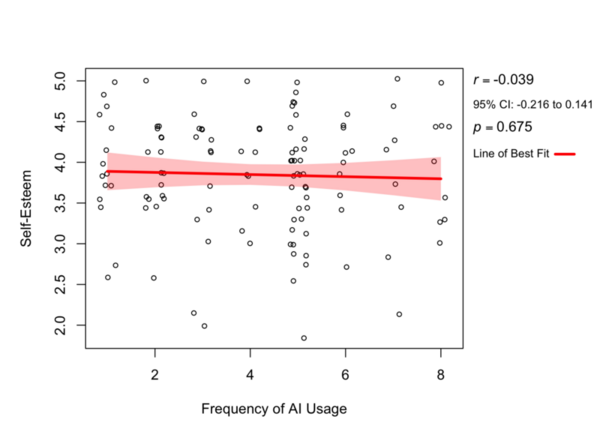
Here the authors investigated whether frequent use of generative AI tools triggers upward social comparison and negatively impacts users' performance self-esteem. Based on a survey of 121 adults, they found no significant relationship between AI usage and self-esteem, concluding that current chatbot interactions do not pose the same psychological threat as peer-based comparisons.
Read More...How are genetically modified foods discussed on TikTok? An analysis of #GMOFOODS

Here, the authors investigated engagement with #GMOFOODS, a hashtag on TikTok. They hypothesized that content focused on the negative effects of genetically modified organisms would receive more interaction driven by consumers. They found that the most common cateogry focused on the disadvantages of GMOs related to nutrition and health with the number of views determining if the video would be provided to users.
Read More...