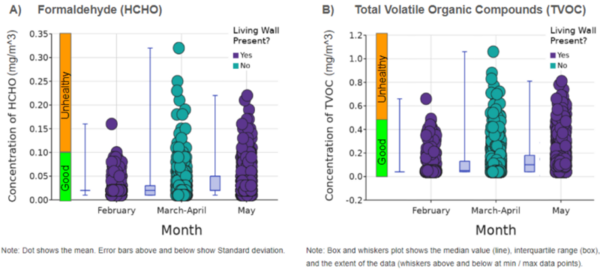
The authors compare air quality in the presence and absence of a living wall in a high school hallway in Brooklyn, NY.
Read More...School sustainability: The implications of implementing living walls at schools for air purification
The authors compare air quality in the presence and absence of a living wall in a high school hallway in Brooklyn, NY.
Read More...Antibacterial activity by Dombeya wallichii plant extracts obtained by ultrasound-assisted extraction
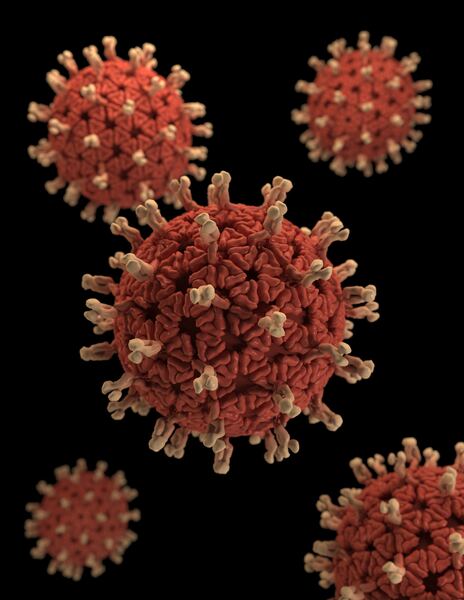
Medicinal plants could be a good source of medication to combat antibiotic resistance. Dombeya wallichii, which is commonly called Pink Ball Tree in the family Sterculiaceae, has been documented to have medicinal potential. We observed the highest antibacterial activity in the stem extracts, followed by leaf and bark extracts. The extracts were more effective against tested Gram-positive bacteria when compared with Gram-negative strains.
Read More...Investigating auxin import and export proteins in Chlorella vulgaris
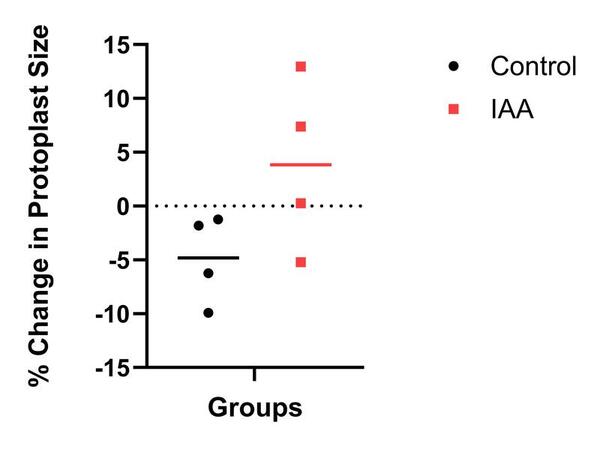
This study explores auxin signaling in Chlorella vulgaris, a green alga with potential for sustainable biofuel and food production. Evidence from protoplast swelling experiments suggests that C. vulgaris secretes auxin and possesses auxin import proteins, highlighting previously uncharacterized signaling pathways. These findings could support more efficient cultivation and resource extraction strategies.
Read More...Investigating the anticancer effects of Uvularia perfoliata
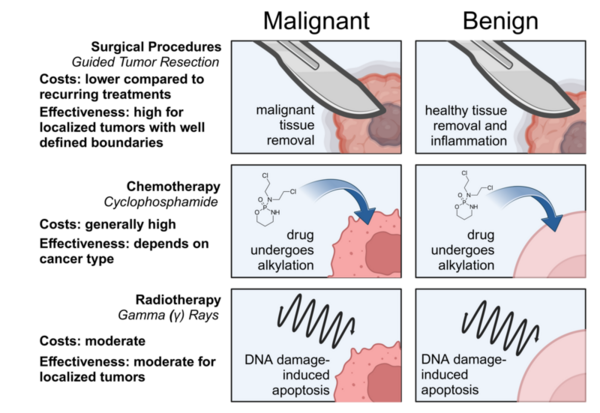
This paper investigates the potential anticancer properties of Uvularia perfoliata by testing its effects on the viability of uveal melanoma cells.
Read More...A cross-cultural analysis of consumer behavior and payment preferences: Insights from India and the United Arab Emirates
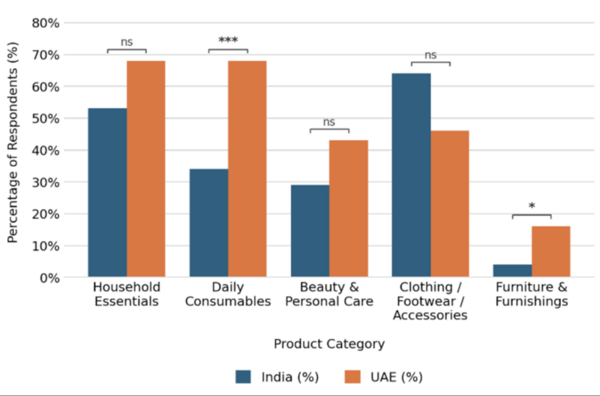
Consumers in India and the United Arab Emirates live in very different economic and cultural environments, and this study set out to measure how that shapes the way they shop and pay. Surveying 50 people in each country, they found that Indian consumers were more price-sensitive and favored cash, while UAE consumers prioritized convenience, gravitating toward credit cards, mobile wallets, and online shopping. The results offer practical insight for retailers, marketers, and policymakers working across these two fast-growing but culturally distinct markets.
Read More...Canopy complexity and plant morphology determine detectability in multi-perspective drone imagery
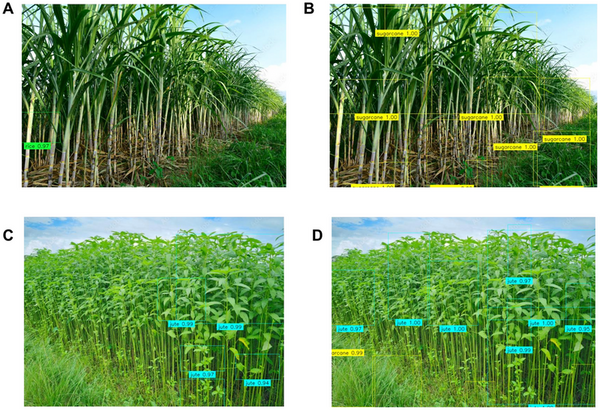
Multi-perspective drone imagery (adding oblique views to top-down shots) raised crop classification accuracy from 35.73% to 52.93% across five species. The improvement scaled with canopy complexity, from +4.2% for simple rice to +38.1% for structurally complex sugarcane.
Read More...Microbes Cultured from Garden Soil Positively Impact Seed Germination and Plant Growth
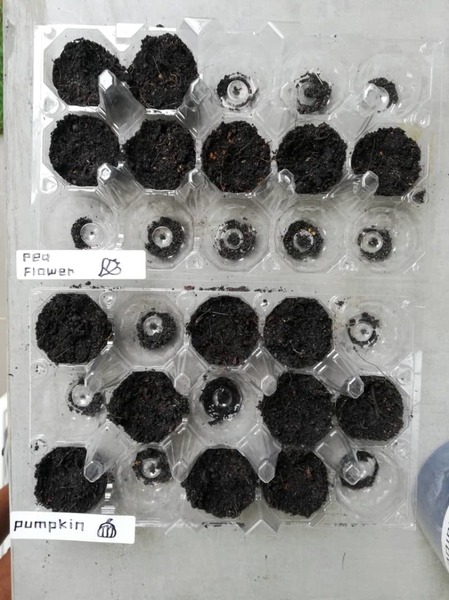
In this study, the authors investigate whether the addition of microbes from native soil enhanced the seed germination and growth of mung beans, pumpkins, and pea flower plants.
Read More...Effect Of SMC On The Growth Of Bean, Cherry Tomato And Roma Tomato Plant
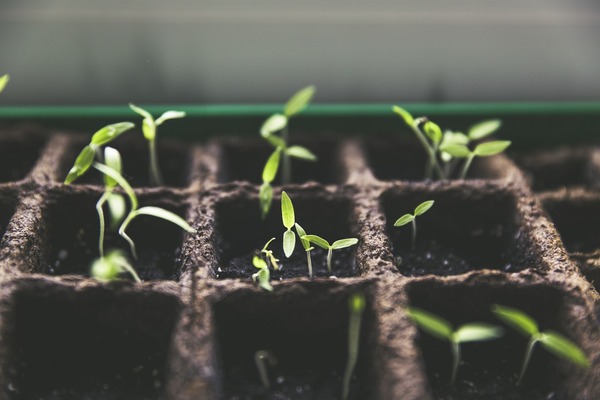
Mushroom compost, also called Spent Mushroom Substrate or Spent Mushroom Compost (SMC), is suitable for a variety of plants. Previous research has found that the application of SMC will increase plant growth. However, it is unclear which exact proportions of SMC and soil will maximize tomato and bean plant growth. We showed that the hypothesized growth media with 30% SMC optimizes seed germination, plant height, number of leaves, and survival rate compared to other combinations of growth media. Our research suggests that SMC is a useful alternative for conventional fertilizers.
Read More...Effects of plant-derived smoke water on germination and growth in stressed plants
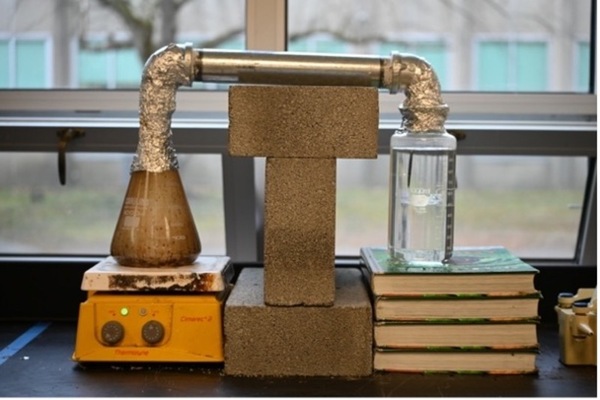
Here the authors investigated the potential of plant-derived smoke water to mitigate the negative impacts of abiotic stressors, such as heat, salinity, and water fluctuations, on the germination and growth of various agricultural crops. Their findings suggest that smoke water, specifically from buckwheat, pea, and radish, significantly improves plant resilience against drought and excessive water stress, offering a viable strategy to bolster food security in the face of climate change.
Read More...Developing novel plant waste-based hydrogels for skin regeneration and infection detection in diabetic wounds
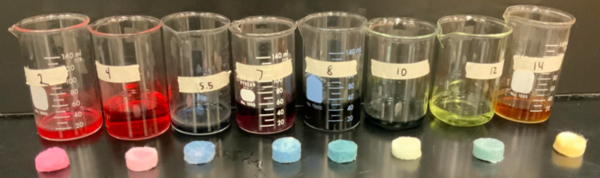
The purpose of this investigation is to develop a hydrogel to aid skin regeneration by creating an extracellular matrix for fibroblast growth with antibacterial and infection-detection properties. Authors developed two natural hydrogels based on pectin and potato peels and characterized the gels for fibroblast compatibility through rheology, scanning electron microscopy, swelling, degradation, and cell cytotoxicity assays. Overall, this experiment fabricated various hydrogels capable of acting as skin substitutes and counteracting infections to facilitate wound healing. Following further testing and validation, these hydrogels could help alleviate the 13-billion-dollar financial burden of foot ulcer treatment.
Read More...