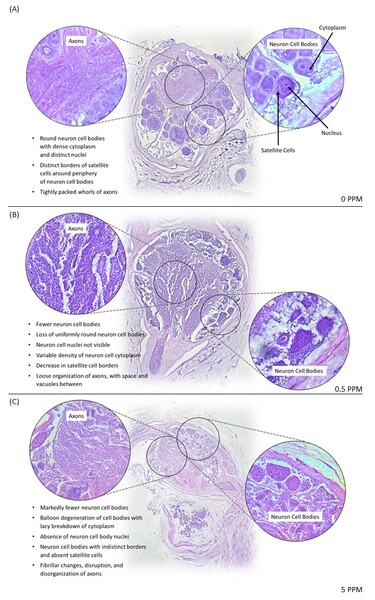
In this study, the authors test whether excess copper exposure has neurobehavioral effects on Hirudo verbana leeches.
Read More...Effects of copper sulfate exposure on the nervous system of the Hirudo verbana leech
In this study, the authors test whether excess copper exposure has neurobehavioral effects on Hirudo verbana leeches.
Read More...Impact of hog farming on water quality of aquatic environments in North Carolina
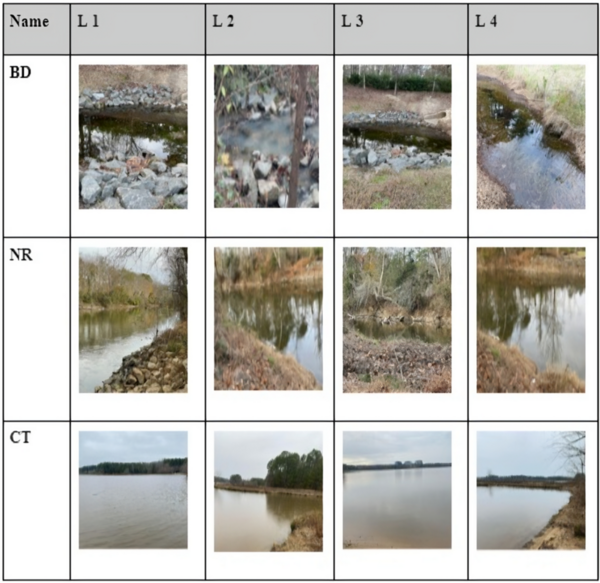
This study collected samples from water bodies near hog farms and an aquatic environment not near a hog farm. It was hypothesized that water bodies near the hog farms would have lower water quality with higher turbidity, total dissolved solids (TDS), and pH than the water body not in proximity to a hog farm because of water contamination with hog waste. Results showed that the turbidity was 4–6 times higher, TDS was 1.5–2 times higher, and pH was 3 units higher in the 2 experimental locations compared to the control location. This study and its findings are important for understanding the impact of hog farming on the proximal water bodies.
Read More...Electrocatalytic oxidation of furfural on Co3O4/nickel foam catalyst: performance and mechanistic study
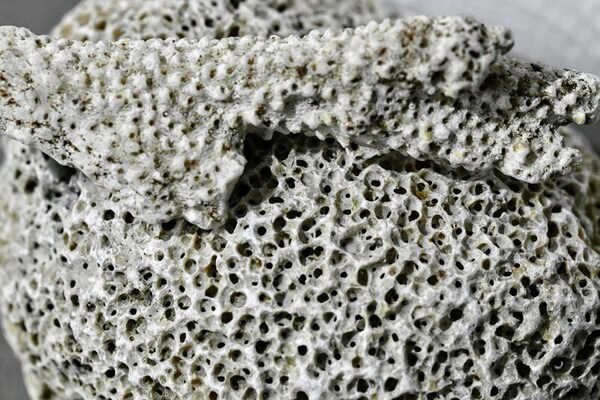
In this study, the authors hypothesized that the unique redox properties of cobalt oxide (Co3O4), combined with the conductive nature of the nickel foam (NF) substrate, synergistically enhances the catalytic performance for furfural oxidation. The study showed successful synthesis of Co3O4 nanoflowers directly grown on NF and tested their capacity to serve as a highly efficient electrocatalyst for furfural oxidation. Beyond furfural oxidation, this study also offers broader implications for sustainable chemistry by establishing design principles for efficient nucleophilic oxidation reaction catalysts, demonstrating an energy-saving alternative to conventional oxygen evolution reaction-coupled processes, and showcasing how biomass conversion can be integrated with renewable energy systems.
Read More...Locating carcinogenic per- and poly-fluoroalkyl substances in Santa Clarita groundwater
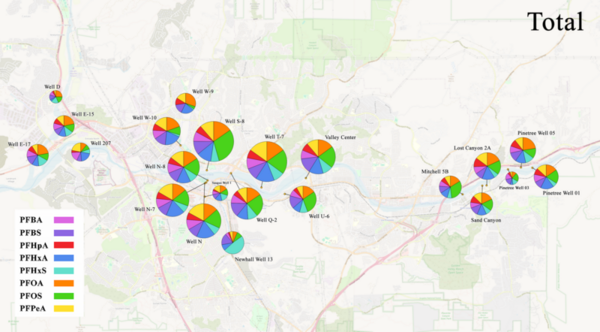
This study investigates PFAS contamination in Santa Clarita groundwater, focusing on potential sources. The study employs statistical analysis to assess data quality and trends which allowed them to identified domestic waste, fire extinguisher materials, and food packaging as the most likely sources of contamination.
Read More...An Analysis of Soil Microhabitats in Revolutionary War, Civil War, and Modern Graveyards on Long Island, NY
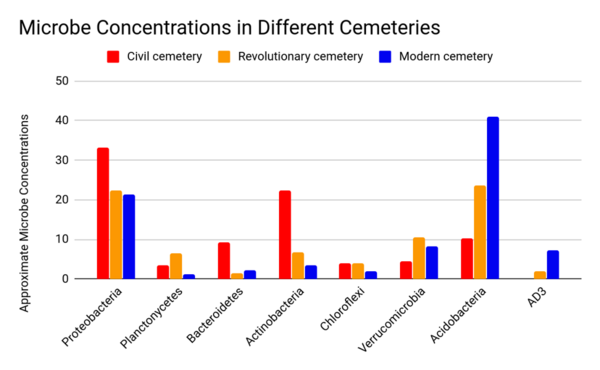
Previously established data indicate that cemeteries have contributed to groundwater and soil pollution, as embalming fluids can impact the microbiomes that exist in decomposing remains. In this study, Caputo et al hypothesized that microbial variation would be high between cemeteries from different eras due to dissimilarities between embalming techniques employed, and furthermore, that specific microbes would act as an indication for certain contaminants. Overall, they found that there is a variation in the microbiomes of the different eras’ cemeteries according to the concentrations of the phyla and their more specific taxa.
Read More...