Browse Articles

Gradient boosting with temporal feature extraction for modeling keystroke log data

Barretto et al. | Oct 04, 2024

Gradient boosting with temporal feature extraction for modeling keystroke log data
Image credit: Barretto and Barretto 2024.

Although there has been great progress in the field of Natural language processing (NLP) over the last few years, particularly with the development of attention-based models, less research has contributed towards modeling keystroke log data. State of the art methods handle textual data directly and while this has produced excellent results, the time complexity and resource usage are quite high for such methods. Additionally, these methods fail to incorporate the actual writing process when assessing text and instead solely focus on the content. Therefore, we proposed a framework for modeling textual data using keystroke-based features. Such methods pay attention to how a document or response was written, rather than the final text that was produced. These features are vastly different from the kind of features extracted from raw text but reveal information that is otherwise hidden. We hypothesized that pairing efficient machine learning techniques with keystroke log information should produce results comparable to transformer techniques, models which pay more or less attention to the different components of a text sequence in a far quicker time. Transformer-based methods dominate the field of NLP currently due to the strong understanding they display of natural language. We showed that models trained on keystroke log data are capable of effectively evaluating the quality of writing and do it in a significantly shorter amount of time compared to traditional methods. This is significant as it provides a necessary fast and cheap alternative to increasingly larger and slower LLMs.

Read More...

AeroPurify: Autonomous air filtration UAV using real-time 3-D Monte Carlo gradient search

Kadakia et al. | Sep 01, 2025

AeroPurify: Autonomous air filtration UAV using real-time 3-D Monte Carlo gradient search
Image credit: Ian Usher

Here the authors present an autonomous drone air filtration system that uses a novel algorithm, the gradient ascent ML particle filter (GA/MLPF), to efficiently locate and mitigate outdoor air pollution. They demonstrate that their GA/MLPF algorithm is significantly more efficient than the conventional gradient ascent algorithm, reducing both the time and number of waypoints needed to find the source of pollution.

Read More...

Tree-Based Learning Algorithms to Classify ECG with Arrhythmias

Sun et al. | Apr 23, 2025

Tree-Based Learning Algorithms to Classify ECG with Arrhythmias

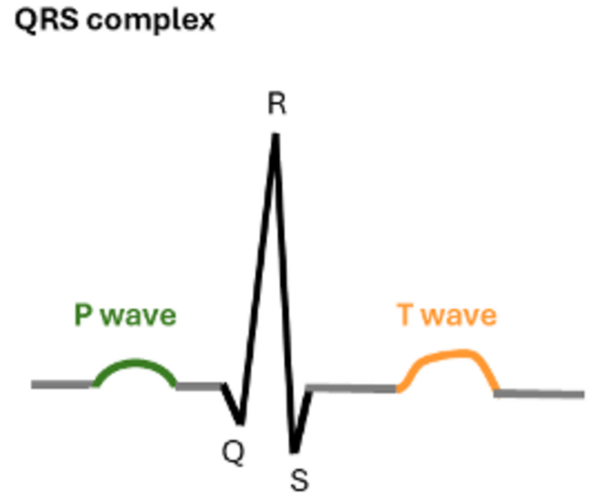
Arrhythmias vary in type and treatment, and ECGs are used to detect them, though human interpretation can be inconsistent. The researchers tested four tree-based algorithms (gradient boosting, random forest, decision tree, and extra trees) on ECG data from over 10,000 patients.

Read More...

Assessing CDK5 as a Nanomotor for Chemotactic Drug Delivery

Jiang et al. | Sep 08, 2022

Assessing CDK5 as a Nanomotor for Chemotactic Drug Delivery

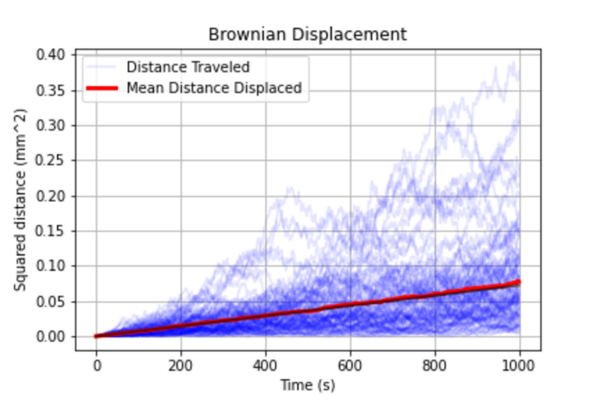
Enzyme chemotaxis is a thermodynamic phenomenon in which enzymes move along a substrate concentration gradient towards regions with higher substrate concentrations and can be used to steer nanovehicles towards targets along natural substrate concentrations. In patients with Alzheimer’s disease, a gradient of tau protein forms in the bloodstream. Tau protein is a substrate of the enzyme CDK5, which catalyzes the phosphorylation of tau protein and can travel using chemotaxis along tau protein gradients to increasing concentrations of tau and amyloid-beta proteins. The authors hypothesized that CDK5 would be able to overcome these barriers of Brownian motion and developed a quantitative model using Michaelis-Menten kinetics to define the necessary parameters to confirm and characterize CDK5’s chemotactic behavior to establish its utility in drug delivery and other applications.

Read More...

Evaluating need for adversarial training data given algorithmic defense methods against adversarial attacks

Yian et al. | Jul 05, 2026

Evaluating need for adversarial training data given algorithmic defense methods against adversarial attacks

The purpose of this study was to determine the necessity of previous non-algorithmic attacks (Adversarial Training) in light of algorithmic defense methods (Gradient Masking and Defensive Distillation) against FGSM attacks. We found a significant increase in image classification accuracy from defense methods with the non-algorithmic defense method compared to ones without. By analyzing the significance with a McNemar test, we determined that the inclusion of non-algorithmic defense methods is still necessary in light of new algorithmic defense methods.

Read More...

Exploring the Factors that Drive Coffee Ratings

Agarwal et al. | May 19, 2025

Exploring the Factors that Drive Coffee Ratings

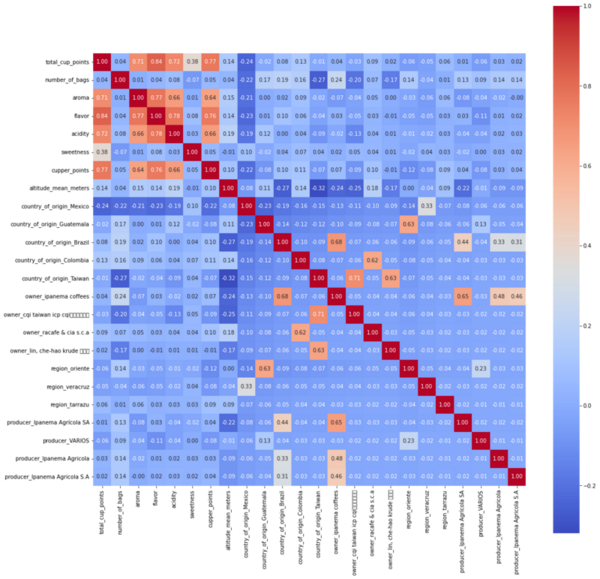
This study explores the factors that influence coffee quality ratings using data from the Coffee Quality Institute. Through a regression model based on gradient descent, the authors aimed to predict coffee ratings (total cup points) and hypothesized that sweetness and the coffee producer would be the most influential factors.

Read More...

Comparative study on three machine learning models in novel autonomous drone-based detection of invasive plant Brassica nigra

Ho et al. | Jul 05, 2026

Comparative study on three machine learning models in novel autonomous drone-based detection of invasive plant <em>Brassica nigra</em>

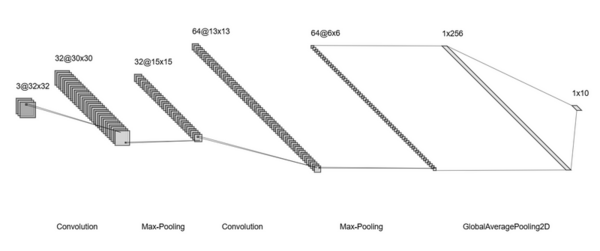
Autonomous drone imaging combined with machine learning offers a promising approach for early detection of invasive species. In this study, students built an autonomous drone and compared three models: CNN, SGDC, and XGBoost, to identify Brassica nigra from aerial footage. Their results show that CNNs most effectively recognize key visual features, demonstrating strong potential for supporting conservation and invasive plant management.

Read More...