Browse Articles

Near-infrared activation of environmentally-friendly gold and silver nanoparticles for unclogging arteries

Gill et al. | Sep 06, 2024

Near-infrared activation of environmentally-friendly gold and silver nanoparticles for unclogging arteries

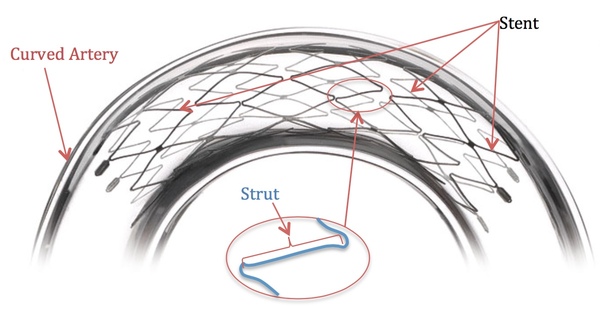
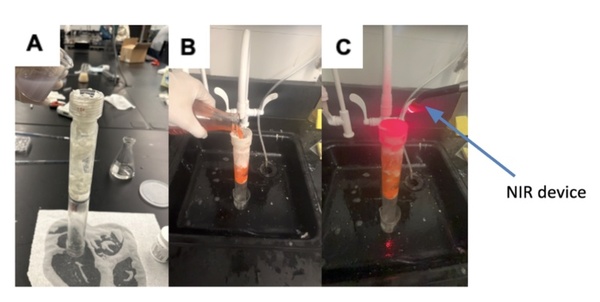
Coronary artery disease, the leading cause of death worldwide, results from cholesterol build-up in coronary arteries, limiting blood and oxygen flow to the heart. This study investigated the use of gold and silver nanoparticles coated with aspirin and activated by near-infrared light to improve blood flow in a clogged artery model. The nanoparticles increased simulated blood flow rates, demonstrating potential as a less invasive and more targeted treatment for cardiovascular disease.

Read More...

On the Relationship Between Viscosity and Surface Tension

Wei et al. | Sep 16, 2014

On the Relationship Between Viscosity and Surface Tension

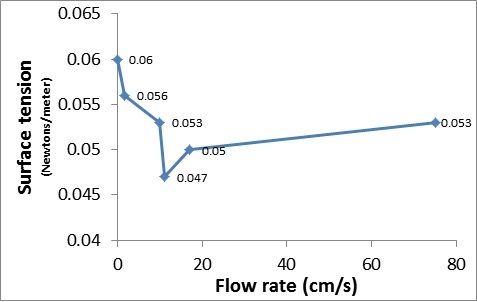
Surface tension and viscosity are both measures of how "sticky" a liquid is, but are they related? The authors here investigate the surface tension and viscosity of mixtures of water with different concentrations of agar agar, flour, or detergent. Surprisingly, they find that the least viscous mixtures had the strongest surface tensions, indicating that the two properties are not linked.

Read More...

Comparing Suturing And Stapling In Coronary Bypass Grafting Anastomosis

Levy et al. | Oct 13, 2014

Comparing Suturing And Stapling In Coronary Bypass Grafting Anastomosis

Coronary artery bypass grafts are a common technique to treat coronary heart disease. The authors compared the efficacy of suturing and stapling techniques using an artificial heart pump and silicone tubing and found that suturing, while more time and skill intensive, held pressure in the tubing better than stapling.

Read More...

A model for angle evolution in conical piles formed using the fixed funnel method

Capaldi et al. | Jul 20, 2026

A model for angle evolution in conical piles formed using the fixed funnel method

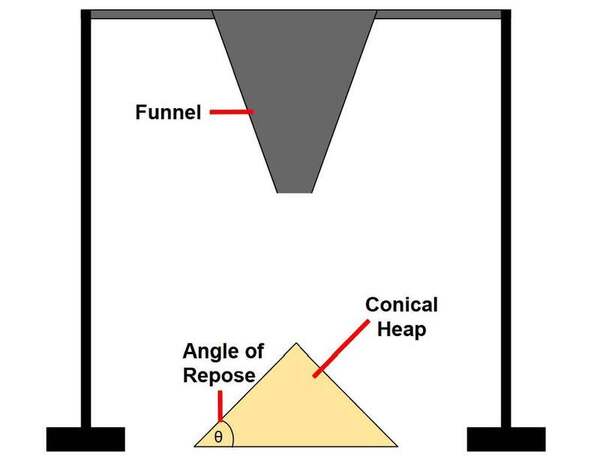
When granular materials are poured onto a surface, they form conical piles whose slopes increase before reaching a stable angle of repose. We found that this angle evolution follows a previously unrecognized two-phase exponential growth pattern that is conserved across granular materials with diverse particle properties. The parameters of this model correlate with particle friction and are influenced by deposition conditions, providing a quantitative framework for describing pile formation.

Read More...

The effect of viscous drag on damped simple harmonic motion

Michael Powell et al. | Sep 14, 2023

The effect of viscous drag on damped simple harmonic motion

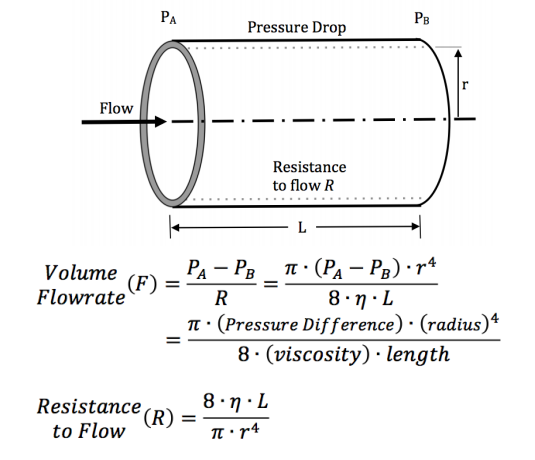
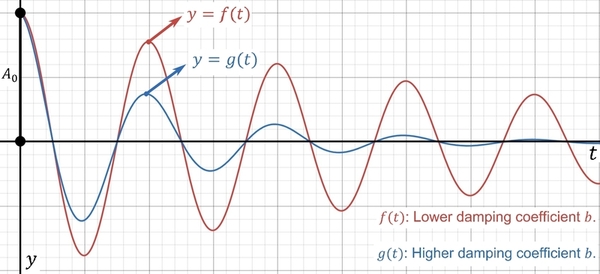
Dynamic viscosity is a quantity that describes the magnitude of a fluid’s internal friction or thickness. Traditionally, scientists measure this quantity by either calculating the terminal velocity of a falling sphere or the time a liquid takes to flow through a capillary tube. However, they have yet to conduct much research on finding this quantity through viscous damped simple harmonic motion. The present study hypothesized that the relationship between the dynamic viscosity and the damping coefficient is positively correlated.

Read More...

Androgen Diffusion Patterns in Soil: Potential Watershed Impacts

Corson et al. | Jan 24, 2019

Androgen Diffusion Patterns in Soil: Potential Watershed Impacts

Androgens are natural or synthetic steroid hormones that control secondary male sex characteristics. Androgens are excreted in cattle urine and feces, and can run off or seep into nearby waters, negatively impacting aquatic life and potentially polluting human water sources. Here, the authors investigated the effectiveness of soil as a natural barrier against androgen flow into vulnerable waterways. Their results, obtained by testing diffusion patterns of luminol, an androgen chemical analog, indicated that soil is a poor barrier to androgen diffusion.

Read More...
Correlating inlet gas composition to conversion efficiency in plasma-assisted landfill gas reforming

Kim et al. | Jun 28, 2025

Correlating inlet gas composition to conversion efficiency in plasma-assisted landfill gas reforming

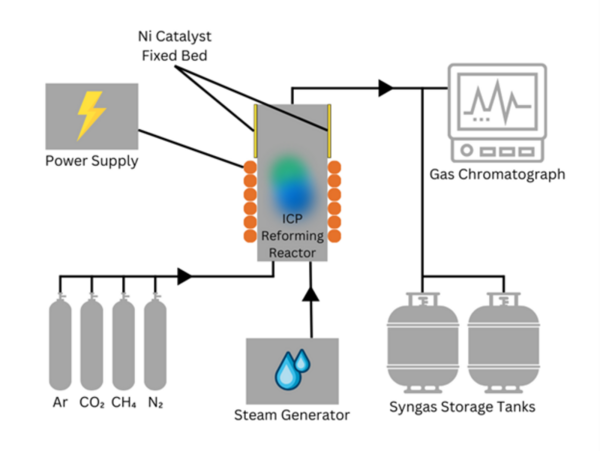
The escalating crisis of climate change, driven by the accumulation of greenhouse gases from human activities, demands urgent and innovative solutions to curb rising global temperatures. Plasma-based methane (CH4) and carbon dioxide (CO2) reforming offers a promising pathway for carbon capture and the sustainable production of hydrogen fuel and syngas components. To advance this technology, particularly in terms of energy efficiency and selectivity, it is essential to enhance the conversion efficiencies of CO2 and CH4.

Read More...