Browse Articles

Investigating the functionality of an Eco-Cooler made of plastic bottles

Tong et al. | Jul 22, 2026

Investigating the functionality of an Eco-Cooler made of plastic bottles
Image credit: Tong, Tong, and Migenes

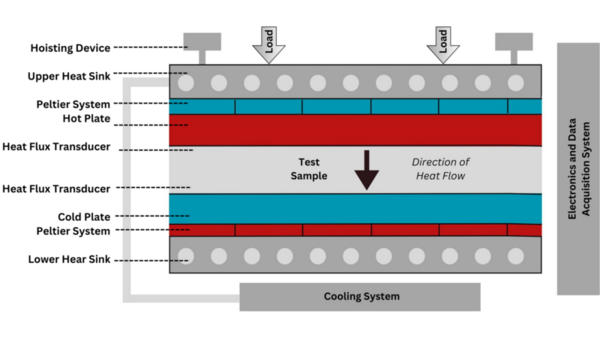
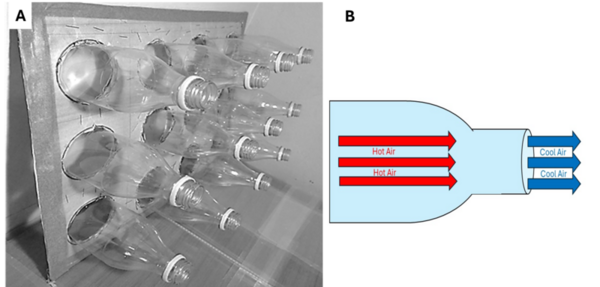
In the study, the authors looked at an environmentally friendly alternative to A/C systems/cooling. They wanted to test the effectiveness of this cooling system called the Eco-Cooler as well as see if they could improve it. They found that the Eco-Cooler had minimal cooling, while their altered Eco-Cooler system had some cooling. This results shows the use of water helps cool the environment a lot more.

Read More...
Can essential oils be allelopathic to Lolium multiforum without harming Solanum lycopersicum?

Madan et al. | Nov 13, 2021

 Can essential oils be allelopathic to <em>Lolium multiforum</em> without harming <em>Solanum lycopersicum</em>?

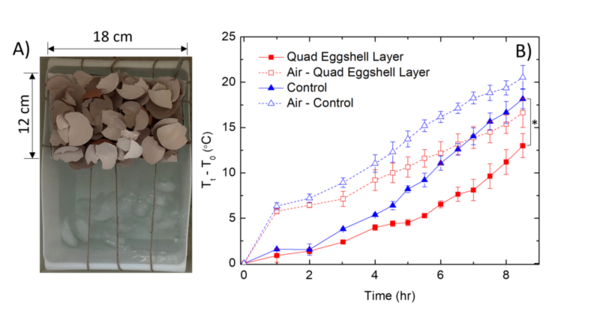
Seeking to investigate eco-friendly biological methods to control weeds and enhance food crop yields, here the authors considered the effects of three essential oils on seed germination and radicle length of both a weed and a common crop. They found that treatment with turmeric oil had phytotoxic potential, leading to a reduction in both seed germination and radicle length of the weed. In contrast, ginger oil possessed allelopathic properties towards both. The authors suggest that essential oils could be used as eco-friendly bio-herbicides.

Read More...

Mathematical modeling of plant community composition for urban greenery plans

Fang et al. | Jul 05, 2023

Mathematical modeling of plant community composition for urban greenery plans
Image credit: CHUTTERSNAP

Here recognizing the importance of urban green space for the health of humans and other organisms, the authors investigated if mathematical modeling can be used to develop an urban greenery management plan with high eco-sustainability by calculating the composition of a plant community. They optimized and tested their model against green fields in a Beijing city park. Although the compositions predicted by their models differed somewhat from the composition of testing fields, they conclude that by using a mathematical model such as this urban green space can be finely designed to be ecologically and economically sustainable.

Read More...

From trash to treasure: A sustainable approach to oil spill clean-up

Kathir et al. | Aug 02, 2023

From trash to treasure: A sustainable approach to oil spill clean-up

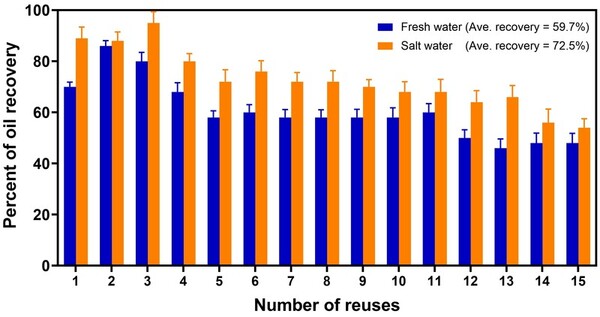
In this study the authors looked at sustainable ways to clean up oil spills that harm marine life. Using water spangle leaves and milk week the authors looked at the ability to recovery oil from both fresh and salt water and the ability to reuse the organic material to clean up spills. Their results show promise to help find a sustainable, eco-friendly way to clean up oil spills and protect marine life and habitats.

Read More...

The effect of floating plant on water purification: Comparison of the water purification capability of Water Hyacinth, Duckweed, and Azolla

Park et al. | Nov 21, 2020

The effect of floating plant on water purification: Comparison of the water purification capability of Water Hyacinth, Duckweed, and Azolla

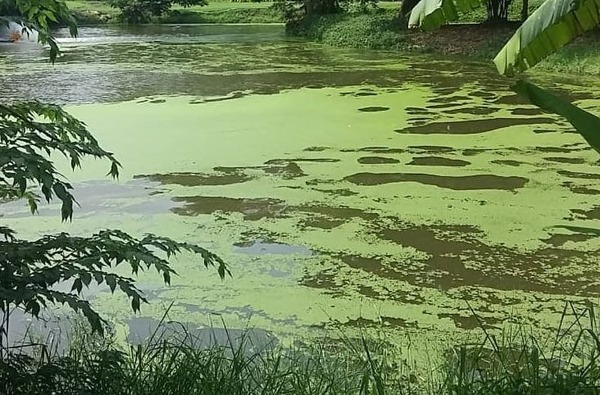
Clean water is a necessity for every household, yet water pollution is a serious problem in many parts of the world and plays a major role in compromising water security in the 21st century. In this paper, the authors address the utility of several plants as natural water purifiers. They estimate the effectiveness of duckweed, hyacinth, and azolla in improving the quality of water from the Mithi river in India by measuring several metrics. They conclude that all three plants are effective in improving water quality, suggesting that these plants as eco-friendly options for water treatment.

Read More...

Repulsion of Ants Using Non-Toxic Household Products

Ambati et al. | Sep 10, 2019

Repulsion of Ants Using Non-Toxic Household Products

Ant invasion causes damage exceeding $5 billion annually in North America. In this study, Ambati and Duvvuri aim to identify natural products with ant-repelling properties using a custom ring apparatus designed to quantify ant-repellence. They report that cinnamon and lemon were the most effective ant repellents of the tested products. These data suggest that compounds found in non-toxic household products, such as cinnamon oil and lemon juice, could be used in low-dose combinations as potent, effective, eco-friendly, and safe ant repellents.

Read More...