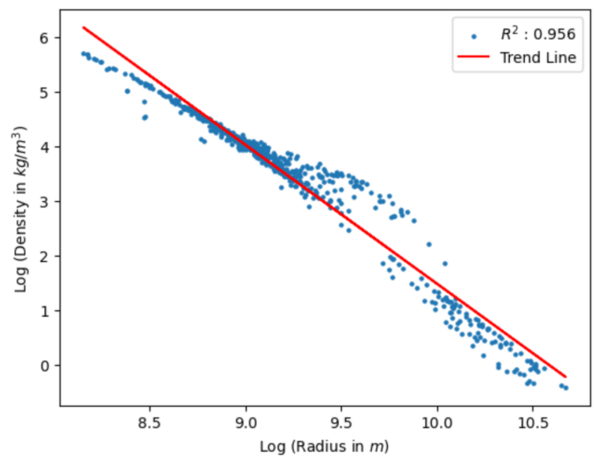
Building on previous work by earlier astronomers, the authors investigate the correlation between the density and size of celestial objects in the universe, including neutron stars, galaxies, and galaxy clusters.
Read More...Exploration of the density–size correlation of celestial objects on various scales
Building on previous work by earlier astronomers, the authors investigate the correlation between the density and size of celestial objects in the universe, including neutron stars, galaxies, and galaxy clusters.
Read More...Spider Density Shows Weak Relationship with Vegetation Density

Evidence supports that spiders have many ecological benefits including insect control and predation in the food chain. In this study the authors investigate that whether the percent of vegetation coverage and spider density are correlated. They determine that despite the trend there is no statistically significant correlation.
Read More...Observing food and density effects on the reproductive strategies of Heterandria formosa
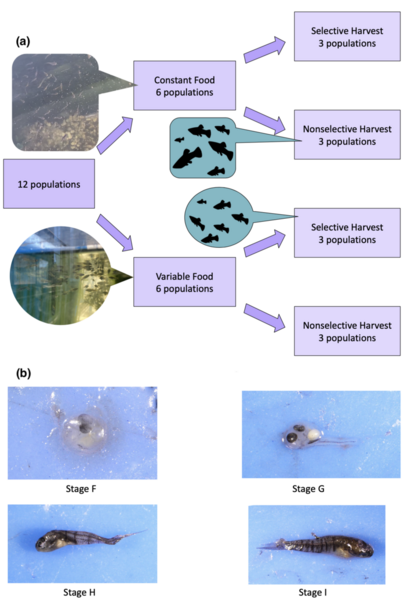
The authors looked at the impact of different harvest and feeding treatments on Heterandria formosa over three generations as a model for changes in marine ecosystems.
Read More...Effects of Various Environmental Factors on Stomatal Density, Area, and Potential Conductance Index

In this study, the authors investigate the combinatorial effects of CO2 plus other environmental factors including salinity, temperature, acidity, and drought on how effectively plants can transport water and carbon through their stomata.
Read More...Integration of iron oxide nanoparticles into high-density polyethylene for sustainable cup coatings
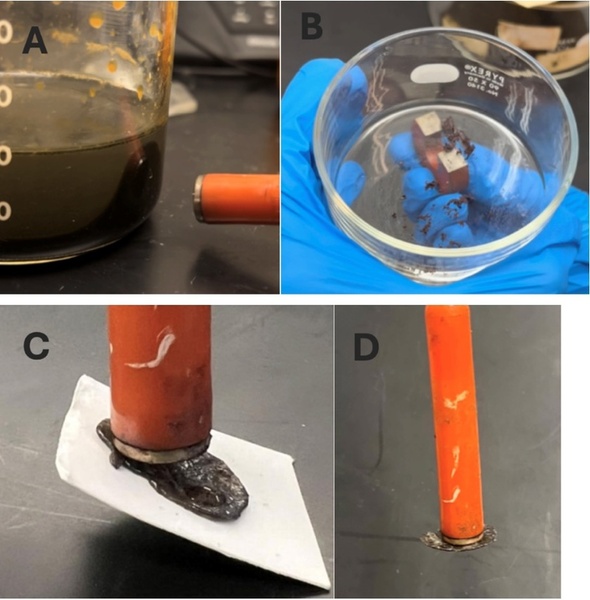
Here the authors propose integrating magnetic iron (II) oxide nanoparticles into the high-density polyethylene linings of disposable paper cups to create a waterproof, magnetically responsive composite liner. Their findings demonstrate that these nanoparticles successfully bond with the plastic layer without disrupting its structural integrity, offering a viable method to improve plastic recovery through magnetic recycling and mitigate global microplastic pollution.
Read More...The Effect of Bead Shape and Texture on the Energy Loss Characteristics in a Rotating Capsule

Industrial process are designed to optimize speed, energy use and quality. Some steps involve the translation of product-filled barrels, how far and fast this happens depends on the properties of the product within. This article investigates such properties on a mini-scale, where the roll of bead size, texture and material on the distance travelled by a cylindrical capsule is investigated.
Read More...Crystallization kinetics of vanillin thin films
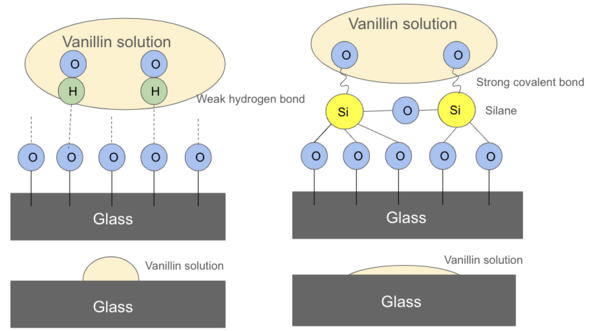
In this study, the authors investigate the crystallization kinetics of vanillin thin films from a solution or a melt, as well as how a silane coating on the glass surface affects these properties.
Read More...Effect of fuel density and temperature on helium-3 fusion reaction rates in stellar cores
.png)
This paper discusses how the conditions at the center of stars affects the nuclear reactions that happen inside these stars. We focused on the effect of temperature and density and found that these two properties interacted to create a greater effect when combined than when separate.
Read More...Impact of Population Density and Elevation on Tuberculosis Spread and Transmission in Maharashtra, India
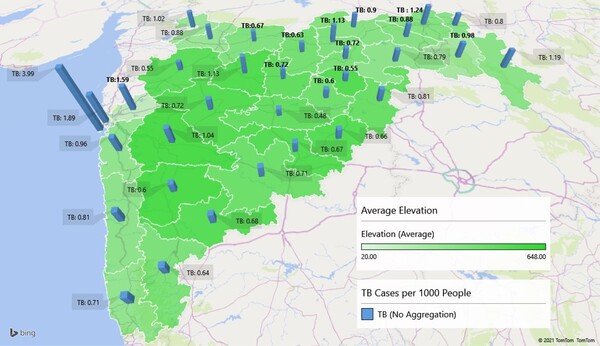
India accounts for over 2.4 million recorded cases of tuberculosis, about 26% of the world’s cases. This research ascertained the bearing of both the population density and the average elevation above mean sea level (MSL) on the number of cases of TB recorded by the districts in Maharashtra, India. The results found a strong positive correlation between the number of TB cases per thousand people and the population density and a strong negative correlation between the number of TB cases per thousand people and the average elevation above MSL.
Read More...The Impact of Effective Density and Compressive Strength on the Structure of Crumpled Paper Balls
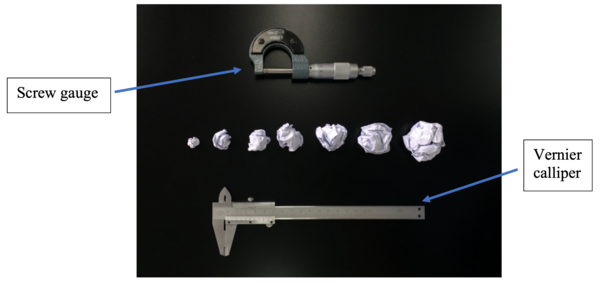
Crumpling is the process whereby a sheet of paper undergoes deformation to yield a three-dimensional structure comprising a random network of ridges and facets with variable density. The authors hypothesized that the more times a paper sheet is crumpled, the greater its compressive strength. Their results show a relatively strong linear relationship between the number of times a paper sheet is crumpled and its compressive strength.
Read More...