Browse Articles

Overcoming The Uncanny Valley Through Shared Stressful Experience with a Humanoid Robot

Bing et al. | Jun 12, 2018

Overcoming The Uncanny Valley Through Shared Stressful Experience with a Humanoid Robot

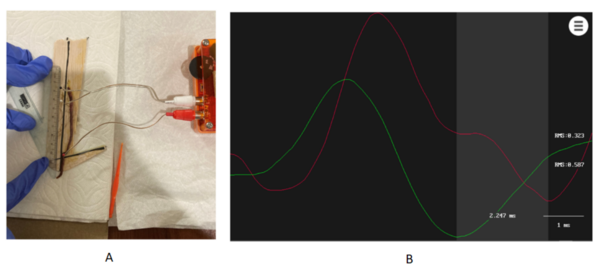
The "Uncanny Valley" is a phenomenon in which humans feel discomfort in the presence of objects that are almost, but not quite, human-like. In this study, the authors tested whether this phenomenon could be overcome by sharing a stressful experience with a humanoid robot. They found that human subjects more readily accepted a robot partner that they had previously shared a stressful experience with, suggesting a potential method for increasing the effectiveness of beneficial human-robot interactions by reducing the Uncanny Valley effect.

Read More...

Depression detection in social media text: leveraging machine learning for effective screening

Shin et al. | Mar 25, 2025

Depression detection in social media text: leveraging machine learning for effective screening

Depression affects millions globally, yet identifying symptoms remains challenging. This study explored detecting depression-related patterns in social media texts using natural language processing and machine learning algorithms, including decision trees and random forests. Our findings suggest that analyzing online text activity can serve as a viable method for screening mental disorders, potentially improving diagnosis accuracy by incorporating both physical and psychological indicators.

Read More...

Forecasting air quality index: A statistical machine learning and deep learning approach

Pasula et al. | Feb 17, 2025

Forecasting air quality index: A statistical machine learning and deep learning approach
Image credit: Amir Hosseini

Here the authors investigated air quality forecasting in India, comparing traditional time series models like SARIMA with deep learning models like LSTM. The research found that SARIMA models, which capture seasonal variations, outperform LSTM models in predicting Air Quality Index (AQI) levels across multiple Indian cities, supporting the hypothesis that simpler models can be more effective for this specific task.

Read More...