Browse Articles

An explainable model for content moderation

Cao et al. | Aug 16, 2023

An explainable model for content moderation

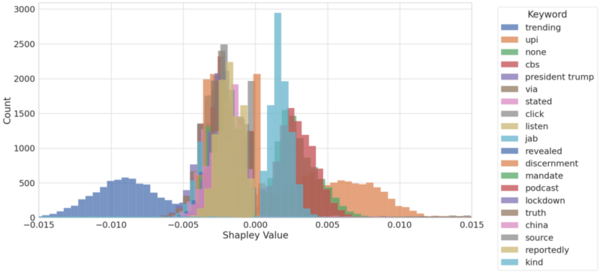
The authors looked at the ability of machine learning algorithms to interpret language given their increasing use in moderating content on social media. Using an explainable model they were able to achieve 81% accuracy in detecting fake vs. real news based on language of posts alone.

Read More...

The influence of working memory on auditory category learning in the presence of visual stimuli

Vishag et al. | Sep 18, 2022

The influence of working memory on auditory category learning in the presence of visual stimuli

Here in an effort to better understand how our brains process and remember different categories of information, the authors assessed working memory capacity using an operation span task. They found that individuals with higher working memory capacity had higher overall higher task accuracy regardless of the type of category or the type of visual distractors they had to process. They suggest this may play a role in how some students may be less affected by distracting stimuli compared to others.

Read More...

Characterizing the association between hippocampal reactive astrogliosis, anhedonia-like behaviors, and neurogenesis in a monkey model of stress and antidepressant treatment

Kim et al. | Aug 25, 2022

Characterizing the association between hippocampal reactive astrogliosis, anhedonia-like behaviors, and neurogenesis in a monkey model of stress and antidepressant treatment

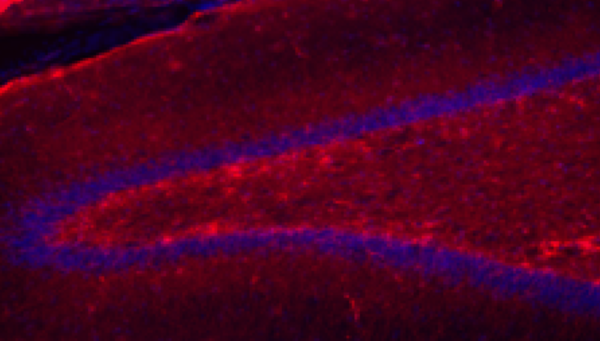
This study examined the effects of stress and selective serotonin reuptake inhibitors (SSRIs) on a measure of astrocyte reactivity in nonhuman primate (NHP) models of stress. Results showed that chronic separation stress in NHPs leads to increased signs of astrogliosis in the NHP hippocampus. The findings were consistent with the hypotheses that hippocampal astrogliosis is an important mechanism in stress-induced cognitive and behavioral deficits.

Read More...

Similarity Graph-Based Semi-supervised Methods for Multiclass Data Classification

Balaji et al. | Sep 11, 2021

Similarity Graph-Based Semi-supervised Methods for Multiclass Data Classification

The purpose of the study was to determine whether graph-based machine learning techniques, which have increased prevalence in the last few years, can accurately classify data into one of many clusters, while requiring less labeled training data and parameter tuning as opposed to traditional machine learning algorithms. The results determined that the accuracy of graph-based and traditional classification algorithms depends directly upon the number of features of each dataset, the number of classes in each dataset, and the amount of labeled training data used.

Read More...

Evaluating need for adversarial training data given algorithmic defense methods against adversarial attacks

Yian et al. | Jul 05, 2026

Evaluating need for adversarial training data given algorithmic defense methods against adversarial attacks

The purpose of this study was to determine the necessity of previous non-algorithmic attacks (Adversarial Training) in light of algorithmic defense methods (Gradient Masking and Defensive Distillation) against FGSM attacks. We found a significant increase in image classification accuracy from defense methods with the non-algorithmic defense method compared to ones without. By analyzing the significance with a McNemar test, we determined that the inclusion of non-algorithmic defense methods is still necessary in light of new algorithmic defense methods.

Read More...

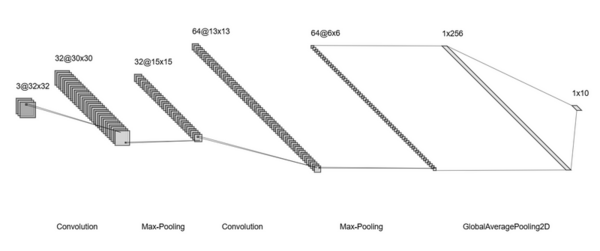
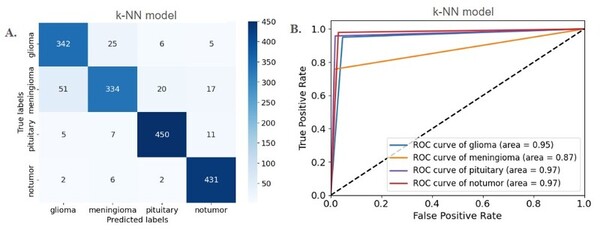
Assessing machine learning model efficacy for brain tumor MRI classification: a multi-model approach

Dhingra et al. | Mar 14, 2026

Assessing machine learning model efficacy for brain tumor MRI classification: a multi-model approach
Image credit: Dhingra and Dhingra

This manuscript explores the performance of five different machine learning models in classifying brain tumors from a dataset of MRI scans. The authors find that several of the models showed >90% accuracy. Thus, the authors suggest that machine learning models demonstrate potential for effective implementation in clinical settings, including as a diagnostic tool that can be used to complement the expertise of neuroradiologists.

Read More...