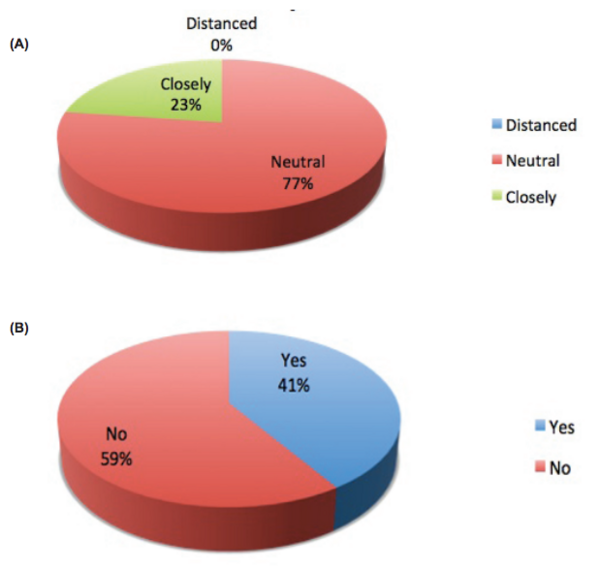
The disinterested willingness a person has for helping others is known as altruism. But is this willingness to help others dependent on external factors that make you more or less inclined to be generous? We hypothesized that generosity in adolescents would depend on external factors and that these factors would change the amount of help given. To evaluate altruism and generosity, we conducted non-anonymous and anonymous variations of the dictator game and ultimatum game experiments and explored the role of anonymity, fairness, and reciprocity in high school students.
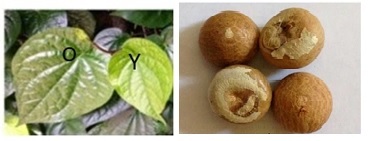
In South Asian countries, the major cause of oral cancer is reported to be chewing paan, which is comprised of betel leaf daubed with slaked lime paste and areca nut. To investigate how paan may contribute to the onset of cancer, the authors treated two immortalized cell lines with extracts of betel leaf, areca nut, and lime and evaluated how these treatments affected cell proliferation and cell death. Initial results indicate that while betel leaf alone may inhibit cell growth, areca nut promoted cancer cell survival and proliferation, even when co-treated with betel leaf. These data suggest that areca nut could exacerbate the progression of oral cancer in humans.
One common age-related health problem is the loss of bone mineral density (BMD), which can lead to a variety of negative health outcomes, including increased risk of spinal fracture. In this study, the authors investigate risk factors that may be predictive of an individual's risk of spinal fracture. Their findings provide valuable information that clinicians can use in patient evaluations.
Racial inequality has been a major issue throughout the history of the United States. In recent years, however, especially with the election of America's first black president, many have claimed that we have made progress and are moving towards a post-racial society. The authors of this study sought to test that claim by evaluating whether high school age students still experience a phenomenon known as white guilt. White guilt is defined as remorse or shame felt by people of Caucasian descent about racial inequality.
Although there has been great progress in the field of Natural language processing (NLP) over the last few years, particularly with the development of attention-based models, less research has contributed towards modeling keystroke log data. State of the art methods handle textual data directly and while this has produced excellent results, the time complexity and resource usage are quite high for such methods. Additionally, these methods fail to incorporate the actual writing process when assessing text and instead solely focus on the content. Therefore, we proposed a framework for modeling textual data using keystroke-based features. Such methods pay attention to how a document or response was written, rather than the final text that was produced. These features are vastly different from the kind of features extracted from raw text but reveal information that is otherwise hidden. We hypothesized that pairing efficient machine learning techniques with keystroke log information should produce results comparable to transformer techniques, models which pay more or less attention to the different components of a text sequence in a far quicker time. Transformer-based methods dominate the field of NLP currently due to the strong understanding they display of natural language. We showed that models trained on keystroke log data are capable of effectively evaluating the quality of writing and do it in a significantly shorter amount of time compared to traditional methods. This is significant as it provides a necessary fast and cheap alternative to increasingly larger and slower LLMs.
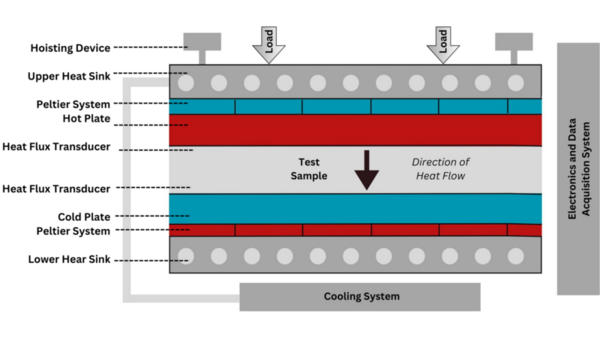
The authors looked into eco-friendly alternatives for insulating material. They ultimately found that a polyurethane derived from eggshells was an effective insulator and further research into it is warranted.
In this study, Imani et al. investigate whether a new proprietary herbal formulation, HF1, can inhibit expression of immune suppressor protein PD-L1. PD-L1 is a transmembrane protein that can be expressed by cancer cells to assist in their ability to avoid attacks from the immune system. Work from this study demonstrates that HF1 treatment can reduce expression of PD-L1 in cultured cancer cells, implicating HF1 as a potential new cancer therapy.
This study investigated perceptions of the emerging workforce toward the use of artificial intelligence in hiring, specifically for assessing subjective "culture fit." Through a mixed-methods survey of 150 high school and early-college students in Nepal, we found a significant disconnect between organizational adoption of AI and the profound skepticism of young job candidates, who express deep concerns about fairness, transparency, and the potential for AI to perpetuate systemic discrimination.
Large corporations often are known for their financial power, but what social and environmental power and conscious do they have? The more responsible corporations are in relation to environmental, social, and governance criteria the better they do fiscally.
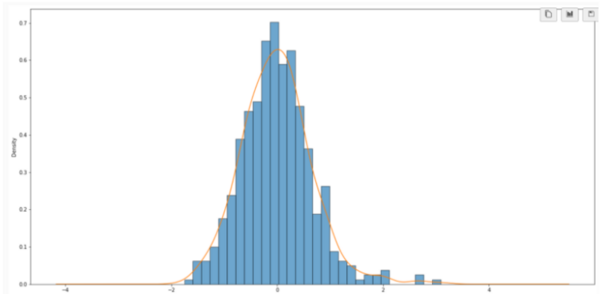
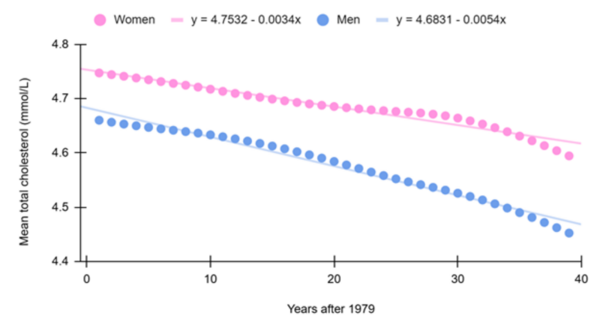
This study explores global trends in average total cholesterol levels among adults from 1980 to 2018, finding a significant decline in both men and women, with a sharper decrease among men. While these improvements likely reflect advances in public health and medical treatment, the persistent gender gap highlights the need for more targeted approaches to cardiovascular disease prevention.