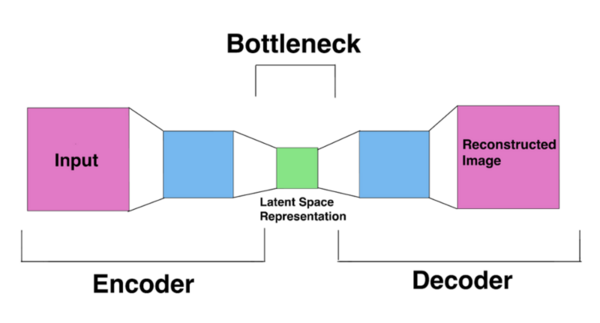
The authors looked at the ability of different deep learning models to predict the presence of lung cancer from chest CT scans. They found that a pre-trained CNN model performed better than an autoencoder model.
Read More...How artificial intelligence deep learning models can be used to accurately determine lung cancers
The authors looked at the ability of different deep learning models to predict the presence of lung cancer from chest CT scans. They found that a pre-trained CNN model performed better than an autoencoder model.
Read More...The Effects of Antioxidants on the Climbing Abilities of Drosophila melanogaster Exposed to Dental Resin
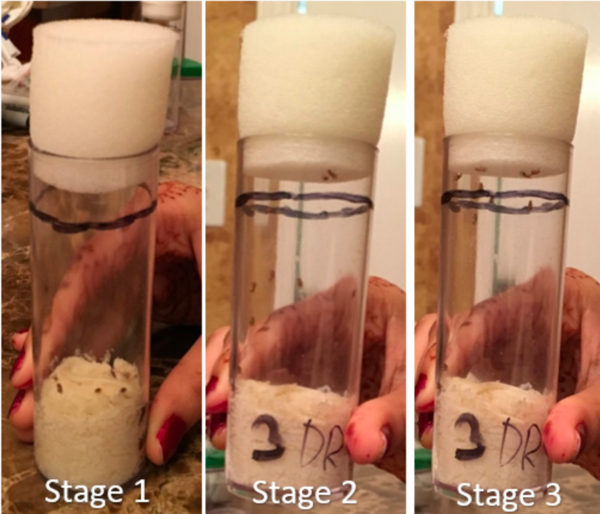
Dental resins can be a source of reactive oxygen species (ROS) which in unruly amounts can be toxic to cellular and overall health. In this report, the authors test whether the consumption of antioxidant rich foods like avocado and asparagus can protect against the effect of dental resin-derived ROS. However, rather than testing humans, they use fruit flies and their climbing abilities as an experimental readout.
Read More...Toxicity of aminomethylphosphonic acid via the Wnt signaling pathway as a novel mechanism
The Wnt signaling pathway, known to coordinate important aspects of cellular homeostasis ranging from differentiation, proliferation, migration, and much more, is dysregulated in many human diseases. This study demonstrates that aminomethylphosphonic acid, which is the main metabolite found in the common herbicide Glyphosate, is toxic to planaria and capable of binding to canonical Wnt proteins.
Read More...Comparative Gamma Radiation Analysis by Geographic Region
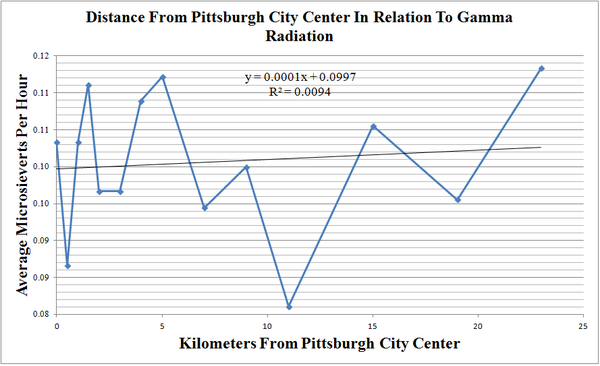
Gamma radiation can be produced by both natural and man-made sources and abnormally high exposure levels could lead to an increase in cell damage. In this study, gamma radiation was measured at different locations and any correlation with various geographic factors, such as distance from a city center, elevation and proximity to the nearest nuclear reactor, was determined.
Read More...Effect of pH on the antibacterial properties of turmeric
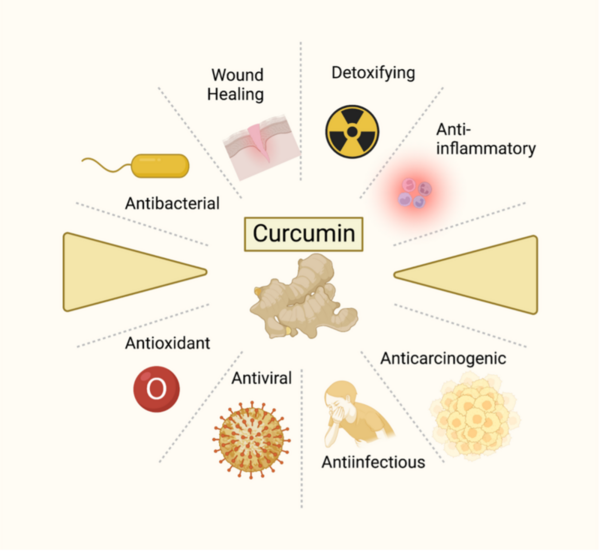
Some spices have antimicrobial or antibacterial properties that people have already tested. Turmeric has a wide variety of uses and has even been implemented in alternative medicine as a treatment for cancer, inflammation, osteoarthritis, and other diseases. We tested the antimicrobial effects of turmeric under two different pHs to characterize this effect in vitro. Decreasing the pH of a solution of turmeric may increase antibacterial properties.
Read More...The effect of natural phenolic compounds on reducing oxidative stress
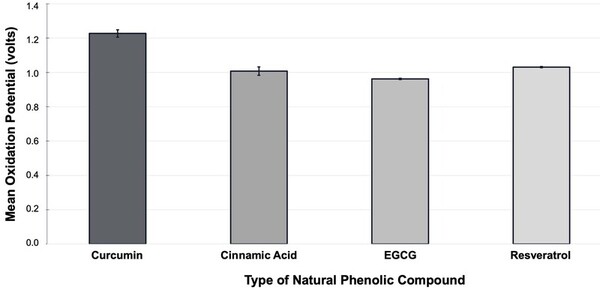
The authors looked at the potential of different phenolic compounds to reduce oxidative stress (i.e., act as antioxidants).
Read More...Singlet oxygen production analysis of reduced berberine analogs via NMR spectroscopy
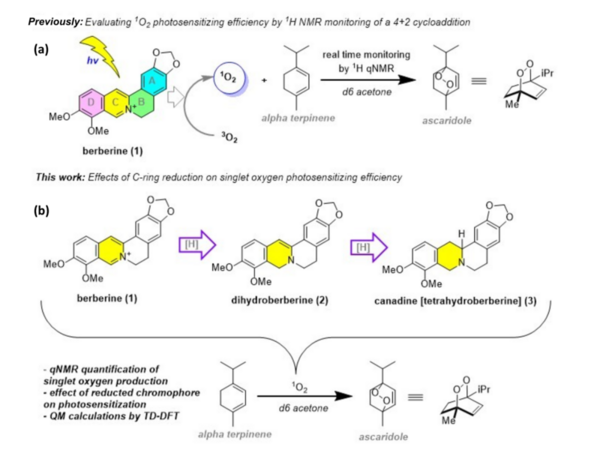
Berberine is a natural product isoquinoline alkaloid derived from plants of the genus Berberis. When exposed to photoirradiation, it produces singlet oxygen through photosensitization of triplet oxygen. Through qNMR analysis of 1H NMR spectra gathered through kinetic experiments, we were able to track the generation of a product between singlet oxygen and alpha terpinene, allowing us to quantitatively measure the photosensitizing properties of our scaffolds.
Read More...In silico modeling of emodin’s interactions with serine/threonine kinases and chitosan derivatives
Here, through protein-ligand docking, the authors investigated the effect of the interaction of emodin with serine/threonine kinases, a subclass of kinases that is overexpressed in many cancers, which is implicated in phosphorylation cascades. Through molecular dynamics theyfound that emodin forms favorable interactions with chitosan and chitosan PEG (polyethylene glycol) copolymers, which could aid in loading drugs into nanoparticles (NPs) for targeted delivery to cancerous tissue. Both polymers demonstrated reasonable entrapment efficiencies, which encourages experimental exploration of emodin through targeted drug delivery vehicles and their anticancer activity.
Read More...DyGS: A Dynamic Gene Searching Algorithm for Cancer Detection
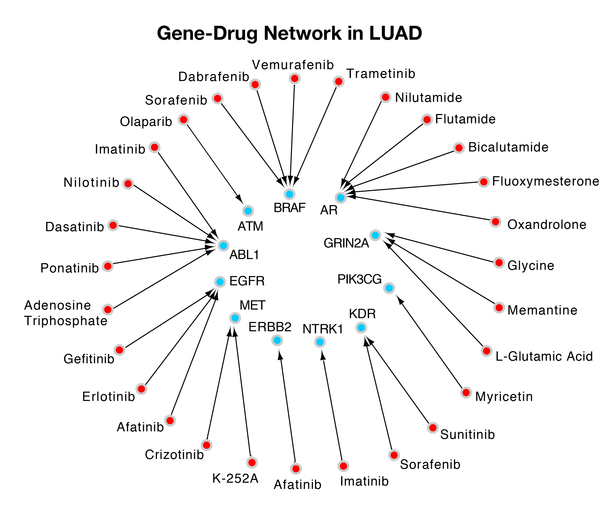
Wang and Gong developed a novel dynamic gene-searching algorithm called Dynamic Gene Search (DyGS) to create a gene panel for each of the 12 cancers with the highest annual incidence and death rate. The 12 gene panels the DyGS algorithm selected used only 3.5% of the original gene mutation pool, while covering every patient sample. About 40% of each gene panel is druggable, which indicates that the DyGS-generated gene panels can be used for early cancer detection as well as therapeutic targets in treatment methods.
Read More...Applying machine learning to breast cancer diagnosis: A high school student’s exploration using R
The authors combine fine needle aspiration biopsy and machine learning algorithms to develop a breast cancer detection method suitable for resource-constrained regions that lack access to mammograms.
Read More...