Browse Articles

Solubility of graphite and the efficacy of using its dissolved form as a conductive paste

Kirby et al. | Aug 23, 2024

Solubility of graphite and the efficacy of using its dissolved form as a conductive paste

This study explored the use of graphite's conductivity for circuit boards by creating a conductive paste through exfoliation with organic solvents and sonication. The combination of acetone and sonication was found to be the most effective, producing a high-conductivity paste with desirable properties such as a low boiling point. While not a replacement for wires, this conductive paste has potential applications in electronics and infrastructure, provided that key engineering challenges are addressed.

Read More...

A HOG feature extraction and CNN approach to Parkinson’s spiral drawing diagnosis

Tripathi et al. | Aug 09, 2024

A HOG feature extraction and CNN approach to Parkinson’s spiral drawing diagnosis

Parkinson’s disease (PD) is a prevalent neurodegenerative disorder in the U.S., second only to Alzheimer’s disease. Current diagnostic methods are often inefficient and dependent on clinical exams. This study explored using machine and deep learning to enhance PD diagnosis by analyzing spiral drawings affected by hand tremors, a common PD symptom.

Read More...

Fitness social media is positively associated with the use of performance-enhancing drugs among young men

Tamaki et al. | Feb 01, 2024

Fitness social media is positively associated with the use of performance-enhancing drugs among young men
Image credit: Samuel Girven

Here the authors investigated the relationship between fitness-related social media and the high usage of performance-enhancing drugs (PEDs) specifically by men in the US age 18-35. In a survey with 149 participants they identified that young men that use fitness-related social media are more likely to use PEDs. Their results suggest the necessity to consider potential risk behaviors which may be related to social media consumption.

Read More...

The effects of the cancer metastasis promoting gene CD151 in E. coli

Burgess et al. | Jun 11, 2023

The effects of the cancer metastasis promoting gene <i>CD151</i> in <i>E. coli</i>
Image credit: qimono

The independent effects of metastasis-promoting gene CD151 in the process of metastasis are not known. This study aimed to isolate CD151 to discover what its role in metastasis would be uninfluenced by potential interactions with other components and pathways in human cells. Results showed that CD151 significantly increased the adhesion of the cells and decreased their motility. Thus, it may be that CD151 is upregulated in cancer cells for the last step of metastasis, and it increases the chances of success of metastasis by aiding in implantation of the cancer cells. Targeting CD151 in chemotherapeutic modalities could therefore potentially slow or prevent metastasis.

Read More...

Toxicity of aminomethylphosphonic acid via the Wnt signaling pathway as a novel mechanism

Zhuang et al. | Mar 08, 2023

Toxicity of aminomethylphosphonic acid via the Wnt signaling pathway as a novel mechanism
Image credit: Image credit: Dapur Melodi

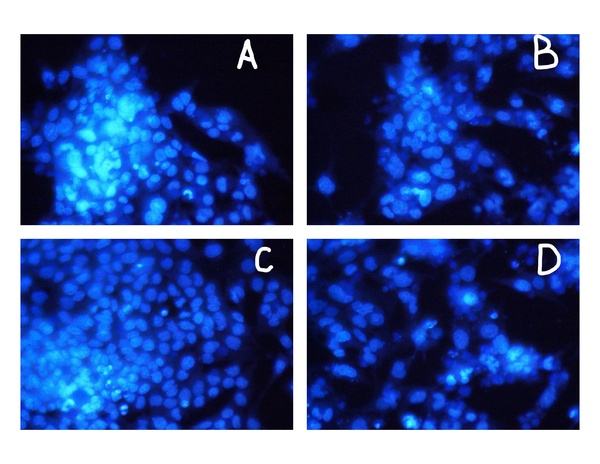
The Wnt signaling pathway, known to coordinate important aspects of cellular homeostasis ranging from differentiation, proliferation, migration, and much more, is dysregulated in many human diseases. This study demonstrates that aminomethylphosphonic acid, which is the main metabolite found in the common herbicide Glyphosate, is toxic to planaria and capable of binding to canonical Wnt proteins.

Read More...

Effect of hypervitaminosis A in regenerating planaria: A potential model for teratogenicity testing

Bennet et al. | Dec 12, 2022

Effect of hypervitaminosis A in regenerating planaria: A potential model for teratogenicity testing

This unique research study evaluated the potential use of the flatworm, brown planaria (Dugesia tigrine), as an alternative model for teratogenicity testing. In this study, we exposed amputated planaria to varying concentrations of a known teratogen, vitamin A (retinol), for approximately 2 weeks, and evaluated multiple parameters including the formation of blastema and eyes. The results from this study demonstrated that high concentrations of retinol caused defects in head and eye formation in regenerating planaria, with similarities to vitamin A related teratogenicity findings in mammals. Based on these results, regenerating brown planaria are a promising alternative model for teratogenicity testing, which can potentially be paradigm shifting as it can reduce cost, time, and pregnant animal use in research.

Read More...

Autologous transplantation of fresh ovarian tissue in the ICR mice model

Wang et al. | Oct 24, 2022

Autologous transplantation of fresh ovarian tissue in the ICR mice model

In this study, we performed orthotopic auto-transplantation of fresh ovarian tissues by transplanting unilateral half ovarian tissue to the contralateral ovary in the ICR (Institute of Cancer Research) strain of outbred, heterogeneous mice to determine if the transplanted tissue could be functional. We found that the freshly transplanted mouse ovarian tissue survived and functional, as histochemical and immunofluorescence assays have shown that not only both follicles at different developing stages and corpus luteum are available, but the morphology of them are properly maintained within the transplanted tissue.

Read More...

Willingness to visit the pediatric dentist during the COVID-19 pandemic

Rossitch et al. | Mar 24, 2022

Willingness to visit the pediatric dentist during the COVID-19 pandemic

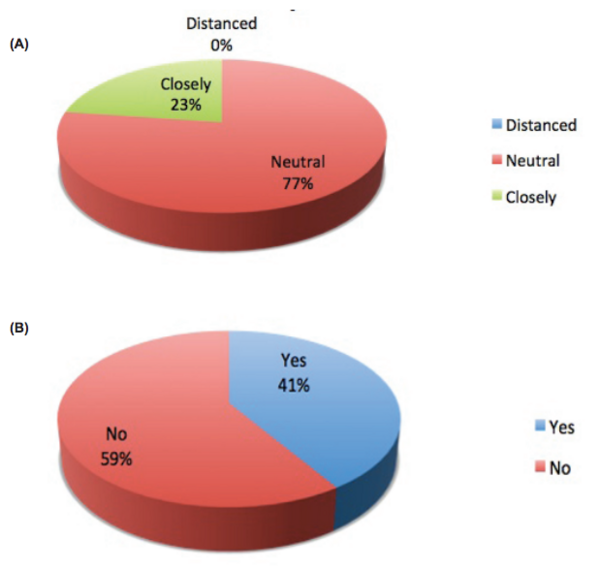
Because of the COVID-19 pandemic, people are missing important appointments because they are viewed as nonessential, possibly including children's pediatric dentist appointments. This study aims to determine how the COVID-19 pandemic has effected parents' willingness to allow children to visit pediatric dental practices and what safety measures would make them feel more comfortable visiting the dentist. The authors found a weak positive correlation between parents' unwillingness to allow their child to visit the dentist, however overall anxiety towards visiting the dentist during the pandemic was low.

Read More...