Here, recognizing that alcohol manufacturers may target ethnic minorities and youths with specific forms of advertisements based on previous studies, the authors considered how alcohol storefronts differ depending on the community they are located in. Specifically, they looked at differences between Metro-Dtroit suburban communities of high- and low-incomes. They found that alcohol stores in the low-income areas had more and larger alcohol and malt liquor advertisements per store along with being within 1,000 feet of a school.
Many cases of viral hepatitis are easily preventable if caught early; however, a lack of public awareness regarding often leads to diagnoses near the final stages of disease when it is most lethal. Thus, we wanted to understand to what extent an individual's sex, age, education and country of residence (India or Singapore) impacts disease identification. We sent out a survey and quiz to residents in India (n = 239) and Singapore (n = 130) with questions that test their knowledge and awareness of the disease. We hypothesized that older and more educated individuals would score higher because they are more experienced, but that the Indian population will not be as knowledgeable as the Singaporean population because they do not have as many resources, such as socioeconomic access to schools and accessibility to healthcare, available to them. Additionally, we predicted that there would not be any notable differences between make and females. The results revealed that the accuracy for all groups we looked at was primarily below 50%, demonstrating a severe knowledge gap. Therefore, we concluded that if more medical professionals discussed viral hepatitis during hospital visits and in schools, patients can avoid the end stages of the disease in notable cases.
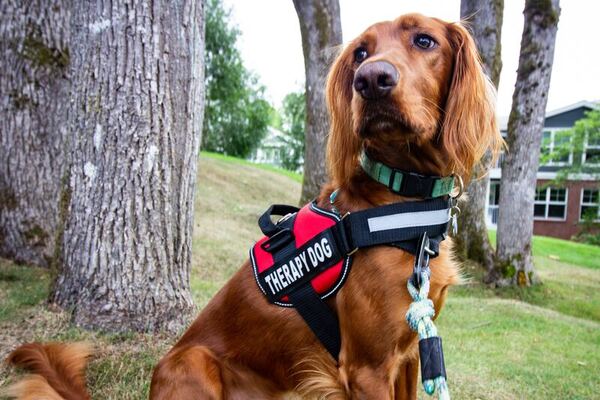
In this article the authors looked at the effect of spending time with a therapy dog before and after stressful events. They found that interacting with a therapy before a stressful event showed more significant reduction in signs of stress compared to interacting with a therapy dog after stressful events have already occurred.
Although the United States maintains millions of square kilometers of nature reserves to protect the biodiversity of the specimens living there, little is known about how confining these species within designated protected lands influences the genetic variation required for a healthy population. In this study, the authors sequenced genetic barcodes of insects from a recently established nature reserve, the Southwestern Riverside County Multi-Species Reserve (SWRCMSR), and a non-protected area, the Mt. San Jacinto College (MSJC) Menifee campus, to compare the genetic variation between the two populations. Their results demonstrated that the midge fly population from the SWRCMSR had fewer unique DNA barcode sequence changes than the MSJC population, indicating that the comparatively younger nature reserve's population had likely not yet established its own unique genetic drift changes.
In this article, Choi and Rossitto investigated the limitations of virtual learning by examining in-person dance learning compared to virtual dance learning while wearing EEG headsets. They found that in-person learners outperformed virtual learners and that virtual learners had higher mirror neuron activity as assessed by Mu rhythm power.
The COVID-19 pandemic has caused disruption in social interactions. In this study, the authors tested if walking a dog will change human interactions and found that walking with a dog increased social interaction.
Here, the authors investigated the most efficient way to position magnets to hold the most pieces of paper on the surface of a refrigerator. They used a regression model along with an artificial neural network to identify the most efficient positions of four magnets to be at the vertices of a rectangle.
In this study, the authors survey students and adults to better understand their basic financial knowledge and money saving skills to measure the extent of knowledge in each group and make comparisons between.
In this study, the authors surveyed a number of students in Singapore to determine how their experiences changed after the implementation of home-based learning during the COVID-19 pandemic.