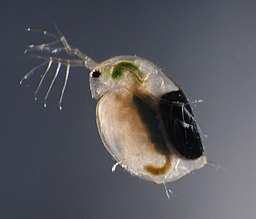
In this study a student uses Daphnia magna, or water fleas, to assay the purity of local soil samples. Daphnia magna are a helpful organism to detect potentially harmful levels of toxins in water.
Read More...Monitoring Local Soil Toxicity by Daphnia magna Viability
In this study a student uses Daphnia magna, or water fleas, to assay the purity of local soil samples. Daphnia magna are a helpful organism to detect potentially harmful levels of toxins in water.
Read More...The Impact of Age on Post-Concussive Symptoms: A Comparative Study of Symptoms Related and Not Related to the Default Mode Network
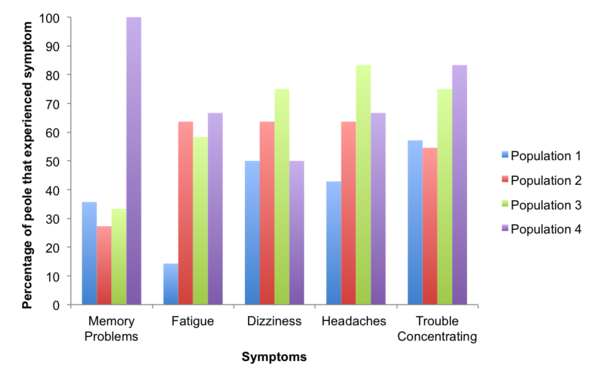
The Default Mode Network (DMN) is a network of connected brain regions that are active when the brain is not focused on external tasks. Minor brain injuries, such as concussions, can affect this network and manifest symptoms. In this study, the authors examined correlations between DMN age and post-concussion symptoms in previously concussed individuals and healthy controls.
Read More...The Clinical Accuracy of Non-Invasive Glucose Monitoring for ex vivo Artificial Pancreas
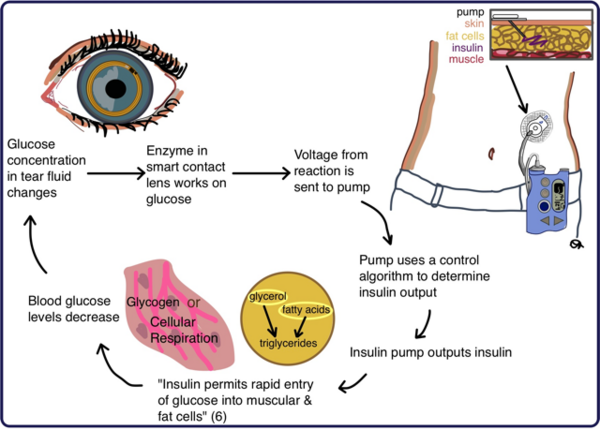
Diabetes is a serious worldwide epidemic that affects a growing portion of the population. While the most common method for testing blood glucose levels involves finger pricking, it is painful and inconvenient for patients. The authors test a non-invasive method to measure glucose levels from diabetic patients, and investigate whether the method is clinically accurate and universally applicable.
Read More...The Development and Maximization of a Novel Photosynthetic Microbial Fuel Cell Using Rhodospirillum rubrum
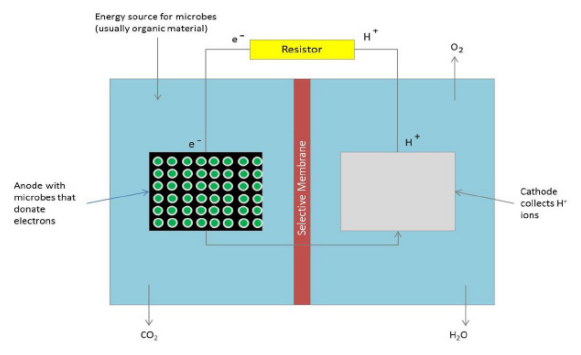
Microbial fuel cells (MFCs) are bio-electrochemical systems that utilize bacteria and are promising forms of alternative energy. Similar to chemical fuel cells, MFCs employ both an anode (accepts electrons) and a cathode (donates electrons), but in these devices the live bacteria donate the electrons necessary for current. In this study, the authors assess the functionality of a photosynthetic MFC that utilizes a purple non-sulfur bacterium. The MFC prototype they constructed was found to function over a range of environmental conditions, suggesting its potential use in industrial models.
Read More...Differences in online reviews between different communities: An empirical study on Amazon and Goodreads
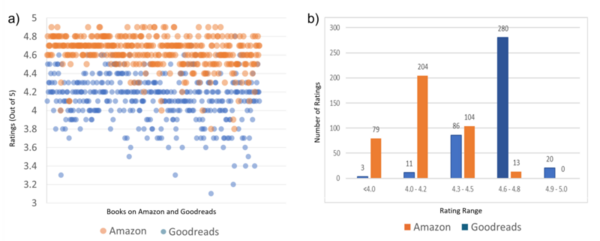
Online review platforms often provide different reviews on the same product, potentially confusing consumers. In this study, we found that the number of raters on Amazon is lower for the same book, while ratings on Amazon were higher than those on Goodreads. Furthermore, these differences in ratings and rater counts were larger for fiction books than for non‑fiction books.
Read More...Algorithmic barriers: Investigating student perceptions of AI bias in subjective “culture fit” hiring
This study investigated perceptions of the emerging workforce toward the use of artificial intelligence in hiring, specifically for assessing subjective "culture fit." Through a mixed-methods survey of 150 high school and early-college students in Nepal, we found a significant disconnect between organizational adoption of AI and the profound skepticism of young job candidates, who express deep concerns about fairness, transparency, and the potential for AI to perpetuate systemic discrimination.
Read More...Sloan green and red photometry of the Type Ia supernova 2024neh
Analysis of the Sloan green and red photometry of the Type Ia supernova 2024neh
Read More...Study of neural network parameters in detecting heart disease
The authors looked at the ability to detect heart disease before the onset of severe clinical symptoms.
Read More...Correlating inlet gas composition to conversion efficiency in plasma-assisted landfill gas reforming
The escalating crisis of climate change, driven by the accumulation of greenhouse gases from human activities, demands urgent and innovative solutions to curb rising global temperatures. Plasma-based methane (CH4) and carbon dioxide (CO2) reforming offers a promising pathway for carbon capture and the sustainable production of hydrogen fuel and syngas components. To advance this technology, particularly in terms of energy efficiency and selectivity, it is essential to enhance the conversion efficiencies of CO2 and CH4.
Read More...Determining viability of image processing models for forensic analysis of hair for related individuals
Here, the authors used machine learning to analyze microscopic images of hair, quantifying various features to distinguish individuals, even within families where traditional DNA analysis is limited. The Discriminant Analysis (DA) model achieved the highest accuracy (88.89%) in identifying individuals, demonstrating its potential to improve the reliability of hair evidence in forensic investigations.
Read More...