Browse Articles

Transfer learning and data augmentation in osteosarcoma cancer detection

Chu et al. | Jun 03, 2023

Transfer learning and data augmentation in osteosarcoma cancer detection
Image credit: Chu and Khan 2023

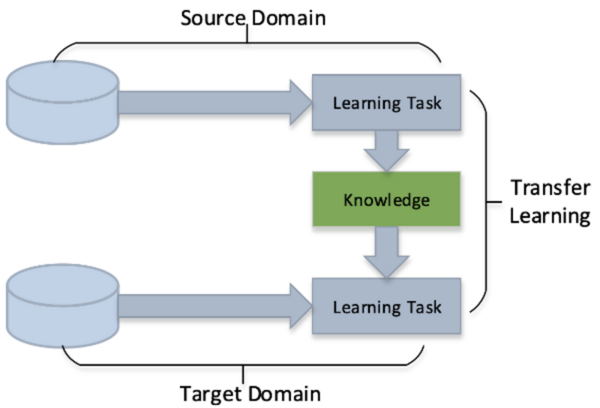
Osteosarcoma is a type of bone cancer that affects young adults and children. Early diagnosis of osteosarcoma is crucial to successful treatment. The current methods of diagnosis, which include imaging tests and biopsy, are time consuming and prone to human error. Hence, we used deep learning to extract patterns and detect osteosarcoma from histological images. We hypothesized that the combination of two different technologies (transfer learning and data augmentation) would improve the efficacy of osteosarcoma detection in histological images. The dataset used for the study consisted of histological images for osteosarcoma and was quite imbalanced as it contained very few images with tumors. Since transfer learning uses existing knowledge for the purpose of classification and detection, we hypothesized it would be proficient on such an imbalanced dataset. To further improve our learning, we used data augmentation to include variations in the dataset. We further evaluated the efficacy of different convolutional neural network models on this task. We obtained an accuracy of 91.18% using the transfer learning model MobileNetV2 as the base model with various geometric transformations, outperforming the state-of-the-art convolutional neural network based approach.

Read More...
Comparative study on three machine learning models in novel autonomous drone-based detection of invasive plant Brassica nigra

Ho et al. | Jul 05, 2026

Comparative study on three machine learning models in novel autonomous drone-based detection of invasive plant <em>Brassica nigra</em>

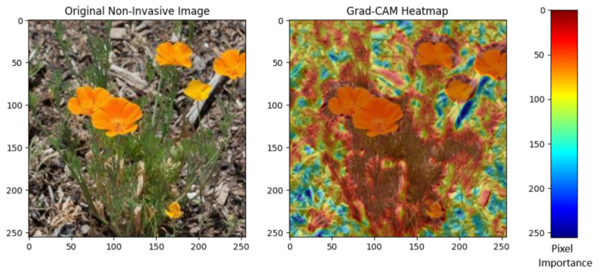
Autonomous drone imaging combined with machine learning offers a promising approach for early detection of invasive species. In this study, students built an autonomous drone and compared three models: CNN, SGDC, and XGBoost, to identify Brassica nigra from aerial footage. Their results show that CNNs most effectively recognize key visual features, demonstrating strong potential for supporting conservation and invasive plant management.

Read More...

Predicting baseball pitcher efficacy using physical pitch characteristics

Oberoi et al. | Jan 11, 2024

Predicting baseball pitcher efficacy using physical pitch characteristics
Image credit: Antoine Schibler

Here, the authors sought to develop a new metric to evaluate the efficacy of baseball pitchers using machine learning models. They found that the frequency of balls, was the most predictive feature for their walks/hits allowed per inning (WHIP) metric. While their machine learning models did not identify a defining trait, such as high velocity, spin rate, or types of pitches, they found that consistently pitching within the strike zone resulted in significantly lower WHIPs.

Read More...