Browse Articles

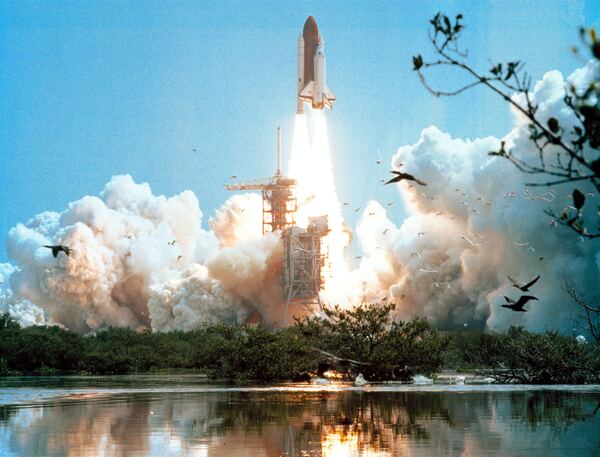
What is the optimal fuel for space flight? Efficiency, cost, and environmental impact

Kapitonova et al. | Dec 28, 2023

What is the optimal fuel for space flight? Efficiency, cost, and environmental impact
Image credit: NASA

Here, the authors sought to investigate the efficiency, cost, and environmental impact of several possible propellants that are or could be used for space flight. By deriving three novel equations, they identified harm, energy, and cost scores for each fuel, suggesting that considering each factor will be essential to the ongoing growth of the space industry.

Read More...

Collaboration beats heterogeneity: Improving federated learning-based waste classification

Chong et al. | Jul 18, 2023

Collaboration beats heterogeneity: Improving federated learning-based waste classification

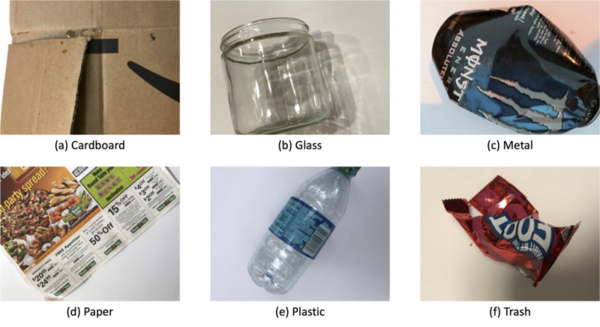
Based on the success of deep learning, recent works have attempted to develop a waste classification model using deep neural networks. This work presents federated learning (FL) for a solution, as it allows participants to aid in training the model using their own data. Results showed that with less clients, having a higher participation ratio resulted in less accuracy degradation by the data heterogeneity.

Read More...

An Analysis on Exoplanets and How They are Affected by Different Factors in Their Star Systems

Selph et al. | Dec 06, 2018

An Analysis on Exoplanets and How They are Affected by Different Factors in Their Star Systems

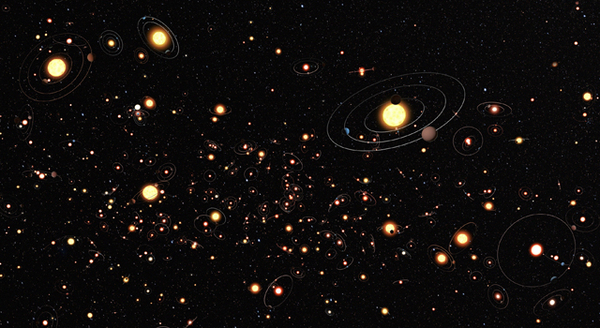
In this article, the authors systematically study whether the type of a star is correlated with the number of planets it can support. Their study shows that medium-sized stars are likely to support more than one planet, just like the case in our solar system. They predict that, of the hundreds of planets beyond our solar system, 6% might be habitable. As humans work to travel further and further into space, some of those might truly be suited for human life.

Read More...