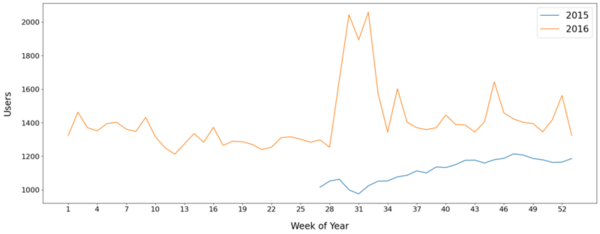
The authors looked at ways to provide better forecasting on website traffic. They found that deep learning models performed better than statistical models.
Read More...Deep sequential models versus statistical models for web traffic forecasting
The authors looked at ways to provide better forecasting on website traffic. They found that deep learning models performed better than statistical models.
Read More...Validating DTAPs with large language models: A novel approach to drug repurposing
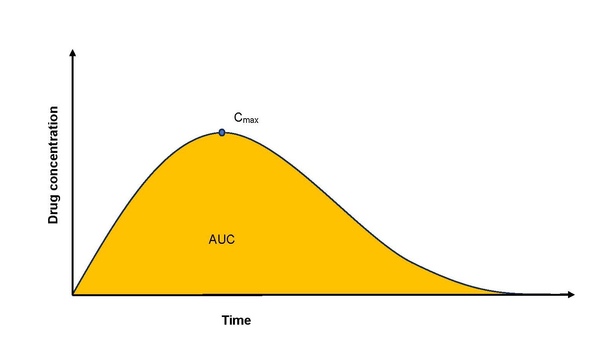
Here, the authors investigated the integration of large language models (LLMs) with drug target affinity predictors (DTAPs) to improve drug repurposing, demonstrating a significant increase in prediction accuracy, particularly with GPT-4, for psychotropic drugs and the sigma-1 receptor. This novel approach offers to potentially accelerate and reduce the cost of drug discovery by efficiently identifying new therapeutic uses for existing drugs.
Read More...The use of computer vision to differentiate valley fever from lung cancer via CT scans of nodules
Pulmonary diseases like lung cancer and valley fever pose serious health challenges, making accurate and rapid diagnostics essential. This study developed a MATLAB-based software tool that uses computer vision techniques to differentiate between these diseases by analyzing features of lung nodules in CT scans, achieving higher precision than traditional methods.
Read More...pH-dependent drug interactions with acid reducing agents
Some cancer treatments lose efficacy when combined with treatments for excessive stomach acid, due to the changes in the stomach environment caused by the stomach acid treatments. Lin and Lin investigate information on oral cancer drugs to see what information is available on interactions of these drugs.
Read More...Digestion products of bread and cheese cause addictive behavior in a planaria model
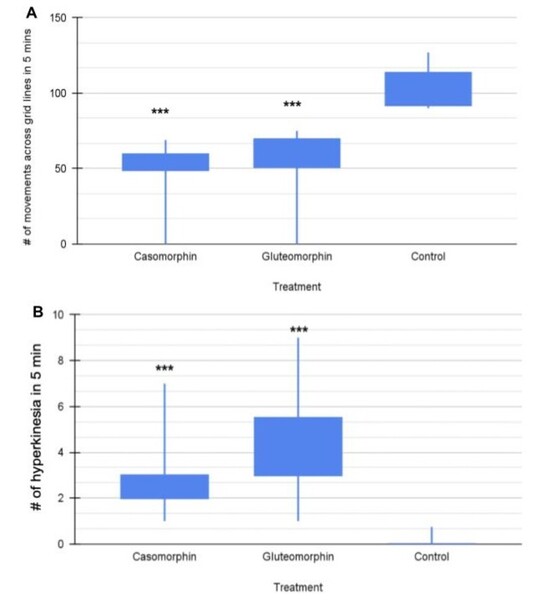
The authors looked at two peptides, gluteomorphin and casomorphin, that are present after the digestion of bread and cheese. As these peptides can bind opioid receptors the authors want to know if they could be addictive in the same way as conventional opioids (i.e., morphine) are known to be. Their results in a planaria model suggest that both of these peptides are addictive.
Read More...Generation of a magnetic field on Mars
The authors propose and test a method that would allow for the generation of a magnetic field on Mars sufficient to support future colonization.
Read More...Transfer Learning with Convolutional Neural Network-Based Models for Skin Cancer Classification
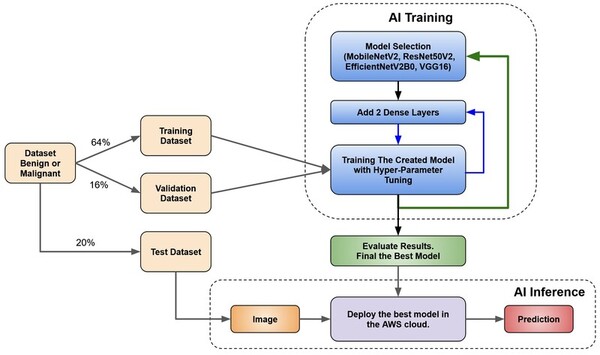
Skin cancer is a common and potentially deadly form of cancer. This study’s purpose was to develop an automated approach for early detection for skin cancer. We hypothesized that convolutional neural network-based models using transfer learning could accurately differentiate between benign and malignant moles using natural images of human skin.
Read More...Predicting baseball pitcher efficacy using physical pitch characteristics
Here, the authors sought to develop a new metric to evaluate the efficacy of baseball pitchers using machine learning models. They found that the frequency of balls, was the most predictive feature for their walks/hits allowed per inning (WHIP) metric. While their machine learning models did not identify a defining trait, such as high velocity, spin rate, or types of pitches, they found that consistently pitching within the strike zone resulted in significantly lower WHIPs.
Read More...A colorimetric investigation of copper(II) solutions
In this study, the authors investigate the effects of acetone on the color of copper chloride (CuCl2) solution, which has important implications for detecting copper in the environment.
Read More...Myrtaceaes as antimicrobial agents against Staphylococcus aureus and Pseudomonas aeruginosa
In this study, the authors test new antimicrobials by measuring the ability of extracts from Australian-native Myrtaceae species to induce death of two bacteria S. aureus and P. aeruginosa.
Read More...