
Understanding and predicting cognitive decline in Alzheimer's disease
Read More...Towards multimodal longitudinal analysis for predicting cognitive decline
Understanding and predicting cognitive decline in Alzheimer's disease
Read More...In vitro dissolution and in vivo response of pseudoephedrine dosage forms
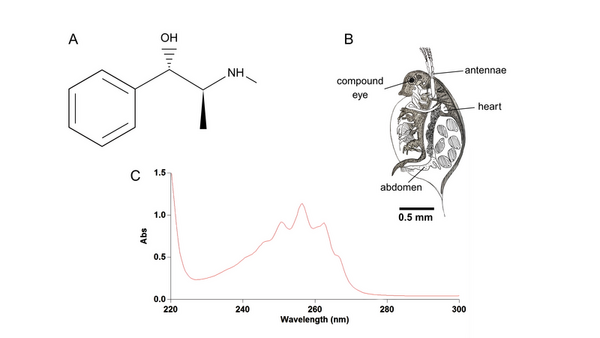
The authors looked at how pharmacokinetics changed depending on the use of an in vitro or an in vivo model.
Read More...The effect of calcium on mealworm iron metabolism
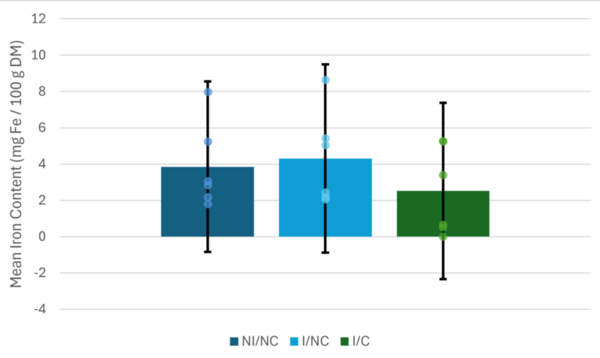
The authors looked at the impact of calcium on iron absorption in mealworms, hypothesizing that calcium would inhibit iron absorption.
Read More...Validating DTAPs with large language models: A novel approach to drug repurposing

Here, the authors investigated the integration of large language models (LLMs) with drug target affinity predictors (DTAPs) to improve drug repurposing, demonstrating a significant increase in prediction accuracy, particularly with GPT-4, for psychotropic drugs and the sigma-1 receptor. This novel approach offers to potentially accelerate and reduce the cost of drug discovery by efficiently identifying new therapeutic uses for existing drugs.
Read More...Voltage, power, and energy production of a Shewanella oneidensis biofilm microbial fuel cell in microgravity
.PNG)
The authors looked at the ability of Shewanella oneidensis to generate energy in a microbial fuel cell under varying conditions. They found that the S. Onedensis biofilm was able to produce energy in microgravity and that one of the biggest factors that limited energy production was a decrease in growth medium present.
Read More...Apoptosis induction and anti-inflammatory activity of polyherbal drug AS20 on cervical cancer cell lines
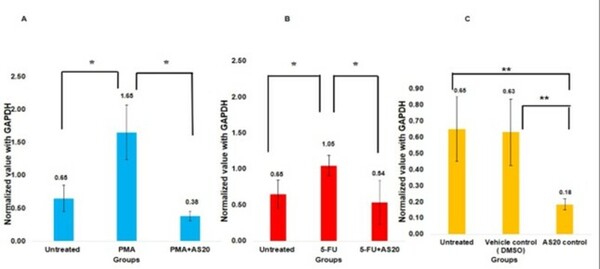
The authors found that treatment with AS20 suppressed phorbol 12-myristate 13-acetate (PMA) and 5-flurouracil (5-FU) induction of COX2 expression. We also observed AS20 treated cells showed DNA fragmentation in HeLa cells.
Read More...Differential MERS-CoV response in different cell types
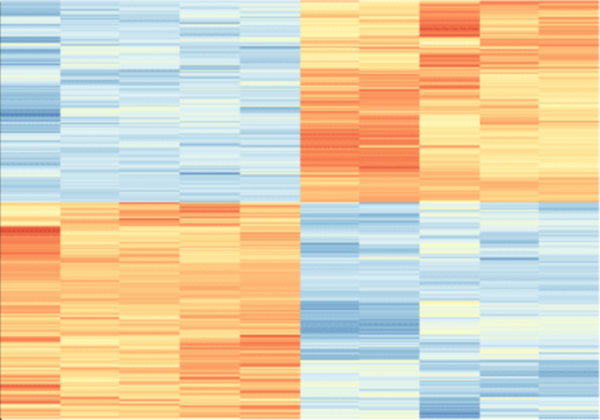
The authors compare RNA expression profiles across three human cell types following infection with MERS-CoV
Read More...Structure-activity relationship of berberine and G4 DNA reveals aromaticity’s effect on binding affinity
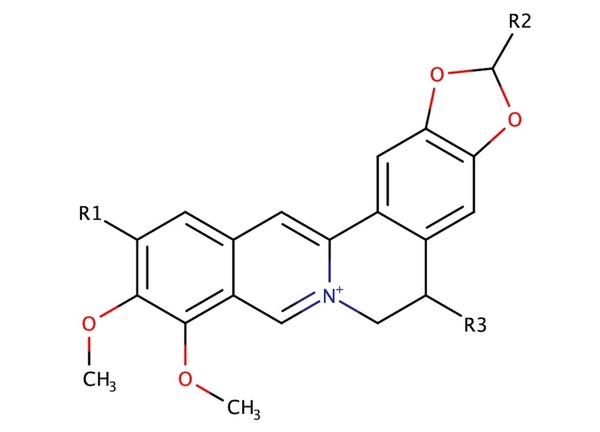
Berberine is a natural quaternary alkaloid that has anti-microbial and anti-cancer effects. This compound can bind to Guanine Quadruplex (G4) DNA secondary complexes to help inhibit cancer cell proliferation. In this study, the authors investigate whether incorporating large aromatic rings helps to stabilize berberine-G4 interactions.
Read More...Myrtaceaes as antimicrobial agents against Staphylococcus aureus and Pseudomonas aeruginosa

In this study, the authors test new antimicrobials by measuring the ability of extracts from Australian-native Myrtaceae species to induce death of two bacteria S. aureus and P. aeruginosa.
Read More...Disruptions in protein-protein interactions between HTT, PRPF40B, and MECP2 are involved in Lopes-Maciel-Rodan syndrome
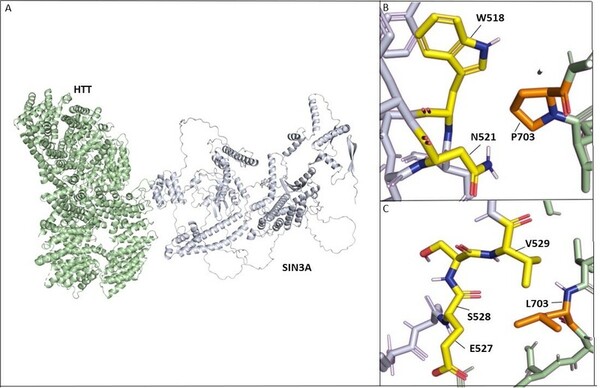
In an extensive study of gene mutations, and their resulting effect on protein-protein interactions, Desai and Stork found that HTT-PRPF40B-MECP2 interactions are weakened with progression of Lopes-Maciel-Rodan syndrome.
Read More...