The authors investigate how well AI-detection machine learning models can detect real versus AI-generated art across different art styles.
Read More...Evaluating the effectiveness of machine learning models for detecting AI-generated art
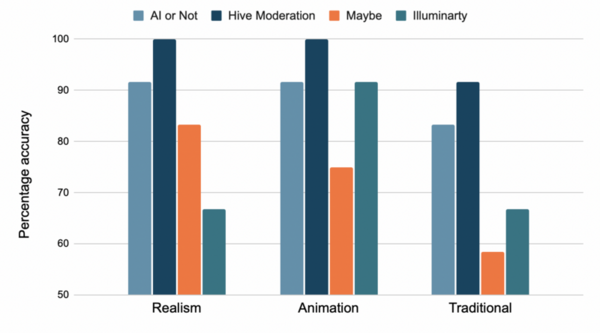
The authors investigate how well AI-detection machine learning models can detect real versus AI-generated art across different art styles.
Read More...Using two-step machine learning to predict harmful algal bloom risk
Using machine learning to predict the risk of algae bloom
Read More...Floating aquatic plants form groups faster through current
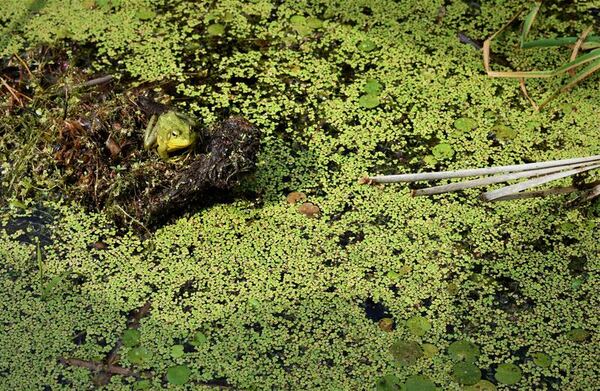
Here, the authors sought to investigate the effects of water current on the growth of colonies of duckweed, a floating plant that forms colonies in silent ponds, marshes, lakes , and streams in North America. They found that current flow mediates the formation of colonies, disrupting and recreating the colonies which provides the opportunity for reorganizations that were identified as beneficial.
Read More...Comparing the Effect of Stent Geometry on Blood Flow Rate of Curved Coronary Artery Stenosis
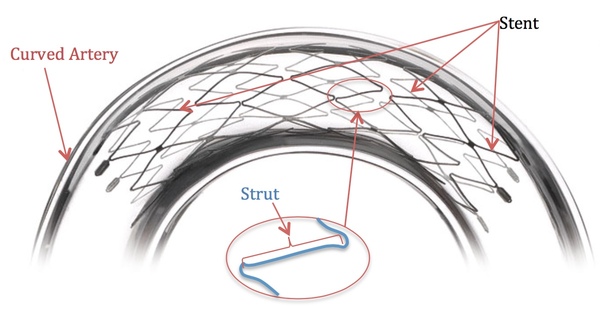
Coronary heart disease (CHD) is a global disease that causes fatal buildup of plaque in the arteries. Currently stents are placed in the artery for many patients with CHD to support proper blood flow. Here, the authors build a system to explore how the shape of the stent affects blood flow rate, a finding that can help optimize stents for patients.
Read More...Analyzing market dynamics and optimizing sales performance with machine learning
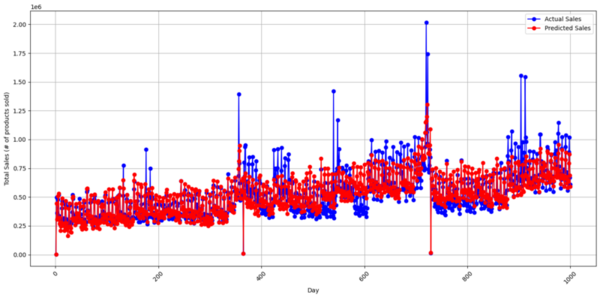
This study uses interpretable machine learning models, lasso and ridge regression with Shapley analysis, to identify key sales drivers for Corporación Favorita, Ecuador’s largest grocery chain. The results show that macroeconomic factors, especially labor force size, have the greatest impact on sales, though geographic and seasonal variables like city altitude and holiday proximity also play important roles. These insights can help businesses focus on the most influential market conditions to enhance competitiveness and profitability.
Read More...Propagation of representation bias in machine learning
Using facial recognition as a use-case scenario, we attempt to identify sources of bias in a model developed using transfer learning. To achieve this task, we developed a model based on a pre-trained facial recognition model, and scrutinized the accuracy of the model’s image classification against factors such as age, gender, and race to observe whether or not the model performed better on some demographic groups than others. By identifying the bias and finding potential sources of bias, his work contributes a unique technical perspective from the view of a small scale developer to emerging discussions of accountability and transparency in AI.
Read More...Overcoming The Uncanny Valley Through Shared Stressful Experience with a Humanoid Robot
The "Uncanny Valley" is a phenomenon in which humans feel discomfort in the presence of objects that are almost, but not quite, human-like. In this study, the authors tested whether this phenomenon could be overcome by sharing a stressful experience with a humanoid robot. They found that human subjects more readily accepted a robot partner that they had previously shared a stressful experience with, suggesting a potential method for increasing the effectiveness of beneficial human-robot interactions by reducing the Uncanny Valley effect.
Read More...Drought prediction in the Midwestern United States using deep learning
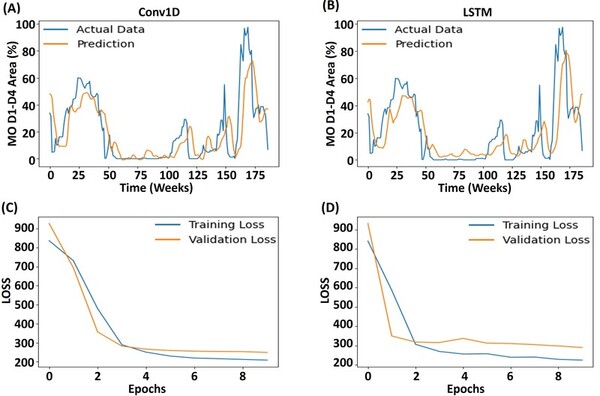
The authors studied the ability of deep learning models to predict droughts in the midwestern United States.
Read More...Predicting clogs in water pipelines using sound sensors and machine learning linear regression
The authors looked the ability of sound sensors to predict clogged pipes when the sound intensity data is run through a machine learning algorithm.
Read More...AeroPurify: Autonomous air filtration UAV using real-time 3-D Monte Carlo gradient search
Here the authors present an autonomous drone air filtration system that uses a novel algorithm, the gradient ascent ML particle filter (GA/MLPF), to efficiently locate and mitigate outdoor air pollution. They demonstrate that their GA/MLPF algorithm is significantly more efficient than the conventional gradient ascent algorithm, reducing both the time and number of waypoints needed to find the source of pollution.
Read More...