Browse Articles

An explainable model for content moderation

Cao et al. | Aug 16, 2023

An explainable model for content moderation

The authors looked at the ability of machine learning algorithms to interpret language given their increasing use in moderating content on social media. Using an explainable model they were able to achieve 81% accuracy in detecting fake vs. real news based on language of posts alone.

Read More...

Predicting asthma-related emergency department visits and hospitalizations with machine learning techniques

Chatterjee et al. | Oct 25, 2021

Predicting asthma-related emergency department visits and hospitalizations with machine learning techniques

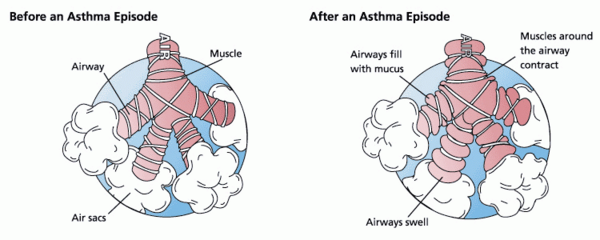
Seeking to investigate the effects of ambient pollutants on human respiratory health, here the authors used machine learning to examine asthma in Lost Angeles County, an area with substantial pollution. By using machine learning models and classification techniques, the authors identified that nitrogen dioxide and ozone levels were significantly correlated with asthma hospitalizations. Based on an identified seasonal surge in asthma hospitalizations, the authors suggest future directions to improve machine learning modeling to investigate these relationships.

Read More...

Locating sources of a high energy cosmic ray extensive air shower using HiSPARC data

Aziz et al. | Oct 24, 2023

Locating sources of a high energy cosmic ray extensive air shower using HiSPARC data

Using the data provided by the University of Twente High School Project on Astrophysics Research with Cosmics (HiSPARC), an analysis of locations for possible high-energy cosmic ray air showers was conducted. An example includes an analysis conducted of the high-energy rain shower recorded in January 2014 and the use of Stellariumâ„¢ to discern its location.

Read More...

Giving Teens a Voice: Sources of Stress for High School Students

Corson et al. | Sep 09, 2019

Giving Teens a Voice: Sources of Stress for High School Students

The authors investigate the negative effects stress has on teen mental and physical health. Through a survey, they give Virginia teens a voice in revising the Health and Physical Education curriculum to include a standards of learning (SOL). Notably they identify factors contributing to stress levels including homework level, amount of free and sleep time, parental pressure and family encouragement.

Read More...