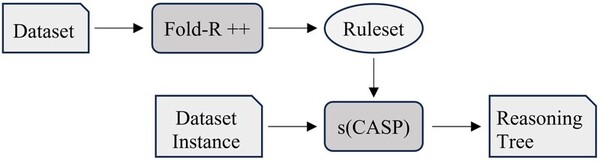
The authors compare current machine learning algorithms with a new Explainable AI algorithm that produces a human-comprehensible decision tree alongside predictions.
Read More...Explainable AI tools provide meaningful insight into rationale for prediction in machine learning models
The authors compare current machine learning algorithms with a new Explainable AI algorithm that produces a human-comprehensible decision tree alongside predictions.
Read More...Simple solving heuristics improve the accuracy of sudoku difficulty classifiers
Transfer Learning with Convolutional Neural Network-Based Models for Skin Cancer Classification
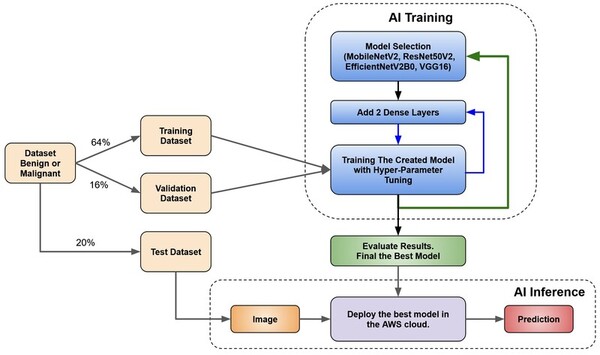
Skin cancer is a common and potentially deadly form of cancer. This study’s purpose was to develop an automated approach for early detection for skin cancer. We hypothesized that convolutional neural network-based models using transfer learning could accurately differentiate between benign and malignant moles using natural images of human skin.
Read More...Evaluating the feasibility of SMILES-based autoencoders for drug discovery
The authors investigate the ability of machine learning models to developing new drug-like molecules by learning desired chemical properties versus simply generating molecules that similar to those in the training set.
Read More...Association of depression and suicidal ideation among adults with the use of H2 antagonists
In this study, the authors investigate associations between use of histamine H2 receptor antagonists and suicidal ideation in different age groups.
Read More...Predicting asthma-related emergency department visits and hospitalizations with machine learning techniques
Seeking to investigate the effects of ambient pollutants on human respiratory health, here the authors used machine learning to examine asthma in Lost Angeles County, an area with substantial pollution. By using machine learning models and classification techniques, the authors identified that nitrogen dioxide and ozone levels were significantly correlated with asthma hospitalizations. Based on an identified seasonal surge in asthma hospitalizations, the authors suggest future directions to improve machine learning modeling to investigate these relationships.
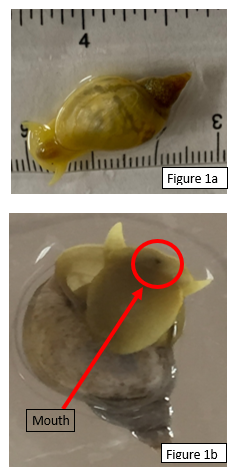
Read More...Can Green Tea Alleviate the Effects of Stress Related to Learning and Long-Term Memory in the Great Pond Snail (Lymnaea stagnalis)?
Stress and anxiety have become more prevalent issues in recent years with teenagers especially at risk. Recent studies show that experiencing stress while learning can impair brain-cell communication thus negatively impacting learning. Green tea is believed to have the opposite effect, aiding in learning and memory retention. In this study, the authors used Lymnaea stagnalis , a pond snail, to explore the relationship between green tea and a stressor that impairs memory formation to determine the effects of both green tea and stress on the snails’ ability to learn, form, and retain memories. Using a conditioned taste aversion (CTA) assay, where snails are exposed to a sweet substance followed by a bitter taste with the number of biting responses being recorded, the authors found that stress was shown to be harmful to snail learning and memory for short-term, intermediate, and long-term memory.
Read More...Sloan green and red photometry of the Type Ia supernova 2024neh
Analysis of the Sloan green and red photometry of the Type Ia supernova 2024neh
Read More...The effect of circumference on the segregation of objects in a mixture
The authors test how the size-segregation theory applies to the behavior of hollow and irregular-shaped objects.
Read More...Using machine learning to understand social media discourse on the co-use of tobacco and cannabis
The authors used developed a machine learning tool for studying social media discourse surrounding use of tobacco and cannabis.
Read More...