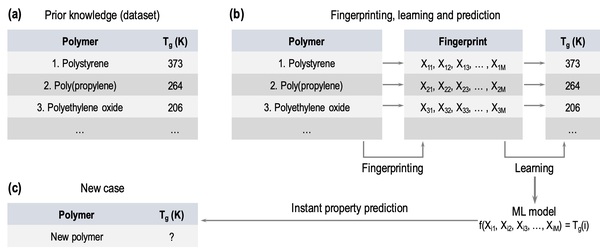
In this study, the authors test whether providing a larger dataset of glass transition temperatures (Tg) to train the machine-learning platform Polymer Genome would improve its accuracy. Polymer Genome is a machine learning based data-driven informatics platform for polymer property prediction and Tg is one property needed to design new polymers in silico. They found that training the model with their larger, curated dataset improved the algorithm's Tg, providing valuable improvements to this useful platform.
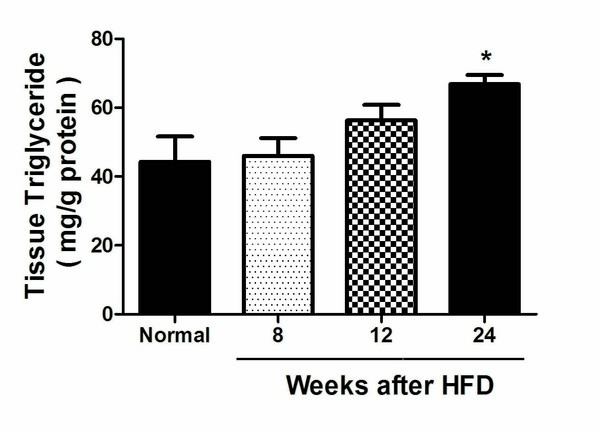
Nonalcoholic fatty liver disease (NAFLD) is one of the most prevalent chronic liver diseases worldwide, but there are few studied warning signs for early detection of the disease. Here, researchers study alterations that occur in a mouse model of NAFLD, which indicate the onset of NAFLD sooner. Earlier detection of diseases can lead to better prevention and treatment.
Here, the authors investigated the integration of large language models (LLMs) with drug target affinity predictors (DTAPs) to improve drug repurposing, demonstrating a significant increase in prediction accuracy, particularly with GPT-4, for psychotropic drugs and the sigma-1 receptor. This novel approach offers to potentially accelerate and reduce the cost of drug discovery by efficiently identifying new therapeutic uses for existing drugs.
Although there has been great progress in the field of Natural language processing (NLP) over the last few years, particularly with the development of attention-based models, less research has contributed towards modeling keystroke log data. State of the art methods handle textual data directly and while this has produced excellent results, the time complexity and resource usage are quite high for such methods. Additionally, these methods fail to incorporate the actual writing process when assessing text and instead solely focus on the content. Therefore, we proposed a framework for modeling textual data using keystroke-based features. Such methods pay attention to how a document or response was written, rather than the final text that was produced. These features are vastly different from the kind of features extracted from raw text but reveal information that is otherwise hidden. We hypothesized that pairing efficient machine learning techniques with keystroke log information should produce results comparable to transformer techniques, models which pay more or less attention to the different components of a text sequence in a far quicker time. Transformer-based methods dominate the field of NLP currently due to the strong understanding they display of natural language. We showed that models trained on keystroke log data are capable of effectively evaluating the quality of writing and do it in a significantly shorter amount of time compared to traditional methods. This is significant as it provides a necessary fast and cheap alternative to increasingly larger and slower LLMs.
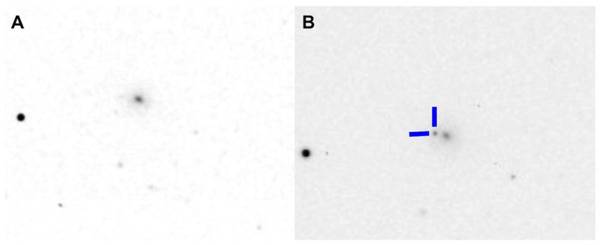
Observing transients like supernovae, which have short-lived brightness variations, helps astronomers understand cosmic phenomena. This study analyzed transient 2023jri, hypothesizing it was a Type IIb supernova. By collecting and analyzing data over four weeks, including light and color curves, they confirmed its classification and provided additional insights into this less-studied supernova type.
Supernovas are powerful explosions that result from gravitational collapse of a massive star. Using photometric analysis Arora et al. set out to investigate whether 2020pni (located in galaxy UGC 9684) was a supernova. They were ultimately able to identify 2020pni as a Type II-L supernova and determine it's distance from earth.
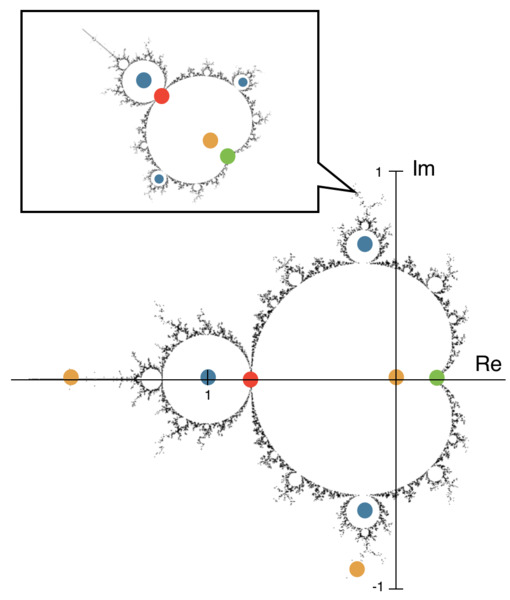
This study aimed to predict and explain chaotic behavior in the Mandelbrot Set, one of the world’s most popular models of fractals and exhibitors of Chaos Theory. The authors hypothesized that repeatedly iterating the Mandelbrot Set’s characteristic function would give rise to a more intricate layout of the fractal and elliptical models that predict and highlight “hotspots” of chaos through their overlaps. The positive and negative results from this study may provide a new perspective on fractals and their chaotic nature, helping to solve problems involving chaotic phenomena.
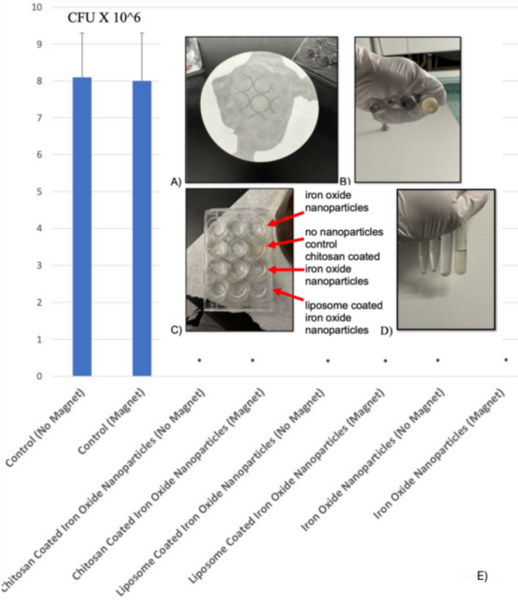
This study explored using iron oxide nanoparticles embedded in liposomes and coated with antibacterial chitosan as a potential alternative to antibiotics for treating bacterial meningitis. The nanoparticles were tested for their ability to cross a model blood–brain barrier and kill E. coli, with and without magnetic guidance.
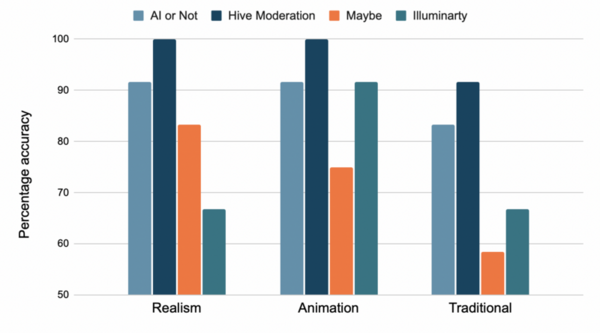
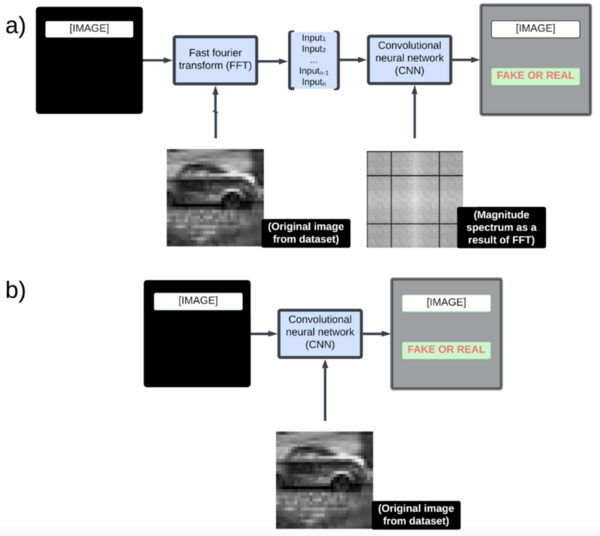
Recent advances in generative AI have made it increasingly hard to distinguish real images from AI-generated ones. Traditional detection models using CNNs or U-net architectures lack precision because they overlook key spatial and frequency domain details. This study introduced a hybrid model combining Convolutional Neural Networks (CNN) with Fast Fourier Transform (FFT) to better capture subtle edge and texture patterns.