Browse Articles

Development of a novel machine learning platform to identify structural trends among NNRTI HIV-1 reverse transcriptase inhibitors

Ashok et al. | Jun 24, 2022

Development of a novel machine learning platform to identify structural trends among NNRTI HIV-1 reverse transcriptase inhibitors

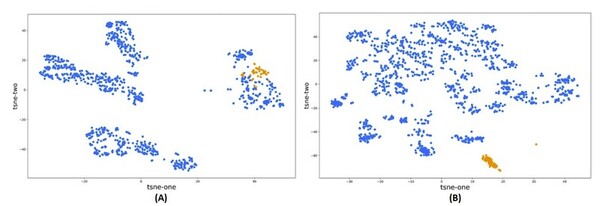
With advancements in machine learning a large data scale, high throughput virtual screening has become a more attractive method for screening drug candidates. This study compared the accuracy of molecular descriptors from two cheminformatics Mordred and PaDEL, software libraries, in characterizing the chemo-structural composition of 53 compounds from the non-nucleoside reverse transcriptase inhibitors (NNRTI) class. The classification model built with the filtered set of descriptors from Mordred was superior to the model using PaDEL descriptors. This approach can accelerate the identification of hit compounds and improve the efficiency of the drug discovery pipeline.

Read More...

Integration of iron oxide nanoparticles into high-density polyethylene for sustainable cup coatings

Atmadja et al. | Jul 08, 2026

Integration of iron oxide nanoparticles into high-density polyethylene for sustainable cup coatings

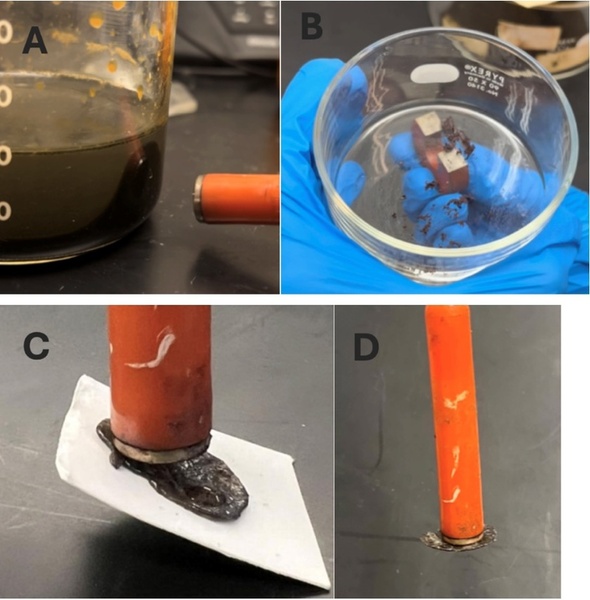
Here the authors propose integrating magnetic iron (II) oxide nanoparticles into the high-density polyethylene linings of disposable paper cups to create a waterproof, magnetically responsive composite liner. Their findings demonstrate that these nanoparticles successfully bond with the plastic layer without disrupting its structural integrity, offering a viable method to improve plastic recovery through magnetic recycling and mitigate global microplastic pollution.

Read More...

Nanotexturing as a method to reduce dust accumulation on solar panels

Choi et al. | Jan 30, 2025

Nanotexturing as a method to reduce dust accumulation on solar panels

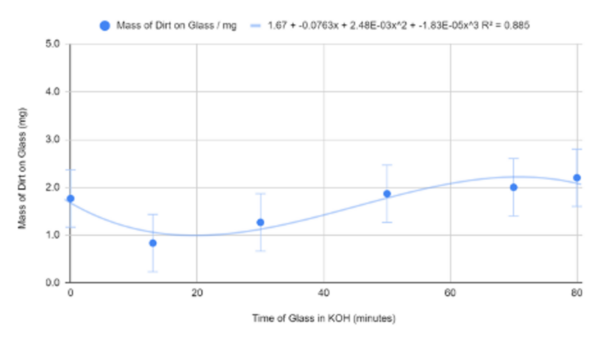
Dust accumulation on solar panels can reduce electricity output by 20–50%, posing a major challenge for solar energy collection. Instead of altering panel design, we explored a simpler approach by modifying surface energy through nanotexturing, predicting that hydrophobic surfaces would repel both water and dust. This study found that treating glass and silicone surfaces with potassium hydroxide (KOH) for 13 and 10 minutes, respectively, created optimal nanotextures (445 nm for glass, 205 nm for silicone), significantly reducing dirt accumulation and improving solar energy capture.

Read More...
Impact of carbon number and atom number on cc-pVTZ Hartree-Fock Energy and program runtime of alkanes

Pan et al. | Mar 06, 2024

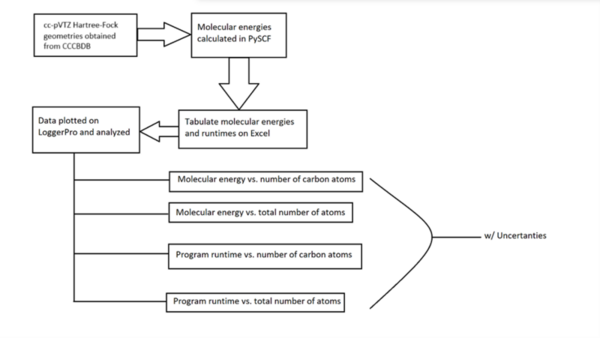
Impact of carbon number and atom number on cc-pVTZ Hartree-Fock Energy and program runtime of alkanes
Image credit: The authors

It's time-consuming to complete the calculations that are used to study nuclear reactions and energy. To uncover which computational chemistry tools are useful for this challenge, Pan, Vaiyakarnam, Li, and McMahan investigated whether the Python-based Simulations of Chemistry Framework’s Hartree-Fock (PySCF) method is an efficient and accurate way to assess alkane molecules.

Read More...

Analysis of the effects of positive ions and boundary layer temperature at various hypersonic speeds on boundary layer density

Selvakumar et al. | Oct 02, 2020

Analysis of the effects of positive ions and boundary layer temperature at various hypersonic speeds on boundary layer density

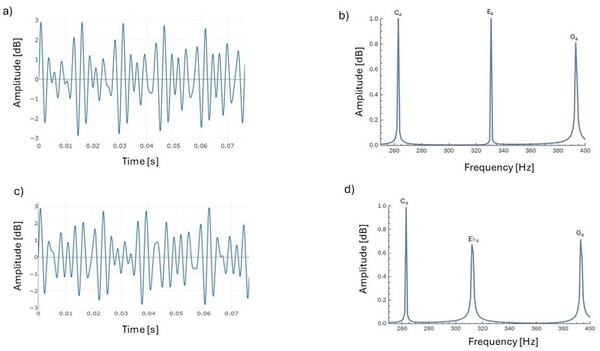
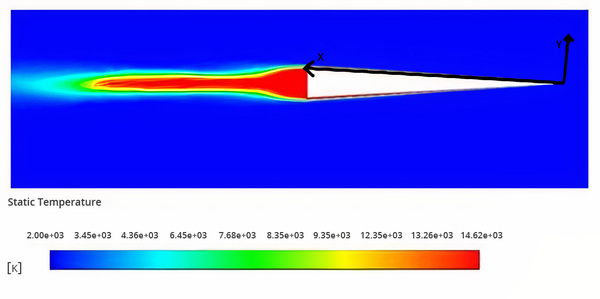
This study's goal was to identify the Mach numbers for which electrostatic drag and heat transfer manipulation would be most applicable inside the stratosphere. The experiments were conducted using computational fluid dynamics software. The study demonstrated that, on average, higher Mach speeds resulted in a considerably higher potential decrease in density. The study highlights that further research on the surface charge method is warranted to explore higher hypersonic speeds within the stratosphere.

Read More...

An Analysis of the Mathematical Accuracy of Perspective in Paintings

Grewal et al. | Dec 13, 2019

An Analysis of the Mathematical Accuracy of Perspective in Paintings

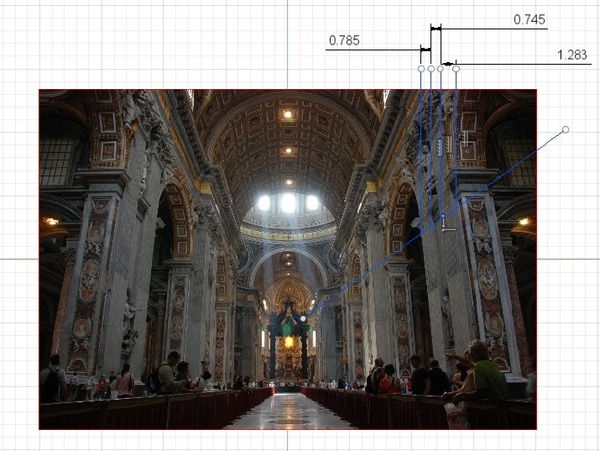
Here the authors investigate whether there are mathematical inaccuracies of perspective in artists' paintings that are undetectable with our naked eyes. Using the cross-ratio method, they find that there are three significant errors in various famous paintings which increase as the structures in the paintings recede from the viewer.

Read More...