Browse Articles

It's better than me: Investigating the psychological risks of AI on self-esteem

Kim et al. | Sep 07, 2026

It's better than me: Investigating the psychological risks of AI on self-esteem

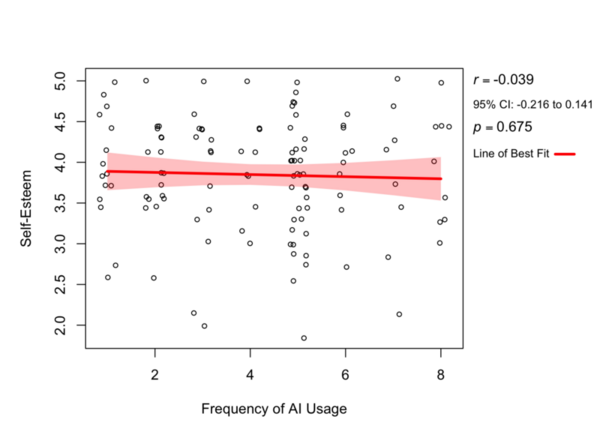
Here the authors investigated whether frequent use of generative AI tools triggers upward social comparison and negatively impacts users' performance self-esteem. Based on a survey of 121 adults, they found no significant relationship between AI usage and self-esteem, concluding that current chatbot interactions do not pose the same psychological threat as peer-based comparisons.

Read More...

Obscurity of eyebrows influences recognition of human emotion and impacts older adolescents

Zhang et al. | Jan 20, 2025

Obscurity of eyebrows influences recognition of human emotion and impacts older adolescents
Image credit: Ernesto Norman

Here, seeking to better understand how facial features provide important visual cues to help convey emotions, the authors evaluated the accuracy and reaction time of participants in regards to experimental photographs where a person's eyebrows were obscured and ones where they were not. Their findings revealed that removing eyebrows resulted in a significant decrease in a participant's ability to recognize anger, with adolescents most likely to misidentify emotions.

Read More...

Antibacterial activity of homemade Indian tomato tamarind soup (rasam) against common pathogens

Eswaran et al. | Oct 04, 2024

Antibacterial activity of homemade Indian tomato tamarind soup (rasam) against common pathogens

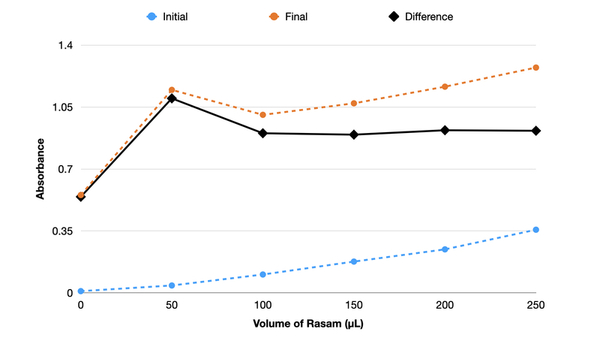
Systematic consumption of traditional foods is a popular way of treating diseases in India. Rasam, a soup of spices and tomato with a tamarind base, is a home remedy for viral infections such as the common cold. Here, we investigate if rasam, prepared under household conditions, exhibits antibacterial activity against Escherichia coli and Staphylococcus aureus, two common pathogenic bacteria. Our results show rasam prepared under household conditions lacks antibacterial activity despite its ingredients possessing such properties.

Read More...

Herbal formulation, HF1 diminishes tumorigenesis: a cytokine study between MCF-7 and BM-MSCs.

Guru et al. | Apr 11, 2022

Herbal formulation, HF1 diminishes tumorigenesis: a cytokine study between MCF-7 and BM-MSCs.

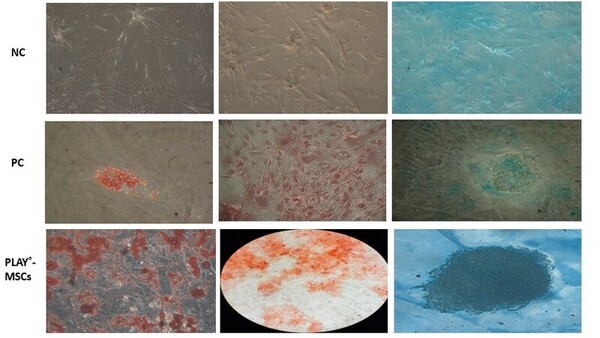
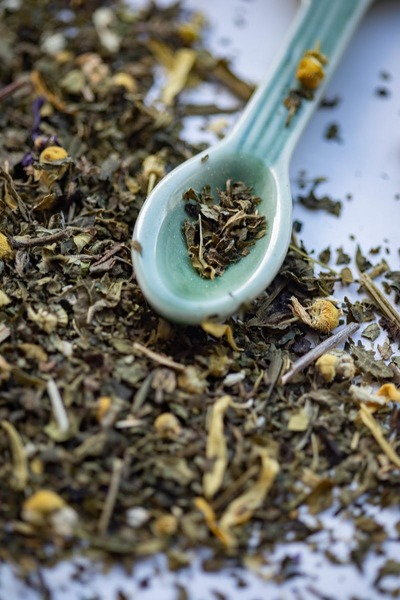
The authors use HF-1, an herbal formation, on bone marrow derived cells as well as breast cancer cells to assess HF-1's ability to prevent tumorigenesis. As metastasis requires coordination of multiple cells in the tumor microenvironment, their findings that HF-1 augments cytokine expression such as VEGF & TGF-B show that HF-1 has potential application to therapeutics.

Read More...

A Data-Centric Analysis of “Stop and Frisk” in New York City

Bhat et al. | Apr 18, 2021

A Data-Centric Analysis of “Stop and Frisk” in New York City

The death of George Floyd has shed light on the disproportionate level of policing affecting non-Whites in the United States of America. To explore whether non-Whites were disproportionately targetted by New York City's "Stop and Frisk" policy, the authors analyze publicly available data on the practice between 2003-2019. Their results suggest African Americans were indeed more likely to be stopped by the police until 2012, after which there was some improvement.

Read More...

Spectroscopic Kinetic Monitoring and Molecular Dynamics Simulations of Biocatalytic Ester Hydrolysis in Non-Aqueous Solvent

Chen et al. | Dec 20, 2020

Spectroscopic Kinetic Monitoring and Molecular Dynamics Simulations of Biocatalytic Ester Hydrolysis in Non-Aqueous Solvent

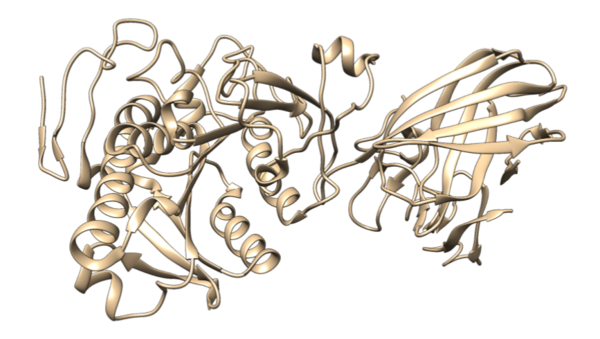
Lipases are a common class of enzymes that catalyze the breakdown of lipids. Here the authors characterize the the activity of pancreatic lipase in different organic solvents using a choloremetric assay, as well as using molecular dynamic simulations. They report that the activity of pancreatic lipase in 5% methanol is more than 25% higher than in water, despite enzyme stability being comparable in both solvents. This suggests that, for industrial applications, using pancreatic lipase in 5% methanol solution might increase yield, compared to just water.

Read More...

The effect of floating plant on water purification: Comparison of the water purification capability of Water Hyacinth, Duckweed, and Azolla

Park et al. | Nov 21, 2020

The effect of floating plant on water purification: Comparison of the water purification capability of Water Hyacinth, Duckweed, and Azolla

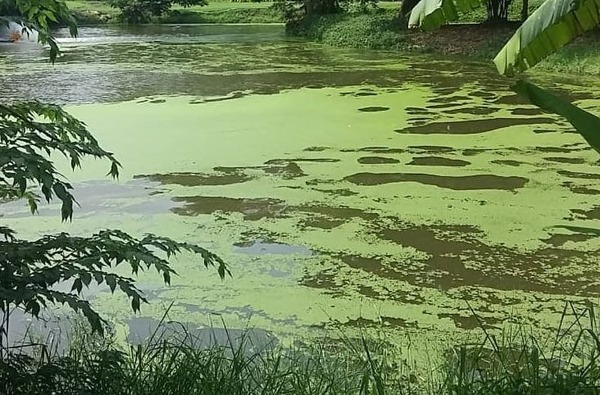
Clean water is a necessity for every household, yet water pollution is a serious problem in many parts of the world and plays a major role in compromising water security in the 21st century. In this paper, the authors address the utility of several plants as natural water purifiers. They estimate the effectiveness of duckweed, hyacinth, and azolla in improving the quality of water from the Mithi river in India by measuring several metrics. They conclude that all three plants are effective in improving water quality, suggesting that these plants as eco-friendly options for water treatment.

Read More...

Investigating the Role of the Novel ESCRT-III Recruitment Factor CCDC11 in HIV Budding: A Potential Target for Antiviral Therapy

Takemaru et al. | Feb 24, 2020

Investigating the Role of the Novel ESCRT-III Recruitment Factor CCDC11 in HIV Budding: A Potential Target for Antiviral Therapy

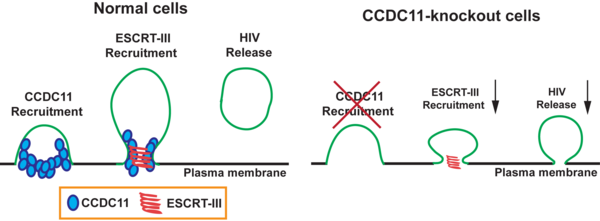
Acquired immunodeficiency syndrome (AIDS) is a life-threatening condition caused by the human immunodeficiency virus (HIV). In this work, Takemaru et al explored the role of Coiled-Coil Domain-Containing 11 (CCDC11) in HIV-1 budding. Their results suggest that CCDC11 is critical for efficient HIV-1 budding, potentially indicating CCDC11 a viable target for antiviral therapeutics without major side effects.

Read More...