Browse Articles

A study of Syrian students' migration motivations, destinations, and return intentions in a time of crisis

Merjaneh et al. | Apr 16, 2026

A study of Syrian students' migration motivations, destinations, and return intentions in a time of crisis
Image credit: Aaron Burden, 2017

This study investigates the migration intentions of Syrian high school and university students amid ongoing conflict and economic instability. Drawing on survey data, the research examines how academic stage influences migration motivations, preferred destinations, and return intentions. The findings reveal a widespread desire to emigrate, driven by educational, economic, and security concerns, highlighting significant implications for Syria’s future workforce and post-conflict recovery.

Read More...

Effects of plant-derived smoke water on germination and growth in stressed plants

Ge et al. | Apr 08, 2026

Effects of plant-derived smoke water on germination and growth in stressed plants

Here the authors investigated the potential of plant-derived smoke water to mitigate the negative impacts of abiotic stressors, such as heat, salinity, and water fluctuations, on the germination and growth of various agricultural crops. Their findings suggest that smoke water, specifically from buckwheat, pea, and radish, significantly improves plant resilience against drought and excessive water stress, offering a viable strategy to bolster food security in the face of climate change.

Read More...

A multi-dimensional analysis of NFL red zone efficiency

Kim et al. | Mar 16, 2026

A multi-dimensional analysis of NFL red zone efficiency
Image credit: Ben Hershey

Here the authors investigated the relationship between offensive play-calling styles and scoring success within the NFL's red zone by analyzing play-by-play data and expected points metrics. Their findings suggest that a conservative approach to play design and execution is more strongly associated with maximizing efficiency and point-value gains than aggressive strategies.

Read More...

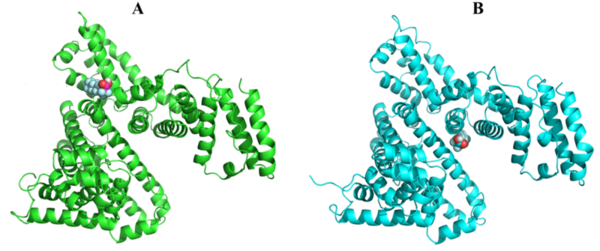
VISTA inhibitor CA170 combined with KRAS vaccine enhances immune response in lung cancer

Giglio et al. | Mar 16, 2026

VISTA inhibitor CA170 combined with <i>KRAS</i> vaccine enhances immune response in lung cancer
Image credit: Robina Weermeijer

Here the authors investigated a combination therapy to target the Kirsten rat sarcoma viral oncogene homolog mutation in lung cancer, by analyzing publicly available data. Their findings indicate that the combination therapy of CA170 and Kvax enhances helper T cell function and improves cytotoxic T lymphocyte infiltration, while Kvax alone drives plasma and memory B cell proliferation.

Read More...

The effect of lead oxide concentrations on the bioluminescence intensity of Panellus stipticus

Park et al. | Mar 02, 2026

The effect of lead oxide concentrations on the bioluminescence intensity of <i>Panellus stipticus</i>

Here the authors investigate the potential of the bioluminescent fungus Panellus stipticus to serve as a sustainable bioindicator for environmental lead contamination. Their findings demonstrate that higher lead concentrations cause a measurable decrease in fungal bioluminescence intensity over time suggesting that the fungus could be an effective tool for detecting lead in an environment.

Read More...

Using satellite surface temperature data to monitor urban heat island

Meister et al. | Feb 13, 2026

Using satellite surface temperature data to monitor urban heat island
Image credit: Meister, Horvath, and Brown de Colstoun

This manuscript investigates the urban heat island (UHI) effect by utilizing two satellite datasets: Landsat (high spatial resolution, lower temporal resolution) and MODIS (lower spatial resolution, high temporal resolution). The authors hypothesized that Landsat would provide better spatial detail, while MODIS would better capture temporal variations. Their analysis in the Washington D.C.–Baltimore region supports these hypotheses, demonstrating that Landsat offers finer spatial details, whereas MODIS provides more consistent seasonal patterns and better detects heatwave frequencies.

Read More...

Quantifying natural recovery of dopamine deficits induced by chronic stress

Josyula et al. | Oct 27, 2025

Quantifying natural recovery of dopamine deficits induced by chronic stress
Image credit: Shawn Day

Here the authors investigated the natural recovery of stress-induced dopamine-related gene deficits in C. elegans by measuring the expression of cat-2 (dopamine biosynthesis) and sod-2 (oxidative stress) following exposure to starvation or hydrocortisone. They found that the reversibility of sod-2 and the expression of cat-2 were highly dependent on the type and severity of the stressor, suggesting that the body's natural ability to recover from dopamine dysfunction has biological limitations.

Read More...