Browse Articles

A Novel Method for Auto-Suturing in Laparoscopic Robotic-Assisted Coronary Artery Bypass Graft (CABG) Anastomosis

Levy et al. | Jun 21, 2018

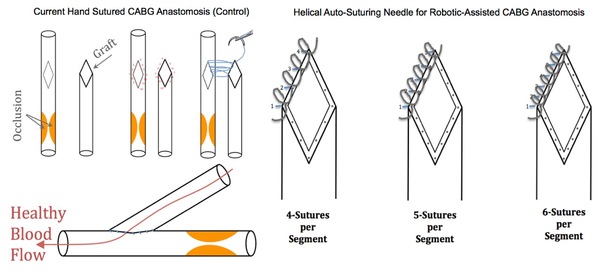
A Novel Method for Auto-Suturing in Laparoscopic Robotic-Assisted Coronary Artery Bypass Graft (CABG) Anastomosis

Levy & Levy tackle the optimization of the coronary artery bypass graft, a life-saving surgical technique that treats artery blockage due to coronary heart disease. The authors develop a novel auto-suturing method that saves time, allows for an increased number of sutures, and improves graft quality over hand suturing. The authors also show that increasing the number of sutures from four to five with their new method significantly improves graft quality. These promising findings may help improve outcomes for patients undergoing surgery to treat coronary heart disease.

Read More...

Characterization of a UPEC DegS Mutant in vitro and in vivo

Bradley et al. | Mar 16, 2015

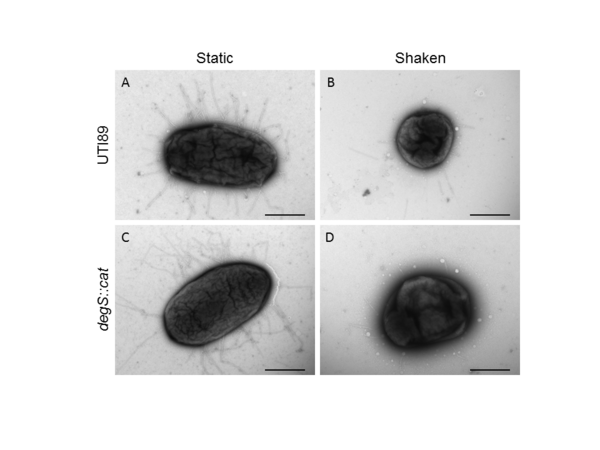
Characterization of a UPEC <em>DegS</em> Mutant <em>in vitro</em> and <em>in vivo</em>

DegS is an integral inner membrane protein in E. coli that helps break down misfolded proteins. When it is mutated, there is a large increase in the production of outer membrane vesicles (OMVs), which are thought to play a role in pathogenesis. This study used mutant strains of uropathogenic E. coli (UPEC) to characterize the role of DegS and OMVs on UPEC virulence.

Read More...

Intra and interspecies control of bacterial growth through extracellular extracts

Howe et al. | Jun 07, 2024

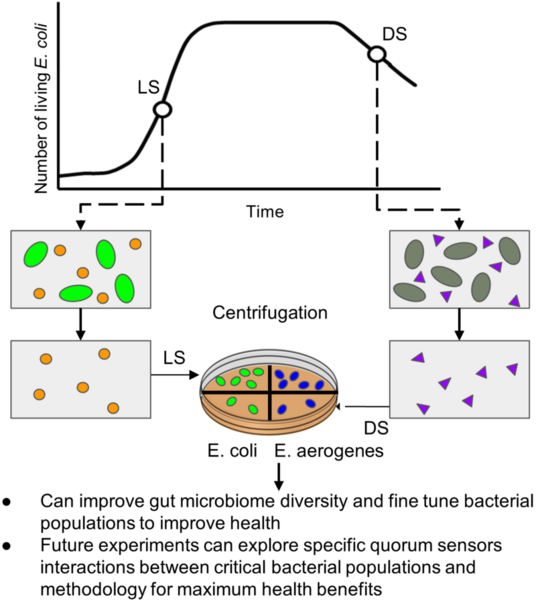
Intra and interspecies control of bacterial growth through extracellular extracts

The study discusses the relationship between bacterial species and the human gut microbiome, emphasizing the role of quorum sensing molecules in bacterial communication and its implications for health. Authors investigated the impact of bacterial supernatants from Escherichia coli (E. coli) on the growth of new E. coli and Enterobacter aerogenes (E. aerogenes) cultures.

Read More...

Strain-specific and photochemically-activated antimicrobial activity of berberine and two analogs

Sun et al. | Nov 17, 2020

Strain-specific and photochemically-activated antimicrobial activity of berberine and two analogs

In this study, the authors investigate the antimicrobial effects of berberine and berberine analogs. Berberine is extracted from plants and is a naturally occurring alkaloid, and is also excited photochemically. Using three different assays, the authors tested whether these compounds would inhibit bacterial growth. They found that these compounds were antibacterial and even more so when used with photoirradiation. This study has important antibacterial implications.

Read More...

The effect of bioenhancers on ampicillin-sulbactam as a treatment against A. baumannii

Balaji et al. | Sep 21, 2024

The effect of bioenhancers on ampicillin-sulbactam as a treatment against <i>A. baumannii<i>

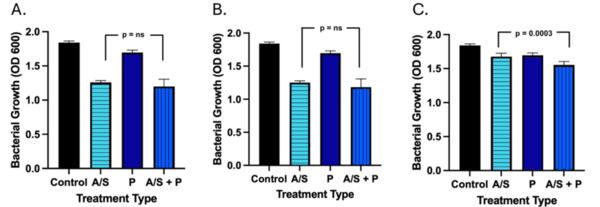
This article explores the potential of piperine, a bioenhancer from black pepper, to improve antibiotic efficacy against antibiotic-resistant Acinetobacter baumannii. By combining piperine with ampicillin-sulbactam, the study demonstrated a significant reduction in bacterial growth for most strains tested, showcasing the promise of bioenhancers in combating resistant pathogens. This research highlights the possibility of reducing the required antibiotic dosage, potentially offering a new strategy in the fight against drug-resistant bacteria.

Read More...

Comparing Virulence of Three T4 Bacteriophage Strains on Ampicillin-Resistant and Sensitive E. coli Bacteria

Hudanich et al. | Dec 09, 2020

Comparing Virulence of Three T4 Bacteriophage Strains on Ampicillin-Resistant and Sensitive <em>E. coli</em> Bacteria

In this study, the authors investigate an alternative way to kill bacteria other than the use of antibiotics, which is useful when considering antibiotic-resistance bacteria. They use bacteriophages, which are are viruses that can infect bacteria, and measure cell lysis. They make some important findings that these bacteriophage can lyse both antibiotic-resistant and non-resistant bacteria.

Read More...