Browse Articles

Quantitative analysis and development of alopecia areata classification frameworks

Dubey et al. | Jun 03, 2024

Quantitative analysis and development of alopecia areata classification frameworks

This article discusses Alopecia areata, an autoimmune disorder causing sudden hair loss due to the immune system mistakenly attacking hair follicles. The article introduces the use of deep learning (DL) techniques, particularly convolutional neural networks (CNN), for classifying images of healthy and alopecia-affected hair. The study presents a comparative analysis of newly optimized CNN models with existing ones, trained on datasets containing images of healthy and alopecia-affected hair. The Inception-Resnet-v2 model emerged as the most effective for classifying Alopecia Areata.

Read More...

Transfer learning and data augmentation in osteosarcoma cancer detection

Chu et al. | Jun 03, 2023

Transfer learning and data augmentation in osteosarcoma cancer detection
Image credit: Chu and Khan 2023

Osteosarcoma is a type of bone cancer that affects young adults and children. Early diagnosis of osteosarcoma is crucial to successful treatment. The current methods of diagnosis, which include imaging tests and biopsy, are time consuming and prone to human error. Hence, we used deep learning to extract patterns and detect osteosarcoma from histological images. We hypothesized that the combination of two different technologies (transfer learning and data augmentation) would improve the efficacy of osteosarcoma detection in histological images. The dataset used for the study consisted of histological images for osteosarcoma and was quite imbalanced as it contained very few images with tumors. Since transfer learning uses existing knowledge for the purpose of classification and detection, we hypothesized it would be proficient on such an imbalanced dataset. To further improve our learning, we used data augmentation to include variations in the dataset. We further evaluated the efficacy of different convolutional neural network models on this task. We obtained an accuracy of 91.18% using the transfer learning model MobileNetV2 as the base model with various geometric transformations, outperforming the state-of-the-art convolutional neural network based approach.

Read More...

Motion tracking and analysis of spray water droplets studied by high-speed photography using an iPhone X

Geng et al. | Sep 11, 2021

Motion tracking and analysis of spray water droplets  studied by high-speed photography using an iPhone X

Smartphones are not only becoming an inseparable part of our daily lives, but also a low-cost, powerful optical imaging tool for more and more scientific research applications. In this work, smartphones were used as a low-cost, high-speed, photographic alternative to expensive equipment, such as those typically found in scientific research labs, to accurately perform motion tracking and analysis of fast-moving objects. By analyzing consecutive images, the speed and flight trajectory of water droplets in the air were obtained, thereby enabling us to estimate the area of the water droplets landing on the ground.

Read More...

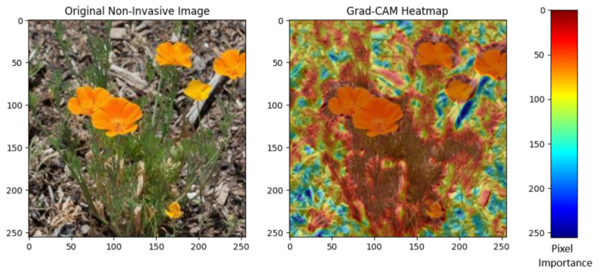
Comparative study on three machine learning models in novel autonomous drone-based detection of invasive plant Brassica nigra

Ho et al. | Jul 05, 2026

Comparative study on three machine learning models in novel autonomous drone-based detection of invasive plant <em>Brassica nigra</em>

Autonomous drone imaging combined with machine learning offers a promising approach for early detection of invasive species. In this study, students built an autonomous drone and compared three models: CNN, SGDC, and XGBoost, to identify Brassica nigra from aerial footage. Their results show that CNNs most effectively recognize key visual features, demonstrating strong potential for supporting conservation and invasive plant management.

Read More...

Influence of induction heating on static recrystallization kinetics of AISI 4130 steel

Chen et al. | Apr 30, 2026

Influence of induction heating on static recrystallization kinetics of AISI 4130 steel

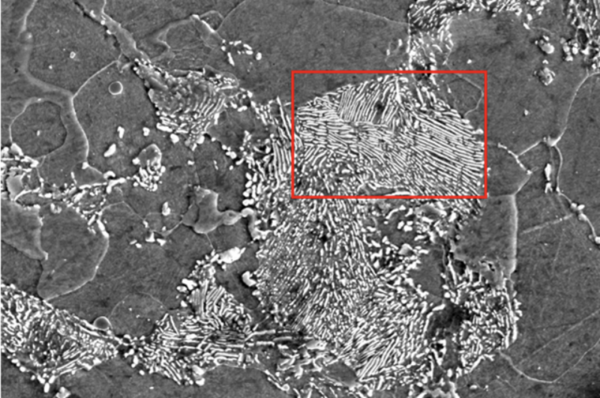
This article investigates whether induction heating can speed up static recrystallization in AISI 4130 steel compared with traditional radiant heating. It was found that induction-heated samples recrystallized faster, softened more quickly, and showed earlier microstructural changes like grain nucleation and pearlite spheroidization, suggesting induction heating could be a more efficient alternative for industrial metal heat treatments.

Read More...