
The authors looked at how students performed on standardized tests when they were taught material via memorization vs. conceptual based approaches.
Read More...The impact of conceptual versus memorization-based teaching methods on student performance
The authors looked at how students performed on standardized tests when they were taught material via memorization vs. conceptual based approaches.
Read More...English learner status in Florida public schools is correlated with significantly lower graduation rates
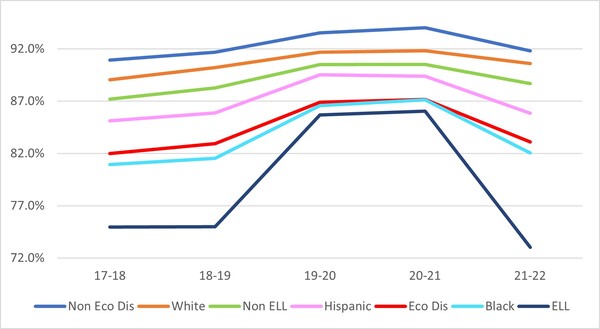
The authors explore factors affecting graduation rates of students learning English as a second language across Florida counties.
Read More...Changing electronic use behavior in adolescents while studying: An interventional psychology experiment

Here, the authors investigated the effects of an interventional psychology on the study habits of high school students specifically related to the use of electronic distractions such as social media or texting, listening to music, or watching TV. They reported varying degrees of success between the control and intervention groups, suggesting that the methods of habit-breaking for students merits further study.
Read More...Does technology help or hurt learning? Evidence from middle school and high school students

Here, recognizing the vastly different opinion held regarding device usage, the authors considered the effects of technology use on middle and high school students' learning effectiveness. Using an anonymous online survey they found partial support that device use at school increases learning effectiveness, but found strong support for a negative effect of technology use at home on learning effectiveness. Based on their findings they suggest that the efficacy of technology depends on environmental context along with other important factors that need consideration.
Read More...Can the Growth Mindset Encourage Girls to Pursue “Male” Careers?

Despite major advances in gender equality, men still far outnumber women in science, technology, engineering and math (STEM) professions. The purpose of this project was to determine whether mindset could affect a student’s future career choices and whether this effect differed based on gender. When looking within the gender groups, 86% of females who had a growth mindset were likely to consider a “male” career, whereas only 16% of females with fixed mindset would likely to consider a “male” career. Especially for girls, cultivating a growth mindset may be a great strategy to address the problem of fewer girls picking STEM careers.
Read More...Misconceptions regarding heart disease are prevalent among american adults and minors

In this study, the authors created a survey to assess misconceptions and knowledge deficits regarding cardiovascular diseases exist among US adults and minors.
Read More...