Browse Articles

The sweetened actualities of neural membrane proteins: A computational structural analysis

Chauhan et al. | Nov 03, 2022

The sweetened actualities of neural membrane proteins: A computational structural analysis

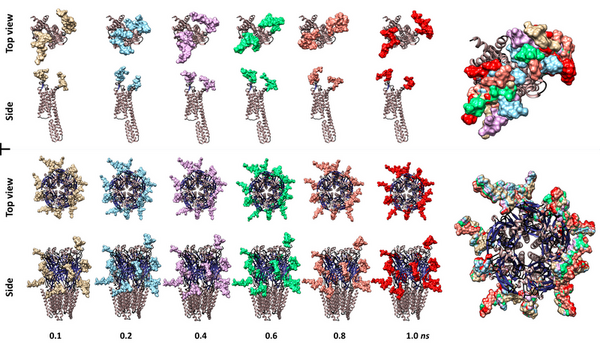
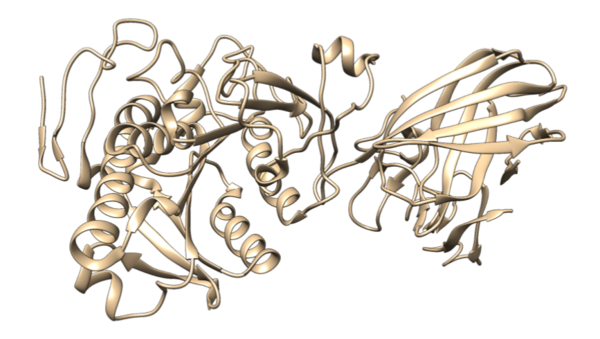
Here, seeking to better understand the roles of glycans in the receptors of active sites of neuronal cells, the authors used molecular dynamics simulations to to uncover the dynamic nature of N-glycans on membrane proteins. The authors suggest the study of theinteractions of these membrane poreins could provide future potential therapeutic targets to treat mental diseases.

Read More...

Development of a novel machine learning platform to identify structural trends among NNRTI HIV-1 reverse transcriptase inhibitors

Ashok et al. | Jun 24, 2022

Development of a novel machine learning platform to identify structural trends among NNRTI HIV-1 reverse transcriptase inhibitors

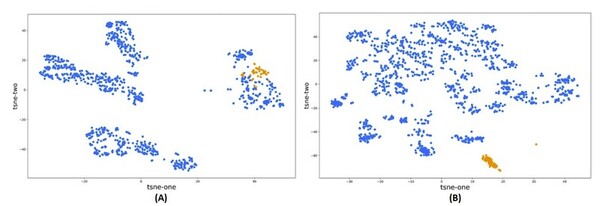
With advancements in machine learning a large data scale, high throughput virtual screening has become a more attractive method for screening drug candidates. This study compared the accuracy of molecular descriptors from two cheminformatics Mordred and PaDEL, software libraries, in characterizing the chemo-structural composition of 53 compounds from the non-nucleoside reverse transcriptase inhibitors (NNRTI) class. The classification model built with the filtered set of descriptors from Mordred was superior to the model using PaDEL descriptors. This approach can accelerate the identification of hit compounds and improve the efficiency of the drug discovery pipeline.

Read More...

Prediction of molecular energy using Coulomb matrix and Graph Neural Network

Hazra et al. | Feb 01, 2022

Prediction of molecular energy using Coulomb matrix and Graph Neural Network

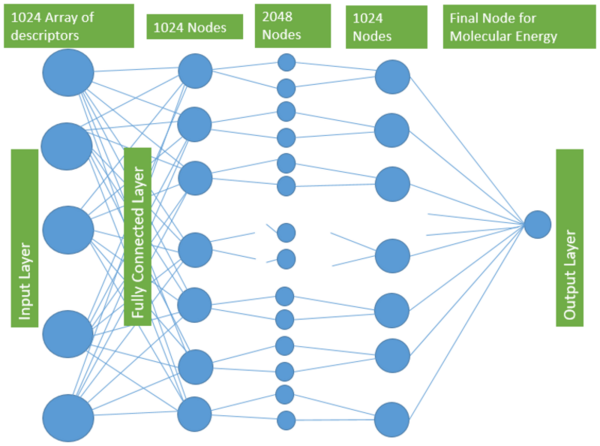
With molecular energy being an integral element to the study of molecules and molecular interactions, computational methods to determine molecular energy are used for the preservation of time and resources. However, these computational methods have high demand for computer resources, limiting their widespread feasibility. The authors of this study employed machine learning to address this disadvantage, utilizing neural networks trained on different representations of molecules to predict molecular properties without the requirement of computationally-intensive processing. In their findings, the authors determined the Feedforward Neural Network, trained by two separate models, as capable of predicting molecular energy with limited prediction error.

Read More...

Analysis of Patterns in the Harmonics of a String with Artificially Enforced Nodes

Jain et al. | Jan 28, 2021

Analysis of Patterns in the Harmonics of a String with Artificially Enforced Nodes

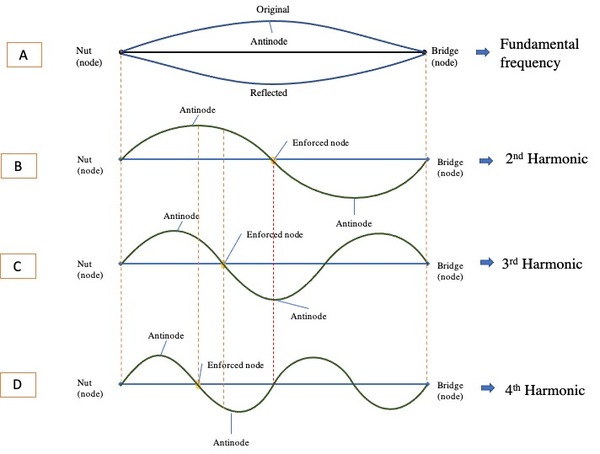
This study examines the higher harmonics in an oscillating string by analyzing the sound produced by a guitar with a spectrum analyzer. The authors mathematically hypothesized that the higher harmonics in the series of the directly excited 2nd harmonic contain the alternate frequencies of the fundamental series, the higher harmonics of the directly excited 3rd harmonic series contain every third frequency of fundamental series, and so on. To test the hypotheses, they enforced artificial nodes to excite the 2nd, 3rd, and 4th harmonics directly, and analyzed the resulting spectrum to verify the mathematical hypothesis. The data analysis corroborates both hypotheses.

Read More...

Spectroscopic Kinetic Monitoring and Molecular Dynamics Simulations of Biocatalytic Ester Hydrolysis in Non-Aqueous Solvent

Chen et al. | Dec 20, 2020

Spectroscopic Kinetic Monitoring and Molecular Dynamics Simulations of Biocatalytic Ester Hydrolysis in Non-Aqueous Solvent

Lipases are a common class of enzymes that catalyze the breakdown of lipids. Here the authors characterize the the activity of pancreatic lipase in different organic solvents using a choloremetric assay, as well as using molecular dynamic simulations. They report that the activity of pancreatic lipase in 5% methanol is more than 25% higher than in water, despite enzyme stability being comparable in both solvents. This suggests that, for industrial applications, using pancreatic lipase in 5% methanol solution might increase yield, compared to just water.

Read More...

The Effect of the Human MeCP2 gene on Drosophila melanogaster behavior and p53 inhibition as a model for Rett Syndrome

Ganga et al. | Sep 07, 2020

The Effect of the Human <i>MeCP2</i> gene on <i>Drosophila melanogaster</i> behavior and p53 inhibition as a model for Rett Syndrome

In this study, the authors observe if the symptoms of Rett Syndrome, a neurodegenerative disease in humans, are reflected in Drosophila melanogaster. This was achieved by differentiating the behavior and physical aspects of wild-type flies from flies expressing the full-length MeCP2 gene and the mutated MeCP2 gene (R106W). After conducting these experiments, some of the Rett Syndrome symptoms were recapitulated in Drosophila, and a subset of those were partially ameliorated by the introduction of pifithrin-alpha.

Read More...

Pancreatic Adenocarcinoma: An Analysis of Drug Therapy Options through Interaction Maps and Graph Theory

Gupta et al. | Feb 04, 2014

Pancreatic Adenocarcinoma: An Analysis of Drug Therapy Options through Interaction Maps and Graph Theory

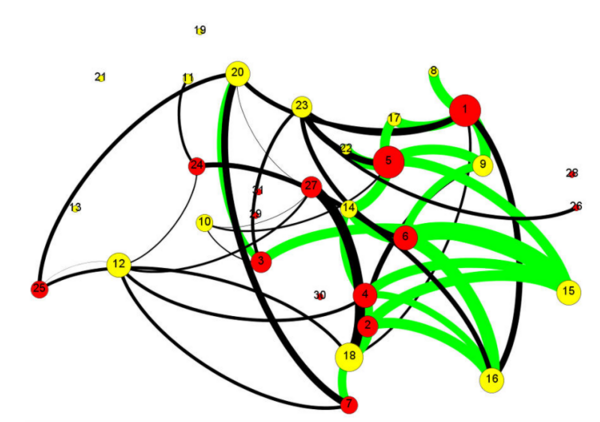
Cancer is often caused by improper function of a few proteins, and sometimes it takes only a few proteins to malfunction to cause drastic changes in cells. Here the authors look at the genes that were mutated in patients with a type of pancreatic cancer to identify proteins that are important in causing cancer. They also determined which proteins currently lack effective treatment, and suggest that certain proteins (named KRAS, CDKN2A, and RBBP8) are the most important candidates for developing drugs to treat pancreatic cancer.

Read More...

Innovative fake health news detection: Integrating emotional features into graph neural networks

Wang et al. | Jul 03, 2026

Innovative fake health news detection: Integrating emotional features into graph neural networks
Image credit: Wang and Wang

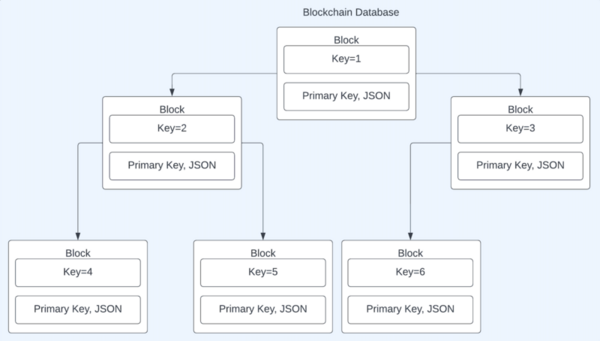
This manuscript tackles a major social issue in the health news sector, with social media being one of the primary sources of information and a prime spot to propagate fake news. The author proposes X-HND , which is a unique architecture that combines emotional and contextual analysis in a Graph Neural Network to accurately detect fake news. This was a multi-step process which involved the creation of a custom health news dataset (HNDataset), and an emotional variant that uses RoBERTa to extract emotion. These dataset were then used to prove the hypothesis that accuracy increases when the custom dataset is used to train the model and that with the integration of emotion capture, the detection accuracy increases further.

Read More...