Browse Articles

Modeling and optimization of epidemiological control policies through reinforcement learning

Rao et al. | May 23, 2023

Modeling and optimization of epidemiological control policies through reinforcement learning

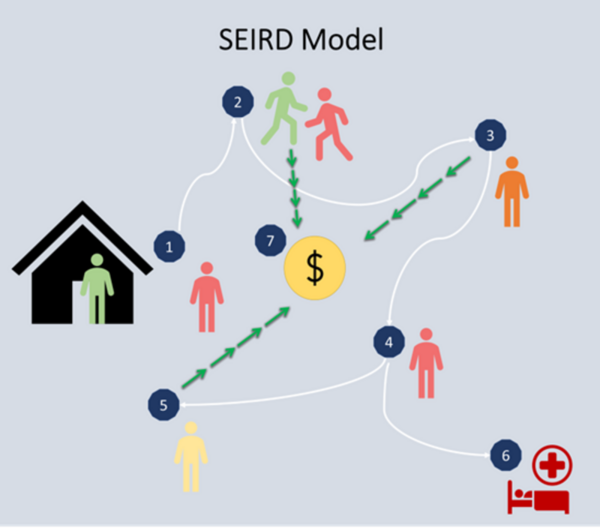
Pandemics involve the high transmission of a disease that impacts global and local health and economic patterns. Epidemiological models help propose pandemic control strategies based on non-pharmaceutical interventions such as social distancing, curfews, and lockdowns, reducing the economic impact of these restrictions. In this research, we utilized an epidemiological Susceptible, Exposed, Infected, Recovered, Deceased (SEIRD) model – a compartmental model for virtually simulating a pandemic day by day.

Read More...

Depression detection in social media text: leveraging machine learning for effective screening

Shin et al. | Mar 25, 2025

Depression detection in social media text: leveraging machine learning for effective screening

Depression affects millions globally, yet identifying symptoms remains challenging. This study explored detecting depression-related patterns in social media texts using natural language processing and machine learning algorithms, including decision trees and random forests. Our findings suggest that analyzing online text activity can serve as a viable method for screening mental disorders, potentially improving diagnosis accuracy by incorporating both physical and psychological indicators.

Read More...

The impact of greenhouse gases, regions, and sectors on future temperature anomaly with the FaIR model

Kosaraju et al. | Jul 29, 2024

The impact of greenhouse gases, regions, and sectors on future temperature anomaly with the FaIR model

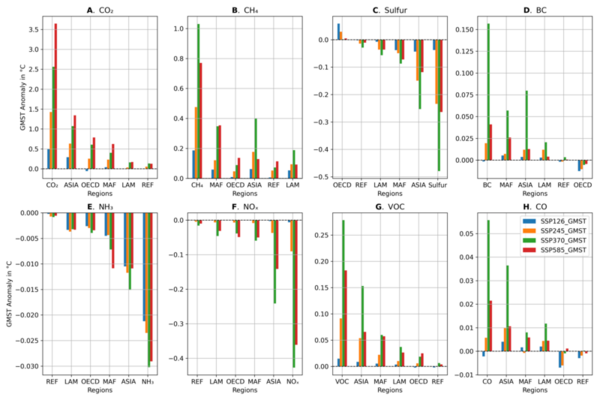
This study explores how different economic sectors, geographic regions, and greenhouse gas types might affect future global mean surface temperature (GMST) anomalies differently from historical patterns. Using the Finite Amplitude Impulse Response (FaIR) model and four Shared Socioeconomic Pathways (SSPs) — SSP126, SSP245, SSP370, and SSP585 — the research reveals that future contributions to GMST anomalies.

Read More...

Scientific project in physics "Carbonated liquids and carbonation level"

Irina et al. | Jan 21, 2024

Scientific project in physics "Carbonated liquids and carbonation level"

In our work we followed the formation of gas bubbles on the surface of the vessel walls in different carbonated liquids, over different time intervals, at different temperatures and in vessels made of different materials. Our results made it possible to identify patterns affecting the process of formation and disappearance of carbon dioxide bubbles.

Read More...

How does light affect the distribution of Euglena sp. and Tetrahymena pyriformis

Singh et al. | Mar 03, 2022

How does light affect the distribution of <em>Euglena sp.</em> and <em>Tetrahymena pyriformis</em>

In this article, the authors explored the locomotory movement of Euglena sp. and Tetrahymena pyriformis in response to light. Such research bears relevance to the migration and distribution patterns of both T. pyriformis and Euglena as they differ in their method of finding sustenance in their native environments. With little previous research done on the exploration of a potential response to photostimulation enacted by T. pyriformis, the authors found that T. pyriformis do not bias in distribution towards areas of light - unlike Euglena, which displayed an increased prevalence in areas of light.

Read More...

Measuring effects of caffeine and melatonin on learning trends of Zebrafish juveniles

Wei et al. | Jun 28, 2026

Measuring effects of caffeine and melatonin on learning trends of Zebrafish juveniles

This study investigates how caffeine and melatonin affect learning in adolescent zebrafish, serving as a model for human teens. Using an automated system to track behavior, we found that melatonin slowed learning while caffeine caused erratic, inconsistent responses, suggesting both substances can negatively impact adolescent learning patterns. These findings highlight the need for further research into their physiological effects and potential implications for human adolescents.

Read More...

Large-scale brain network connectivity under anxiety induced by naturalistic story listening

Chang et al. | Jun 03, 2026

Large-scale brain network connectivity under anxiety induced by naturalistic story listening

This study found that anxiety induced by a suspenseful story increased communication between the brain’s salience, default mode, and central executive networks, with the central executive network acting as a bridge during peak tension. These findings suggest that anxiety alters large-scale brain connectivity patterns and may help inform future diagnostic tools and personalized treatments for anxiety disorders.

Read More...