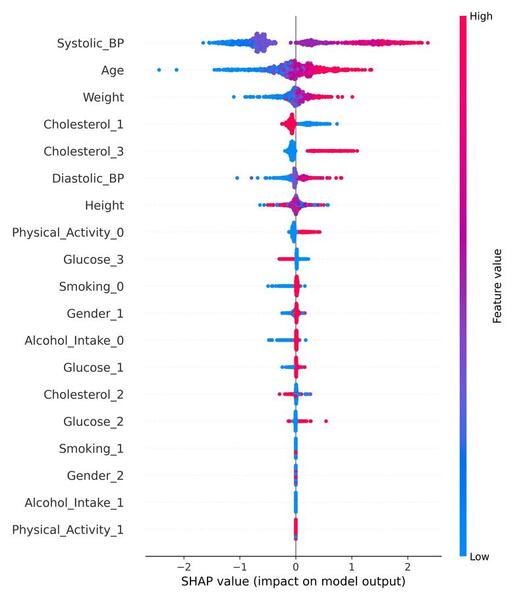
The authors test the effectiveness of machine learning to predict onset of cardiovascular disease.
Read More...Cardiovascular Disease Prediction Using Supervised Ensemble Machine Learning and Shapley Values
The authors test the effectiveness of machine learning to predict onset of cardiovascular disease.
Read More...Automated classification of nebulae using deep learning & machine learning for enhanced discovery
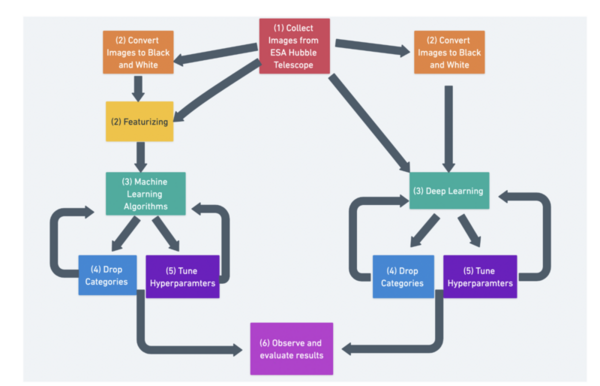
There are believed to be ~20,000 nebulae in the Milky Way Galaxy. However, humans have only cataloged ~1,800 of them even though we have gathered 1.3 million nebula images. Classification of nebulae is important as it helps scientists understand the chemical composition of a nebula which in turn helps them understand the material of the original star. Our research on nebulae classification aims to make the process of classifying new nebulae faster and more accurate using a hybrid of deep learning and machine learning techniques.
Read More...A land use regression model to predict emissions from oil and gas production using machine learning
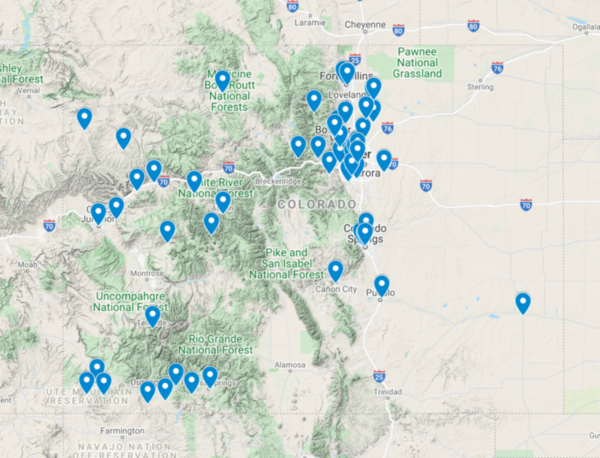
Emissions from oil and natural gas (O&G) wells such as nitrogen dioxide (NO2), volatile organic compounds (VOCs), and ozone (O3) can severely impact the health of communities located near wells. In this study, we used O&G activity and wind-carried emissions to quantify the extent to which O&G wells affect the air quality of nearby communities, revealing that NO2, NOx, and NO are correlated to O&G activity. We then developed a novel land use regression (LUR) model using machine learning based on O&G prevalence to predict emissions.
Read More...Prediction of preclinical Aβ deposit in Alzheimer’s disease mice using EEG and machine learning
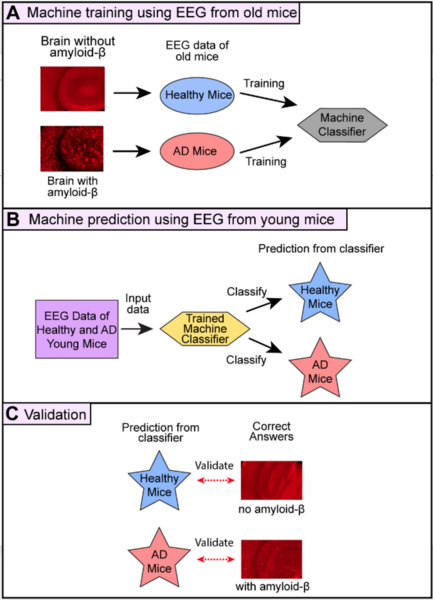
Alzheimer’s disease (AD) is a common disease affecting 6 million people in the U.S., but no cure exists. To create therapy for AD, it is critical to detect amyloid-β protein in the brain at the early stage of AD because the accumulation of amyloid-β over 20 years is believed to cause memory impairment. However, it is difficult to examine amyloid-β in patients’ brains. In this study, we hypothesized that we could accurately predict the presence of amyloid-β using EEG data and machine learning.
Read More...Predicting asthma-related emergency department visits and hospitalizations with machine learning techniques
Seeking to investigate the effects of ambient pollutants on human respiratory health, here the authors used machine learning to examine asthma in Lost Angeles County, an area with substantial pollution. By using machine learning models and classification techniques, the authors identified that nitrogen dioxide and ozone levels were significantly correlated with asthma hospitalizations. Based on an identified seasonal surge in asthma hospitalizations, the authors suggest future directions to improve machine learning modeling to investigate these relationships.
Read More...Using data science along with machine learning to determine the ARIMA model’s ability to adjust to irregularities in the dataset
Auto-Regressive Integrated Moving Average (ARIMA) models are known for their influence and application on time series data. This statistical analysis model uses time series data to depict future trends or values: a key contributor to crime mapping algorithms. However, the models may not function to their true potential when analyzing data with many different patterns. In order to determine the potential of ARIMA models, our research will test the model on irregularities in the data. Our team hypothesizes that the ARIMA model will be able to adapt to the different irregularities in the data that do not correspond to a certain trend or pattern. Using crime theft data and an ARIMA model, we determined the results of the ARIMA model’s forecast and how the accuracy differed on different days with irregularities in crime.
Read More...Propagation of representation bias in machine learning
Using facial recognition as a use-case scenario, we attempt to identify sources of bias in a model developed using transfer learning. To achieve this task, we developed a model based on a pre-trained facial recognition model, and scrutinized the accuracy of the model’s image classification against factors such as age, gender, and race to observe whether or not the model performed better on some demographic groups than others. By identifying the bias and finding potential sources of bias, his work contributes a unique technical perspective from the view of a small scale developer to emerging discussions of accountability and transparency in AI.
Read More...Predicting and explaining illicit financial flows in developing countries: A machine learning approach
The authors looked at the ability of different machine learning algorithms to predict the level of financial corruption in different countries.
Read More...Advancing pediatric cancer predictions through generative artificial intelligence and machine learning
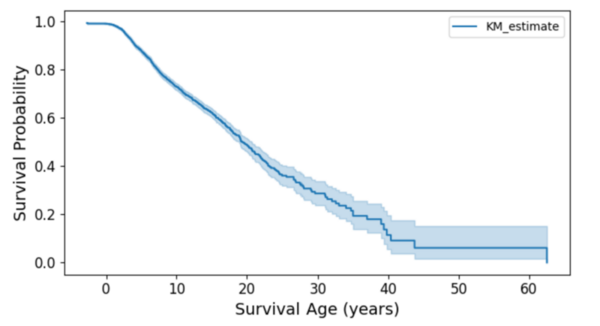
Pediatric cancers pose unique challenges due to their rarity and distinct biological factors, emphasizing the need for accurate survival prediction to guide treatment. This study integrated generative AI and machine learning, including synthetic data, to analyze 9,184 pediatric cancer patients, identifying age at diagnosis, cancer types, and anatomical sites as significant survival predictors. The findings highlight the potential of AI-driven approaches to improve survival prediction and inform personalized treatment strategies, with broader implications for innovative healthcare applications.
Read More...Identifying factors, such as low sleep quality, that predict suicidal thoughts using machine learning
Sadly, around 800,000 people die by suicide worldwide each year. Dong and Pearce analyze health survey data to identify associations between suicidal ideation and relevant variables, such as sleep quality, hopelessness, and anxious behavior.
Read More...