Browse Articles

Differentiation of Waste Plastic Pyrolysis Fuels to Conventional Diesel Fuel

Jewison et al. | May 25, 2018

Differentiation of Waste Plastic Pyrolysis Fuels to Conventional Diesel Fuel

Plastic pollution and energy shortages are pressing issues in today’s world. The authors examined whether waste plastic pyrolysis fuels are similar to conventional diesel and, thus, a plausible alternative fuel. Results showed that waste plastic pyrolysis fuels did not match up to diesel overall, though several fuels came close in calorific value.

Read More...

Mechanistic deconvolution of autoreduction in tetrazolium-based cell viability assays

Tran et al. | Jul 12, 2024

Mechanistic deconvolution of autoreduction in tetrazolium-based cell viability assays

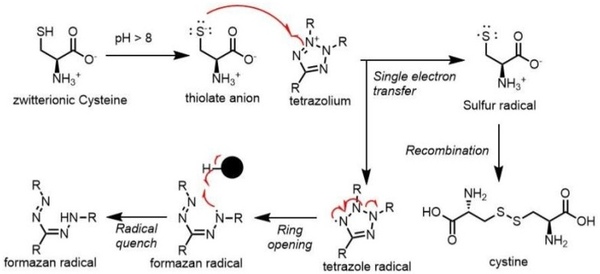
Optical reporters like tetrazolium dyes, exemplified by 5-diphenyl tetrazolium bromide (MTT), are effective tools for quantifying cellular responses under experimental conditions. These dyes assess cell viability by producing brightly-colored formazan dyes when reduced inside active cells. However, certain small molecules, including reducing agents like ascorbic acid, cysteine, and glutathione (GSH), can interfere with MTT assays, potentially compromising accuracy.

Read More...

Rhizosphere metagenome analysis and wet-lab approach to derive optimal strategy for lead remediation in situ

Bhat et al. | Jul 18, 2023

Rhizosphere metagenome analysis and wet-lab approach to derive optimal strategy for lead remediation <i>in situ</i>
Image credit: Karolina Grabowska

The Environmental Protection Agency (EPA) reports a significant number of heavy metal-contaminated sites across the United States. To address this public health concern, rhizoremediation using microbes has emerged as a promising solution. Here, a combination of soil microbes were inoculated in the rhizosphere in soil contaminated with 500 parts per million (ppm) of lead. Results showed rhizoremediation is an effective bioremediation strategy and may increase crop productivity by converting nonarable lands into arable lands.

Read More...