Browse Articles

Quantitatively evaluating changes in art critique journals’ use of moral language across time

Chang et al. | Oct 23, 2026

Quantitatively evaluating changes in art critique journals’ use of moral language across time
Image credit: Chang and Mahmoud

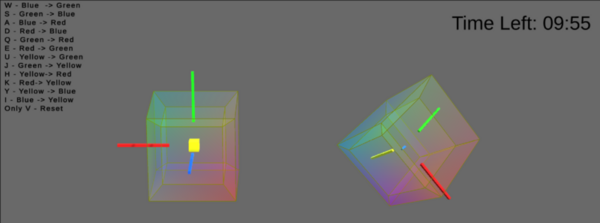
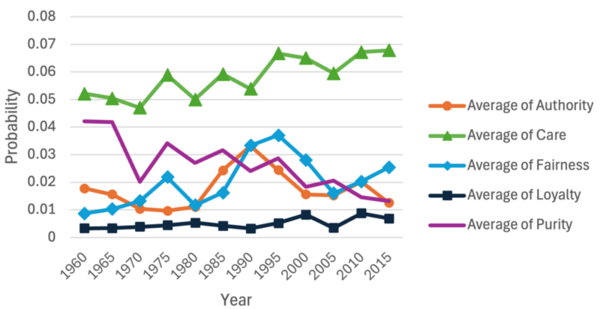
The authors use MoralBERT, a BERT-based machine learning model, to analyze the prevalence and evolution of moral language in art critique journals from 1960 to 2015. They draw on Moral Foundations Theory to examine changes in five virtue and five vice foundations over time. They discover slight increases in degradation and care and a decrease in purity among otherwise stable patterns. The study is a novel application of computational moral analysis in a domain not typically associated with such tools. Although the moral signals were relatively faint, the study offers insights into shifting art world discourses and models an exciting method for future inquiry.

Read More...

Understanding the impossibility of machine learning fairness with data examples

Pillutla et al. | Sep 04, 2026

Understanding the impossibility of machine learning fairness with data examples

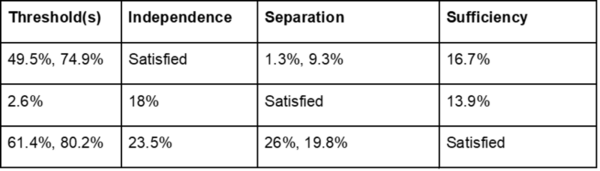
Machine learning systems are often expected to make fair decisions, yet the most widely used fairness criteria—independence, separation, and sufficiency—cannot generally be satisfied at the same time. In this study, students tested these criteria using a logistic regression model on a real-world student performance dataset and found that each criterion was met only at different prediction thresholds, with no threshold satisfying all three simultaneously. These results illustrate the inherent trade-offs in algorithmic fairness and highlight why achieving perfectly fair machine learning models is often impossible in practice.

Read More...

Comparative analysis of player ability, game size, and ideal starting positions in Nim games

Sinha et al. | Aug 02, 2026

Comparative analysis of player ability, game size, and ideal starting positions in Nim games
Image credit: Immo Wegmann

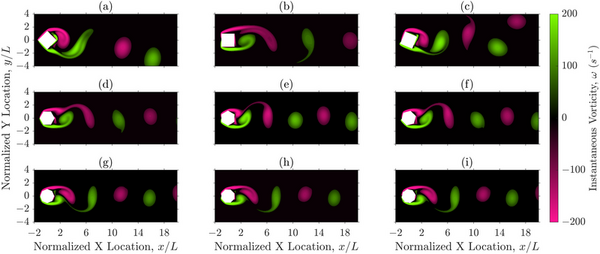
Here the authors investigated the impact of player ability versus starting positions in the game of Nim under imperfect play, hypothesizing that player skill becomes the primary determinant of outcomes as pile sizes grow. Through computational simulations and a mathematical model, they demonstrated that favorable starting positions lose their advantage over time and provide key insights to help improve reinforcement learning algorithms in abstract, complex decision-making environments.

Read More...

Comparative study on three machine learning models in novel autonomous drone-based detection of invasive plant Brassica nigra

Ho et al. | Jul 05, 2026

Comparative study on three machine learning models in novel autonomous drone-based detection of invasive plant <em>Brassica nigra</em>

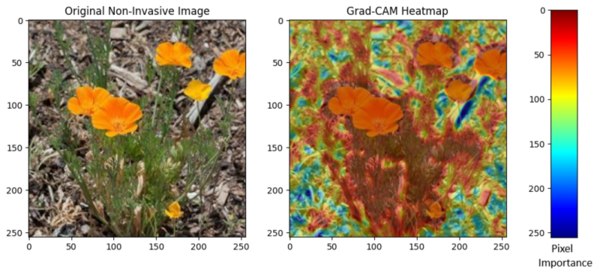
Autonomous drone imaging combined with machine learning offers a promising approach for early detection of invasive species. In this study, students built an autonomous drone and compared three models: CNN, SGDC, and XGBoost, to identify Brassica nigra from aerial footage. Their results show that CNNs most effectively recognize key visual features, demonstrating strong potential for supporting conservation and invasive plant management.

Read More...

Analysis of the catalytic efficiency of spent coffee grounds and titanium dioxide using UV-Vis spectroscopy

Jahng et al. | Dec 09, 2025

Analysis of the catalytic efficiency of spent coffee grounds and titanium dioxide using UV-Vis spectroscopy
Image credit: Jahng and Kim

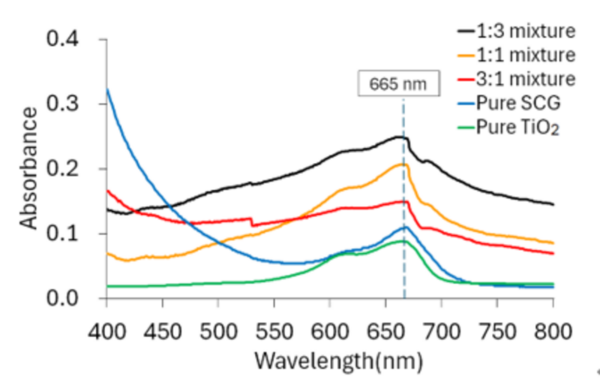
This paper looks at using spent coffee grounds as a partial substitute for titanium dioxide (TiO2) as a catalyst for chemical reactions. Using UV-Vis spectrophotometry, they found that adding the coffee grounds to TiO2 in a 3:1 ratio, there is still meaningful catalytic activity. This offers a cheaper solution than just using pure TiO2.

Read More...