Browse Articles

Attitudes towards mental health in Indians who practice yoga regularly and those who do not

Komar et al. | Jul 13, 2022

Attitudes towards mental health in Indians who practice yoga regularly and those who do not

Whether it is through implicit association or intentional practice, yoga has been known to help individuals maintain good mental health. However, many communities, such as South Asian communities, often project the stereotype that embodies neglecting topics such as mental health and considering them taboo. In this online survey-based study, the authors focused on examining whether yoga would alter individuals’ attitudes toward mental health. They hypothesized that 1) participants who regularly practiced yoga would be more familiar with the term mental health, 2) participants who practiced yoga would value their mental health more, and 3) participants who practiced yoga regularly would be more open about their mental health and be more likely to reach out for professional help if needed. They did not find a statistical significance for any of our hypotheses which suggests that yoga may not have an effect on perceptions of mental health in yoga-practicing Indian adults.

Read More...

Analysis of reduction potentials to determine the most efficient metals for electrochemical cell alternatives

Carroll et al. | Jul 10, 2020

Analysis of reduction potentials to determine the most efficient metals for electrochemical cell alternatives

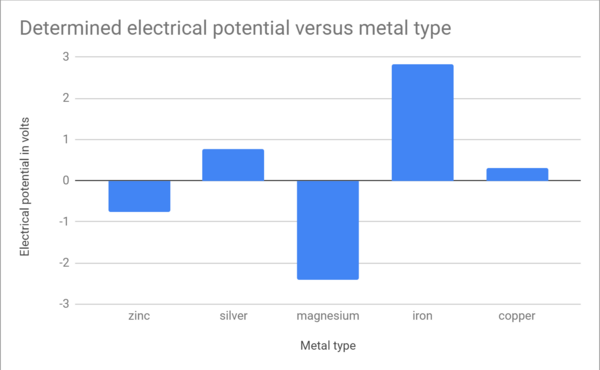
In this study, the authors investigate what metals make the most efficient electrochemical cells, which are batteries that use the difference in electrical potential to generate electricity. Calculations predicted that a cell made of iron and magnesium would have the highest efficiency. Construction of an electrochemical cell of iron and magnesium produced voltages close to the theoretical voltage predicted. These findings are important as work continues towards making batteries with the highest storage efficiency possible.

Read More...

The effects of COVID-19 pandemic social isolation on the mental and physical health of the general population

Cinque et al. | Oct 15, 2022

The effects of COVID-19 pandemic social isolation on the mental and physical health of the general population

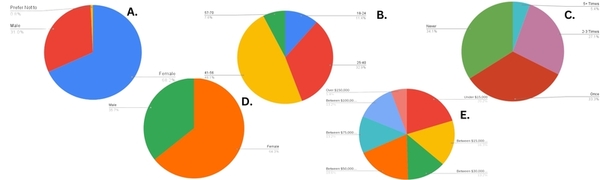
Here, seeking to better understand on the effects of social isolation during the COVID-19 pandemic, the authors used a survey during April and May of 2020 of participants primarily in Long Island, NY to assess the physical and mental health of the general population. They found negative impacts to physical health and increases in depressive symptoms and feelings of loneliness across all groups. More significant increases in negative mental health symptoms were observed in younger age groups and amongst women.

Read More...

Depression detection in social media text: leveraging machine learning for effective screening

Shin et al. | Mar 25, 2025

Depression detection in social media text: leveraging machine learning for effective screening

Depression affects millions globally, yet identifying symptoms remains challenging. This study explored detecting depression-related patterns in social media texts using natural language processing and machine learning algorithms, including decision trees and random forests. Our findings suggest that analyzing online text activity can serve as a viable method for screening mental disorders, potentially improving diagnosis accuracy by incorporating both physical and psychological indicators.

Read More...

Early detection of student burnout using data science: a study of behavioral and psychological indicators

Baber et al. | Jul 13, 2026

Early detection of student burnout using data science: a study of behavioral and psychological indicators

This study examined behavioral and psychological predictors of burnout among high school and university students in Pakistan using survey data and machine-learning models. Shorter sleep and greater mental fatigue—especially fatigue—were associated with higher burnout risk, while a Random Forest model successfully identified students at risk of burnout.

Read More...