Browse Articles

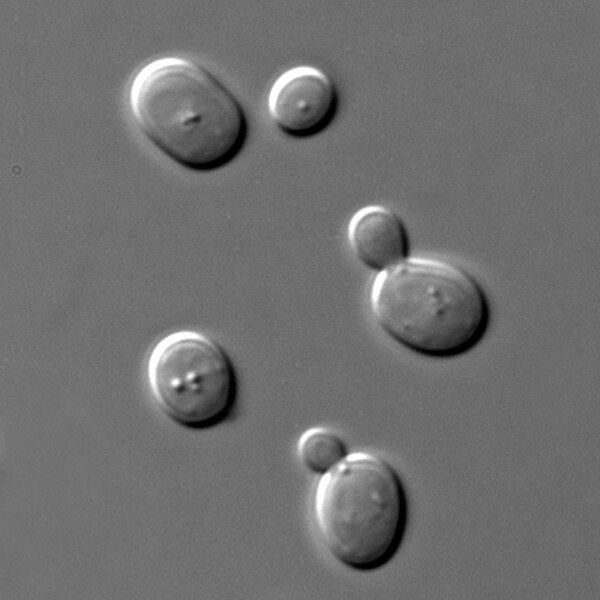
Utilizing a Wastewater-Based Medium for Engineered Saccharomyces cerevisiae for the Biological Production of Fatty Alcohols and Carboxylic Acids to Replace Petrochemicals

Ramesh et al. | Oct 02, 2019

Utilizing a Wastewater-Based Medium for Engineered <em>Saccharomyces cerevisiae</em> for the Biological Production of Fatty Alcohols and Carboxylic Acids to Replace Petrochemicals

Saccharomyces cerevisiae yeast is used to produce bioethanol, an alternative to fossil fuels. In this study, authors take advantage of this well studied yeast by genetically engineering them to increase fatty acid biosynthesis and culturing in a cost-effective wastewater based medium; potentially providing a sustainable alternative to petrochemicals.

Read More...
Increased carmine red exposure periods yields a higher number of vacuoles formed in Tetrahymena pyriformis

Shah et al. | Nov 18, 2022

Increased carmine red exposure periods yields a higher number of vacuoles formed in <em>Tetrahymena pyriformis</em>

T. pyriformis can use phagocytosis to create vacuoles of carmine red, a dye which is made using crushed insects and is full of nutrients. Establishing a relationship between vacuole formation and duration of exposure to food can demonstrate how phagocytosis occurs in T. pyriformis. We hypothesized that if T. pyriformis was incubated in a carmine red solution, then more vacuoles would form over time in each cell.

Read More...

Cell cytotoxicity and pro-apoptosis on MCF-7 cells using polyherbal formulation, MAT20

Tarigopula et al. | Feb 17, 2023

Cell cytotoxicity and pro-apoptosis on MCF-7  cells using polyherbal formulation, MAT20

The purpose of this study was to test the anti-cancer properties and pro-apoptotic effects of the polyherbal formulation MAT20 as a complementary treatment. Moringa oleifera (Moringa), Phyllanthus emblica (Amla) and Ocimum sanctum (Tulsi), these 3 herbs were used to formulate MAT20, which contain phytochemicals that are known to display anti-cancer properties. In this study, we hypothesized that MCF-7 breast cancer cells treated with MAT20 would show increased cytotoxicity compared to its individual plant extracts.

Read More...