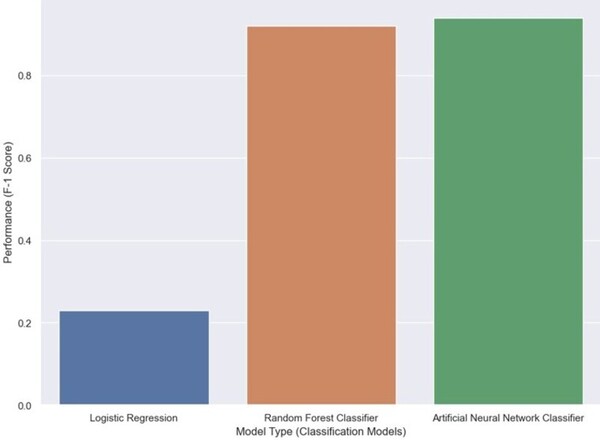
The authors looked at the ability of different machine learning algorithms to predict the level of financial corruption in different countries.
Read More...Predicting and explaining illicit financial flows in developing countries: A machine learning approach
The authors looked at the ability of different machine learning algorithms to predict the level of financial corruption in different countries.
Read More...Evaluating the performance of Q-learning-based AI in auctions
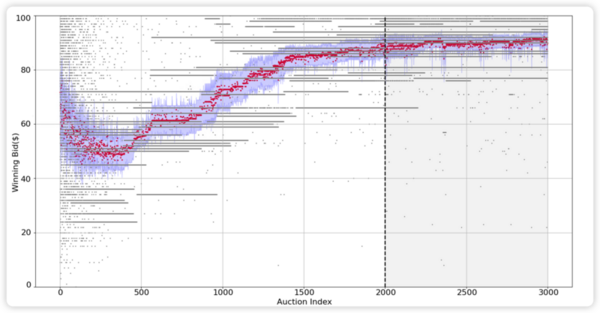
Advertising platforms like Google Ads use AI to drive the algorithms used to maximize advertisers benefits. This study shows that AI does not adjust it strategy based on auction type and highlights the limitations of AI running without explicit guidance.
Read More...Optimizing AI image detection using a Convolutional Neural Network model with Fast Fourier Transform
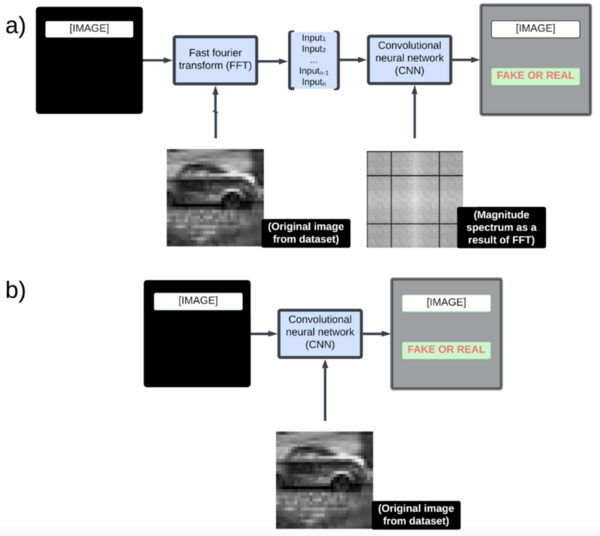
Recent advances in generative AI have made it increasingly hard to distinguish real images from AI-generated ones. Traditional detection models using CNNs or U-net architectures lack precision because they overlook key spatial and frequency domain details. This study introduced a hybrid model combining Convolutional Neural Networks (CNN) with Fast Fourier Transform (FFT) to better capture subtle edge and texture patterns.
Read More...The availability of a poetry tutor prompts inexperienced writers to explore deeply emotional themes
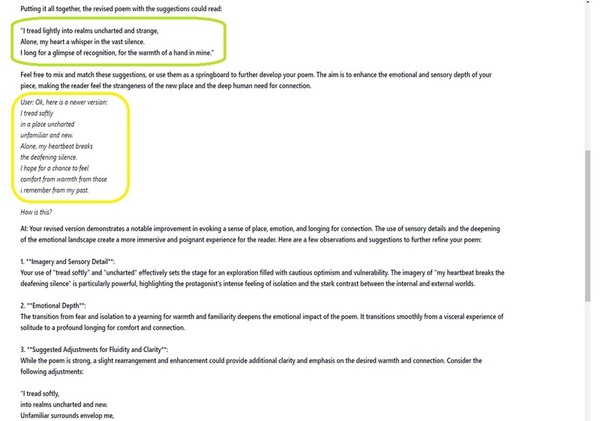
The study developed Loving Words, a free AI-powered poetry tutor designed to help writers improve their poetry and experience its therapeutic benefits. Two groups of participants wrote poems—one without assistance and one using Loving Words.
Read More...Training neural networks on text data to model human emotional understanding
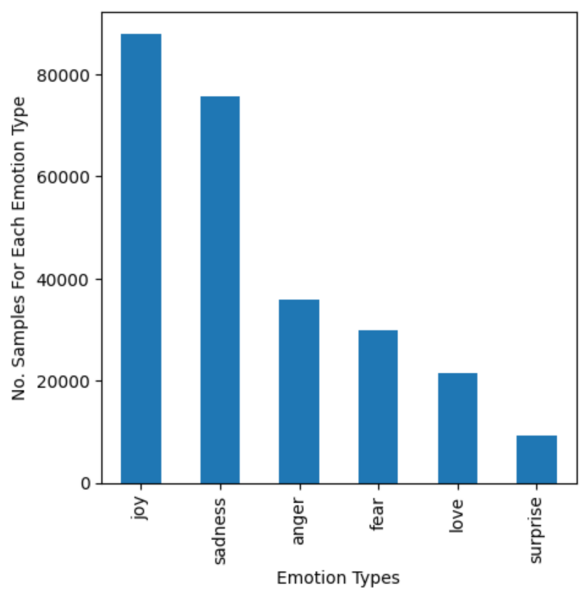
The authors train a neural network to detect text-based emotions including joy, sadness, anger, fear, love, and surprise.
Read More...SpottingDiffusion: Using transfer learning to detect Latent Diffusion Model-synthesized images
Automated classification of nebulae using deep learning & machine learning for enhanced discovery
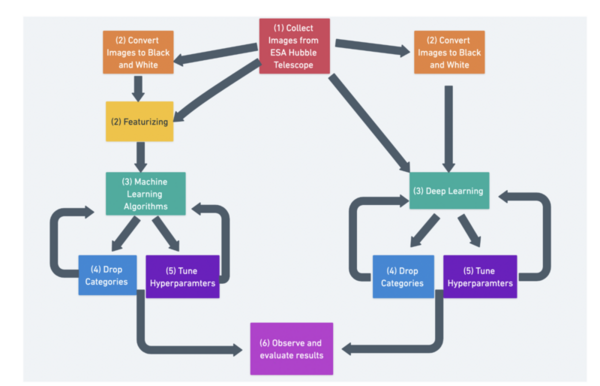
There are believed to be ~20,000 nebulae in the Milky Way Galaxy. However, humans have only cataloged ~1,800 of them even though we have gathered 1.3 million nebula images. Classification of nebulae is important as it helps scientists understand the chemical composition of a nebula which in turn helps them understand the material of the original star. Our research on nebulae classification aims to make the process of classifying new nebulae faster and more accurate using a hybrid of deep learning and machine learning techniques.
Read More...Explainable AI tools provide meaningful insight into rationale for prediction in machine learning models
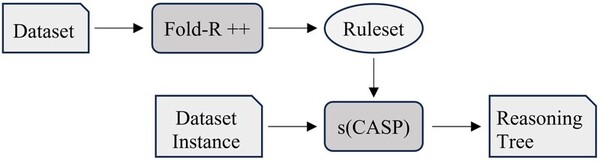
The authors compare current machine learning algorithms with a new Explainable AI algorithm that produces a human-comprehensible decision tree alongside predictions.
Read More...Chemoreception in Aurelia aurita studied by AI-enhanced image analysis

The authors studied the chemoreception of moon jellyfish in response to food, and developed an AI tool to identify track and quantify the pulsation of swimming jellyfish.
Read More...Unveiling bias in ChatGPT-3.5: Analyzing constitutional AI principles for politically biased responses
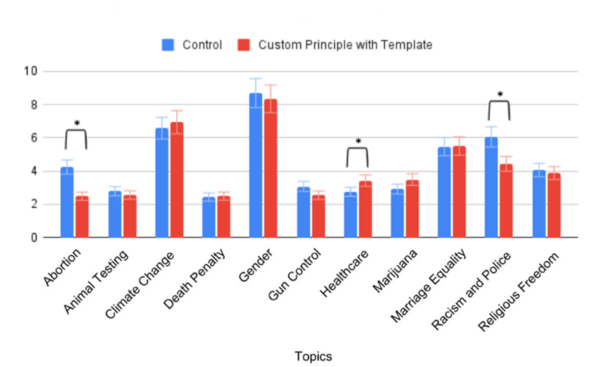
Various methods exist to mitigate bias in AI models, including "Constitutional AI," a technique which guides the AI to behave according to a list of rules and principles. Lo, Poosarla, Singhal, Li, Fu, and Mui investigate whether constitutional AI can reduce bias in AI outputs on political topics.
Read More...