Browse Articles

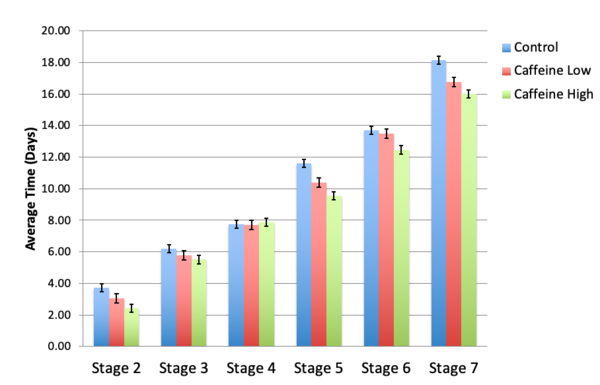
The Effect of Caffeine on the Regeneration of Brown Planaria (Dugesia tigrina)

Lazorik et al. | May 10, 2019

The Effect of Caffeine on the Regeneration of Brown Planaria (<em>Dugesia tigrina</em>)

The degeneration of nerve cells in the brain can lead to pathologies such as Parkinson’s disease. It has been suggested that neurons in humans may regenerate. In this study, the effect of different doses of caffeine on regeneration was explored in the planeria model. Caffeine has been shown to enhance dopamine production, and dopamine is found in high concentrations in regenerating planeria tissues. Higher doses of caffeine accelerated planeria regeneration following decapitation, indicating a potential role for caffeine as a treatment to stimulate regeneration.

Read More...
The Cilium- and Centrosome-Associated Protein CCDC11 Is Required for Cytokinesis via Midbody Recruitment of the ESCRT- III Membrane Scission Complex Subunit CHMP2A

Ahmed et al. | Mar 14, 2018

The Cilium- and Centrosome-Associated Protein CCDC11 Is Required for Cytokinesis via Midbody Recruitment of the ESCRT- III Membrane Scission Complex Subunit CHMP2A

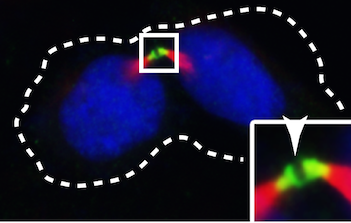
In order for cells to successfully multiply, a number of proteins are needed to correctly coordinate the replication and division process. In this study, students use fluorescence microscopy and molecular methods to study CCDC11, a protein critical in the formation of cilia. Interestingly, they uncover a new role for CCDC11, critical in the cell division across multiple human cell lines.

Read More...

Genetic underpinnings of the sex bias in autism spectrum disorder

Lee et al. | Mar 29, 2024

Genetic underpinnings of the sex bias in autism spectrum disorder
Image credit: Louis Reed

Here, seeking to identify a possible explanation for the more frequent diagnosis of autism spectrum disorder (ASD) in males than females, they sought to investigate a potential sex bias in the expression of ASD-associated genes. Based on their analysis, they identified 17 ASD-associated candidate genes that showed stronger collective sex-dependent expression.

Read More...