Browse Articles

Effects of Prolonged Azithromycin Therapy on Bacterial Resistance to Functionally Analogous Antibiotics

Gibbs et al. | Dec 04, 2020

Effects of Prolonged Azithromycin Therapy on Bacterial Resistance to Functionally Analogous Antibiotics

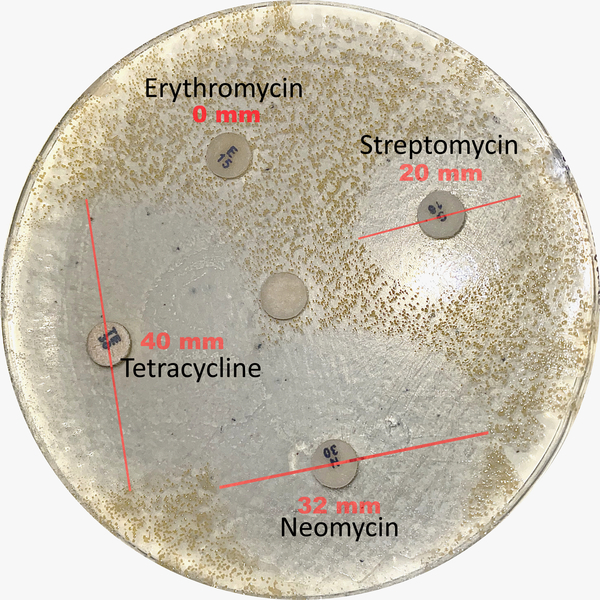
In this study, the authors investigate a potential case of cross antibiotic-resistance. Using swabs from an individual who received long-term treatments of azithromycin, they addressed the question of whether any bacteria in this individual might develop resistance to not only azithromycin, but also other antibiotics with similar structures. This study cleverly addresses the important issue of antibiotic resistance from a new and thoughtful approach.

Read More...
Cathodal Galvanotaxis: The Effect of Voltage on the distribution of Tetrahymena pyriformis

Zheng et al. | Jun 10, 2019

Cathodal Galvanotaxis: The Effect of Voltage on the distribution of <em>Tetrahymena pyriformis</em>

The surface of the unicellular eukaryote, Tetrahymena pyriformis, is covered with thousands of hair-like cilia. These cilia are very similar to cilia of the human olfactory and respiratory tracts making them model organisms for studying cilia function and pathology. The authors of this study investigated the effect of voltage on T. pyriformis galvanotaxis, the movement towards an electrical stimulus. They observed galvanotaxis towards the cathode at voltages over 4V which plateau, indicating opening of voltage gated-ion channels to trigger movement.

Read More...

A 3D printed triboelectric nanogenerator for bridge vibration energy harvesting and sensing

Walavalkar et al. | Jul 19, 2026

A 3D printed triboelectric nanogenerator for bridge vibration energy harvesting and sensing
Image credit: Jakub Żerdzicki

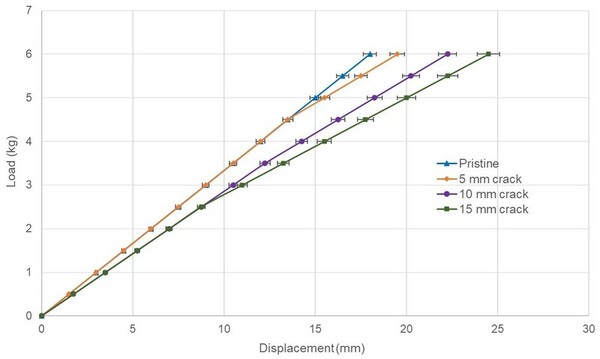
This study strongly illustrates that optimizing 3D printing parameters would enhance a triboelectric nanogenerator's performance. The design improvements substantiate the potential of optimized, 3D-printed TENGs for developing scalable, cost-effective solutions for powering low-energy electronics, particularly in applications such as structural health monitoring.

Read More...

Comparing Virulence of Three T4 Bacteriophage Strains on Ampicillin-Resistant and Sensitive E. coli Bacteria

Hudanich et al. | Dec 09, 2020

Comparing Virulence of Three T4 Bacteriophage Strains on Ampicillin-Resistant and Sensitive <em>E. coli</em> Bacteria

In this study, the authors investigate an alternative way to kill bacteria other than the use of antibiotics, which is useful when considering antibiotic-resistance bacteria. They use bacteriophages, which are are viruses that can infect bacteria, and measure cell lysis. They make some important findings that these bacteriophage can lyse both antibiotic-resistant and non-resistant bacteria.

Read More...

Innovative use of recycled textile fibers in building materials: A circular economy approach

Gupta et al. | Feb 19, 2026

Innovative use of recycled textile fibers in building materials: A circular economy approach
Image credit: Gupta and Gupta

Textile waste from the fashion industry is a major environmental pollutant, but recycling waste into novel building material is a strategy to reduce the negative effects. This manuscript characterized five different binders that can be used to repurpose textile waste into bricks for construction purposes. Water-based glue, cement, white cement, plaster of Paris, and epoxy resin were mixed with shredded textile waste, and the mechanical characteristics and thermal insulation of each brick type were measured. Bricks with increased mechanical strength had the poorest thermal resistance, and the contrasting properties would suit different building purposes. This work provides a first step in generating recycled textile bricks for construction in a circular economy framework.

Read More...