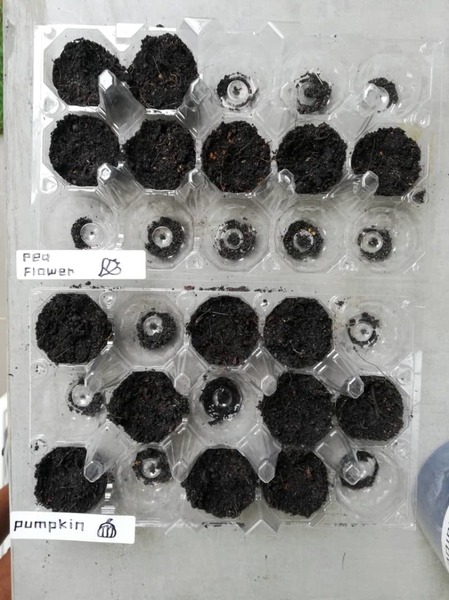
In this study, the authors investigate whether the addition of microbes from native soil enhanced the seed germination and growth of mung beans, pumpkins, and pea flower plants.
Read More...Microbes Cultured from Garden Soil Positively Impact Seed Germination and Plant Growth
In this study, the authors investigate whether the addition of microbes from native soil enhanced the seed germination and growth of mung beans, pumpkins, and pea flower plants.
Read More...Effects of plant-derived smoke water on germination and growth in stressed plants
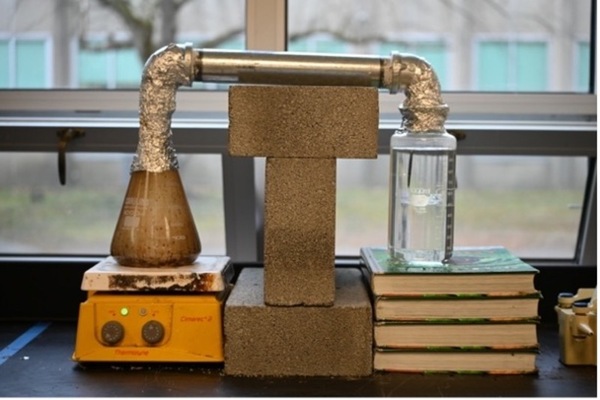
Here the authors investigated the potential of plant-derived smoke water to mitigate the negative impacts of abiotic stressors, such as heat, salinity, and water fluctuations, on the germination and growth of various agricultural crops. Their findings suggest that smoke water, specifically from buckwheat, pea, and radish, significantly improves plant resilience against drought and excessive water stress, offering a viable strategy to bolster food security in the face of climate change.
Read More...Developing novel plant waste-based hydrogels for skin regeneration and infection detection in diabetic wounds
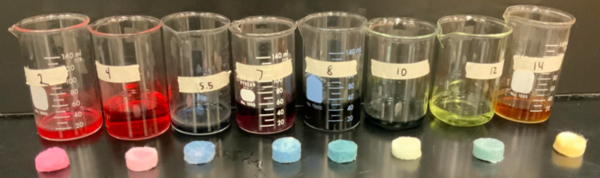
The purpose of this investigation is to develop a hydrogel to aid skin regeneration by creating an extracellular matrix for fibroblast growth with antibacterial and infection-detection properties. Authors developed two natural hydrogels based on pectin and potato peels and characterized the gels for fibroblast compatibility through rheology, scanning electron microscopy, swelling, degradation, and cell cytotoxicity assays. Overall, this experiment fabricated various hydrogels capable of acting as skin substitutes and counteracting infections to facilitate wound healing. Following further testing and validation, these hydrogels could help alleviate the 13-billion-dollar financial burden of foot ulcer treatment.
Read More...Mathematical modeling of plant community composition for urban greenery plans

Here recognizing the importance of urban green space for the health of humans and other organisms, the authors investigated if mathematical modeling can be used to develop an urban greenery management plan with high eco-sustainability by calculating the composition of a plant community. They optimized and tested their model against green fields in a Beijing city park. Although the compositions predicted by their models differed somewhat from the composition of testing fields, they conclude that by using a mathematical model such as this urban green space can be finely designed to be ecologically and economically sustainable.
Read More...Electromagnetic Radiation From Electronics Does Affect Plant Growth
Plants are the main producers of oxygen and organic compounds. Ensuring the health of these organisms is vital, as recent technologies could be damaging them. The purpose of this study was to find out if electromagnetic (EM) radiation from electronics affects plant growth.
Read More...Analyzing the effect of mycorrhizal fungi on plant communication of nutrients
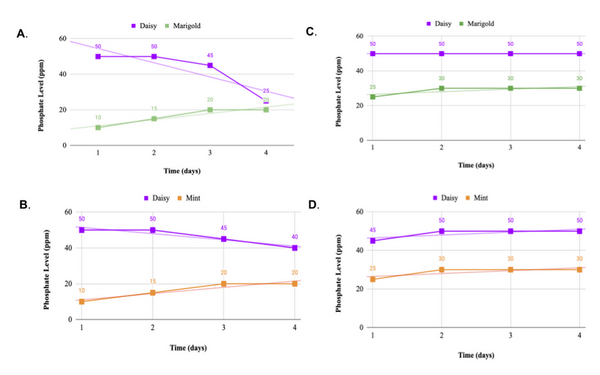
The authors looked at the ability of plants to transfer phosphate between each other through mycorrhizal fungi. Specifically, they looked at whether plants with excess phosphate would transfer this nutrient to other plants that had depleted levels of phosphate.
Read More...Polluted water tested from the Potomac River affects invasive species plant growth

Here recognizing the potential for pollution to impact the ecosystems of local waterways, the authors investigated the growth of tiger lilies, which are invasive to the Potomac River, in relation to the level of pollution. The authors report that increasing levels of pollution led to increased growth of the invasive species based on their study.
Read More...The Effect of Anubias barteri Plant Species on Limiting Freshwater Acidification
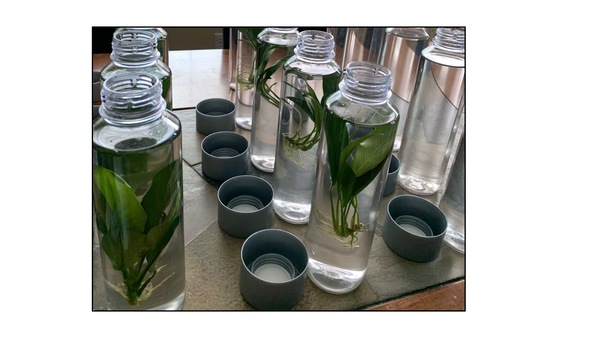
Research relating to freshwater acidification is minimal, so the impact of aquatic plants, Anubias barteri var. congensis and Anubias barteri var. nana, on minimizing changes in pH was explored in an ecosystem in Northern California. Creek water samples, with and without the aquatic plants, were exposed to dry ice to simulate carbon emissions and the pH was monitored over an eight-hour period. There was a 25% difference in the observed pH based on molar hydrogen ion concentration between the water samples with plants and those without plants, suggesting that aquatic plants have the potential to limit acidification to some extent. These findings can guide future research to explore the viable partial solution of aquatic plants in combating freshwater acidification.
Read More...Nature’s reset: The effect of native and invasive plant forage on honey bee nutrition and survival
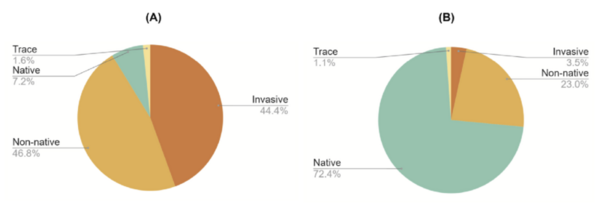
The authors looked at survival of honey bees over the winter in regards to native and invasive plant availability. They found that native plants provided greater survivability and overall health compared to environments where there was an abundance of invasive plants.
Read More...Time-Efficient and Low-Cost Neural Network to detect plant disease on leaves and reduce food loss and waste
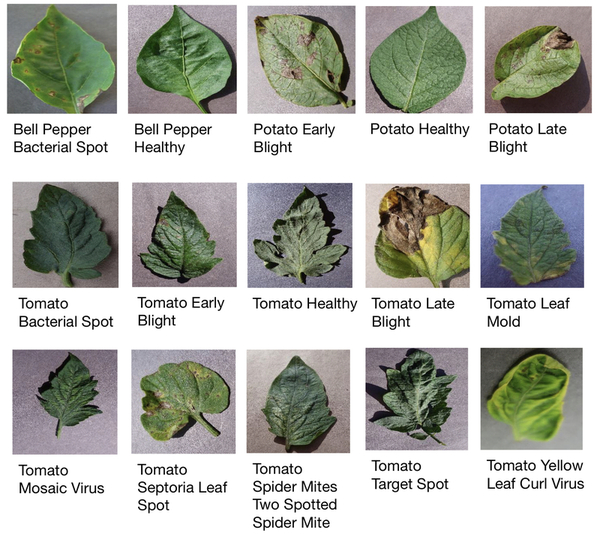
About 25% of the food grown never reaches consumers due to spoilage, and 11.5 billion pounds of produce from gardens are wasted every year. Current solutions involve farmers manually looking for and treating diseased crops. These methods of tending crops are neither time-efficient nor feasible. I used a convolutional neural network to identify signs of plant disease on leaves for garden owners and farmers.
Read More...