The authors studied the chemoreception of moon jellyfish in response to food, and developed an AI tool to identify track and quantify the pulsation of swimming jellyfish.
Read More...Chemoreception in Aurelia aurita studied by AI-enhanced image analysis
The authors studied the chemoreception of moon jellyfish in response to food, and developed an AI tool to identify track and quantify the pulsation of swimming jellyfish.
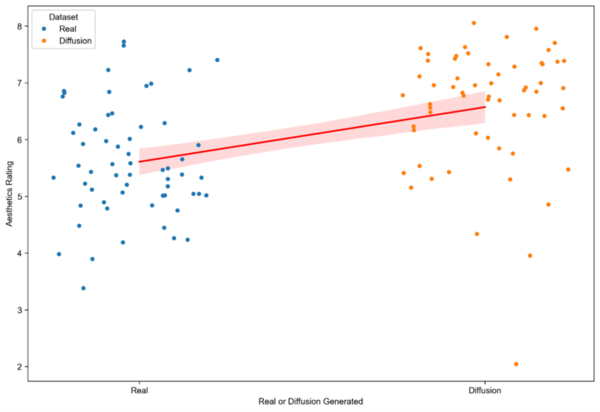
Read More...SpottingDiffusion: Using transfer learning to detect Latent Diffusion Model-synthesized images
Explainable AI tools provide meaningful insight into rationale for prediction in machine learning models
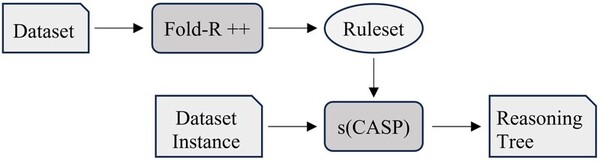
The authors compare current machine learning algorithms with a new Explainable AI algorithm that produces a human-comprehensible decision tree alongside predictions.
Read More...Unveiling bias in ChatGPT-3.5: Analyzing constitutional AI principles for politically biased responses
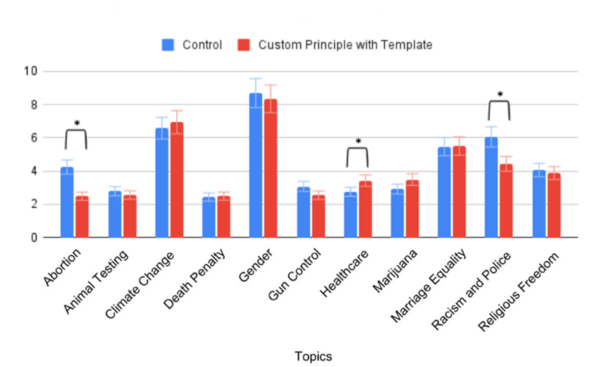
Various methods exist to mitigate bias in AI models, including "Constitutional AI," a technique which guides the AI to behave according to a list of rules and principles. Lo, Poosarla, Singhal, Li, Fu, and Mui investigate whether constitutional AI can reduce bias in AI outputs on political topics.
Read More...Innovative fake health news detection: Integrating emotional features into graph neural networks
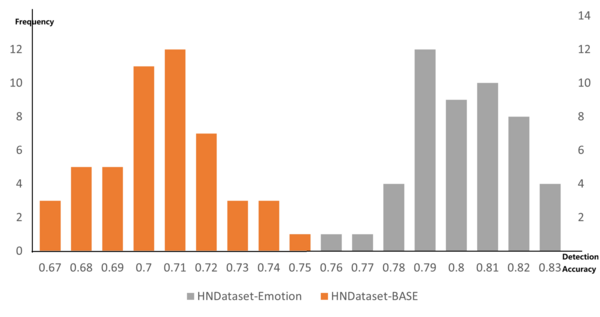
This manuscript tackles a major social issue in the health news sector, with social media being one of the primary sources of information and a prime spot to propagate fake news. The author proposes X-HND , which is a unique architecture that combines emotional and contextual analysis in a Graph Neural Network to accurately detect fake news. This was a multi-step process which involved the creation of a custom health news dataset (HNDataset), and an emotional variant that uses RoBERTa to extract emotion. These dataset were then used to prove the hypothesis that accuracy increases when the custom dataset is used to train the model and that with the integration of emotion capture, the detection accuracy increases further.
Read More...Revisiting the Belmont Report: an analysis of the bioethical values of Generation Z
The authors studied the bioethical values of Generation Z.
Read More...Exploring the effects of diverse historical stock price data on the accuracy of stock price prediction models
Algorithmic trading has been increasingly used by Americans. In this work, we tested whether including the opening, closing, and highest prices in three supervised learning models affected their performance. Indeed, we found that including all three prices decreased the error of the prediction significantly.
Read More...Investigating Teen Audism: The Development and Use of a Survey Scale to Measure Misconceptions of the Deaf Community in a Hearing High School
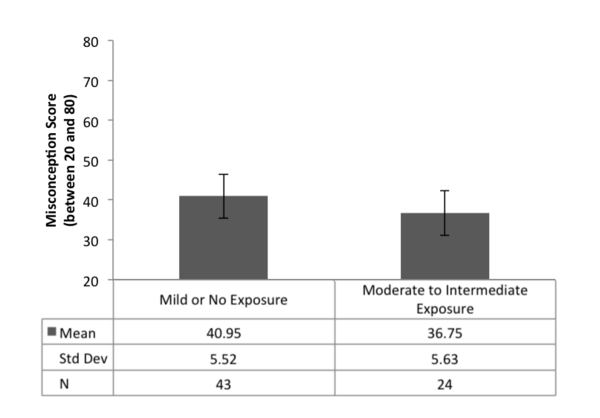
The authors explore hearing students' misconceptions about the Deaf and Hard of Hearing (HoH) community. Results indicate that some misconceptions are more common than others, and that personal experience with individuals in the Deaf and HoH community reduces the frequency of such misconceptions.
Read More...Deep sequential models versus statistical models for web traffic forecasting
The authors looked at ways to provide better forecasting on website traffic. They found that deep learning models performed better than statistical models.
Read More...Levering machine learning to distinguish between optimal and suboptimal basketball shooting forms
The authors looked at different ways to build computational resources that would analyze shooting form for basketball players.
Read More...