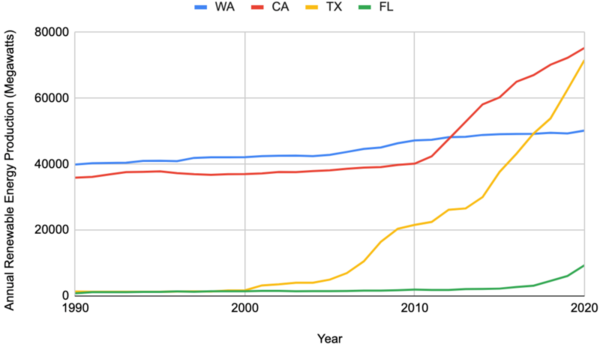
The authors compare rates of renewable energy adoption between states that historically vote for democrats versus republicans in presidential elections.
Read More...The impact of political ideologies on renewable energy adoption
The authors compare rates of renewable energy adoption between states that historically vote for democrats versus republicans in presidential elections.
Read More...The impact of attending a more selective college on future income
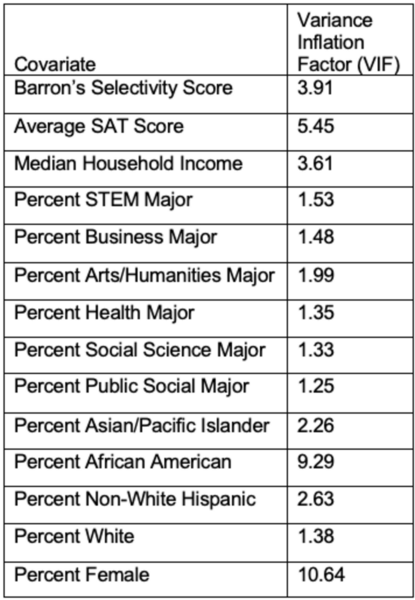
Debates around legacy preferences, recruited athletes, and affirmative action in U.S. college admissions often focus on the belief that graduating from a more selective institution leads to higher future earnings. The study hypothesized a positive correlation between college selectivity and future income due to enhanced resources and opportunities.
Read More...The impact of culturally informed music therapy on visually impaired youth: A Jaffna, Sri Lanka study
The authors looked at the effect of music therapy on visually impaired youth. They found that culturally relevant curricula is an important consideration while also showing that broadly music therapy enhances working memory, emotional well-being and inhibitory control.
Read More...The impact of greenhouse gases, regions, and sectors on future temperature anomaly with the FaIR model
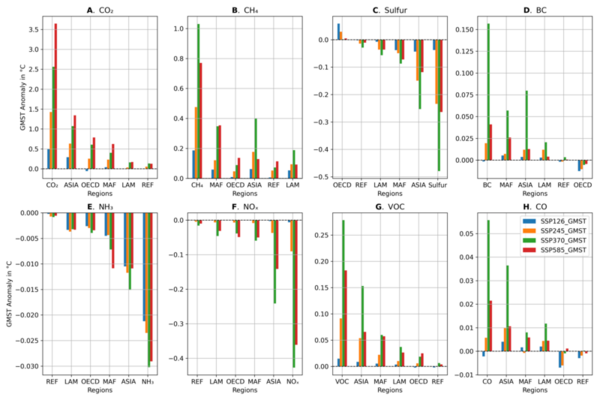
This study explores how different economic sectors, geographic regions, and greenhouse gas types might affect future global mean surface temperature (GMST) anomalies differently from historical patterns. Using the Finite Amplitude Impulse Response (FaIR) model and four Shared Socioeconomic Pathways (SSPs) — SSP126, SSP245, SSP370, and SSP585 — the research reveals that future contributions to GMST anomalies.
Read More...The impact of genetic analysis on the early detection of colorectal cancer
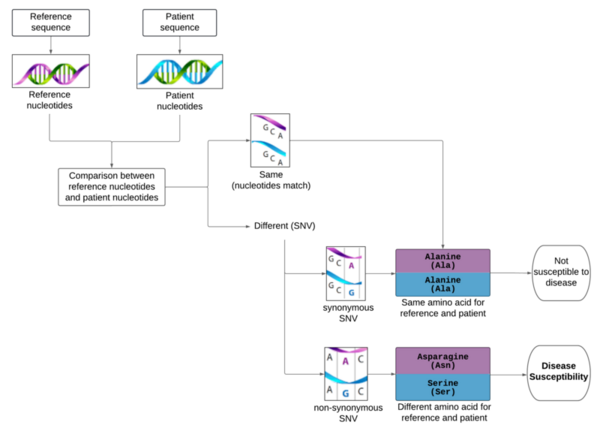
Although the 5-year survival rate for colorectal cancer is below 10%, it increases to greater than 90% if it is diagnosed early. We hypothesized from our research that analyzing non-synonymous single nucleotide variants (SNVs) in a patient's exome sequence would be an indicator for high genetic risk of developing colorectal cancer.
Read More...The impact of COVID-19 quarantine on physical activities in Basra, Iraq: A cross-sectional study
As the COVID-19 pandemic continues, the authors noticed a change in the physical activity of many people, as well as a change in the type of physical activity they practice. Here, the authors used a cross-sectional survey of 150 participants from the province of Basra in Iraq. They found an overall decrease in the number of days of physical activity for participants along with an increasing proportion of at-home exercises compared to other activities that are performed inside sports clubs during the pandemic.
Read More...Psychosocial impact of home-based learning among students during the COVID-19 Pandemic in Singapore
In this study, the authors surveyed a number of students in Singapore to determine how their experiences changed after the implementation of home-based learning during the COVID-19 pandemic.
Read More...The impact of Red 40 artificial food dye on the heart rate of Daphnia magna
In this study, potential physiological effects of Red 40 food dye, found in many different food products, are tested using Daphnia magna, a small freshwater crustacean.
Read More...The impact of timing and magnitude of the El Niño- Southern Oscillation on local precipitation levels and temperatures in the Bay Area
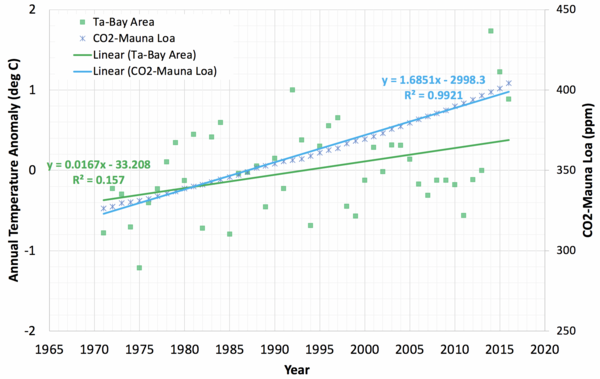
Understanding the relationships between temperature, MEI, SPI, and CO2 concentration is important as they measure the major influencers of California’s regional climate: temperature, ENSO, precipitation, and atmospheric CO2. In this article, the authors analyzed temperature, Multivariate El Niño-Southern Oscillation Index (MEI), and Standard Precipitation Index (SPI) data from the San Francisco Bay Area from 1971 to 2016. They also analyzed CO2 records from Mauna Loa, HI for the same time period, along with the annual temperature anomalies for the Bay Area.
Read More...The Impact of the COVID-19 Pandemic on Mental Health of Teens
In this study, the authors investigate whether the COVID-19 pandemic is affecting the mental health of teens. Using data from a study done in Islamabad, Pakistan, the authors find that many teens between the ages of 13 and 19 show signs of mental illness. This study reports important data regarding the mental health of youth and points toward an increased need to address this topic during the pandemic.
Read More...