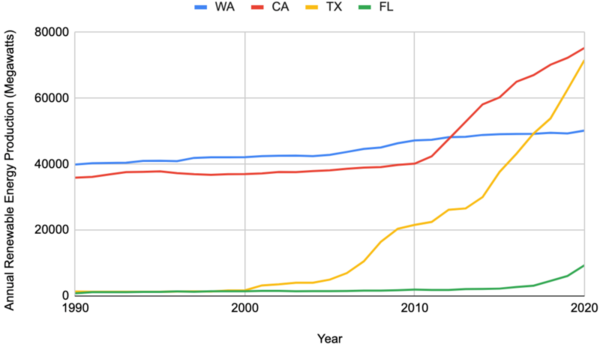
The authors compare rates of renewable energy adoption between states that historically vote for democrats versus republicans in presidential elections.
Read More...The impact of political ideologies on renewable energy adoption
The authors compare rates of renewable energy adoption between states that historically vote for democrats versus republicans in presidential elections.
Read More...Evaluating the effectiveness of synthetic training data for day-ahead wind speed prediction in the Great Lakes
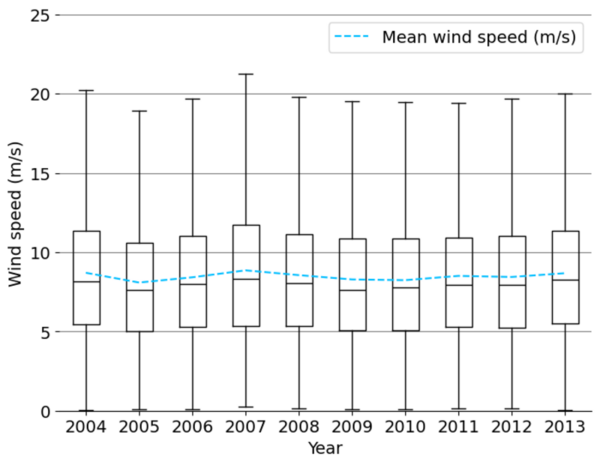
The authors looked at the feasibility to predict wind speeds that will have less reliance on using historical data.
Read More...Increasing Average Yearly Temperature in Two U.S. Cities Shows Evidence for Climate Change
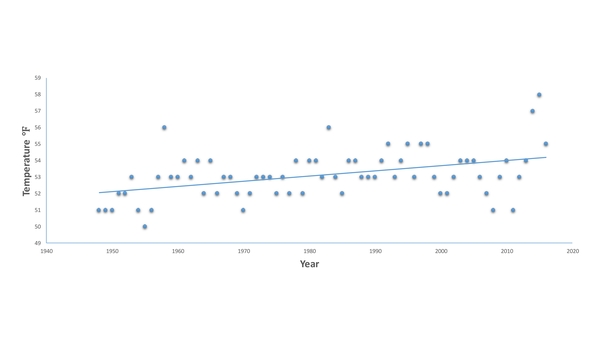
The authors were interested in whether they could observe the effects of climate change by analyzing historical temperature data of two U.S. cities. They predicted that they should observe a warming trend in both cities. Their results showed that despite yearly variations, warming trends can be observed both in Rochester, NY and Seattle, WA which fit the predictions of climate change forecasts.
Read More...The impact of greenhouse gases, regions, and sectors on future temperature anomaly with the FaIR model
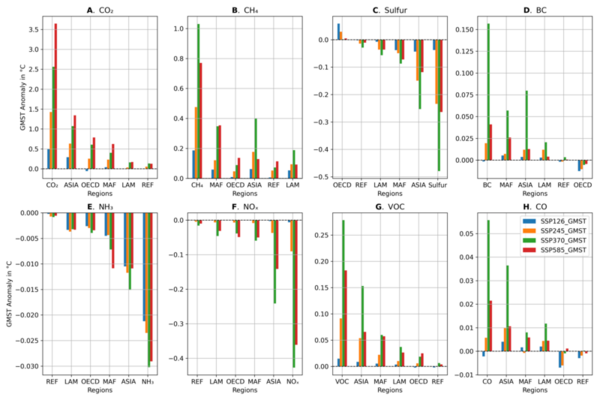
This study explores how different economic sectors, geographic regions, and greenhouse gas types might affect future global mean surface temperature (GMST) anomalies differently from historical patterns. Using the Finite Amplitude Impulse Response (FaIR) model and four Shared Socioeconomic Pathways (SSPs) — SSP126, SSP245, SSP370, and SSP585 — the research reveals that future contributions to GMST anomalies.
Read More...Investigating the contribution of genetic risk factors to gastric cancer in Korean-ancestry populations
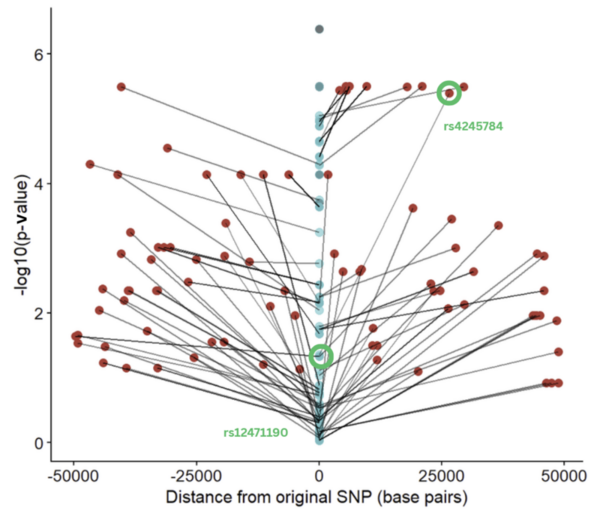
This project investigated whether previously identified genetic risk factors in non-Korean populations were associated with high gastric cancer incidence rates in Koreans.
Read More...Do self-expression values affect global jazz popularity? An analysis of postmaterialism and political activity
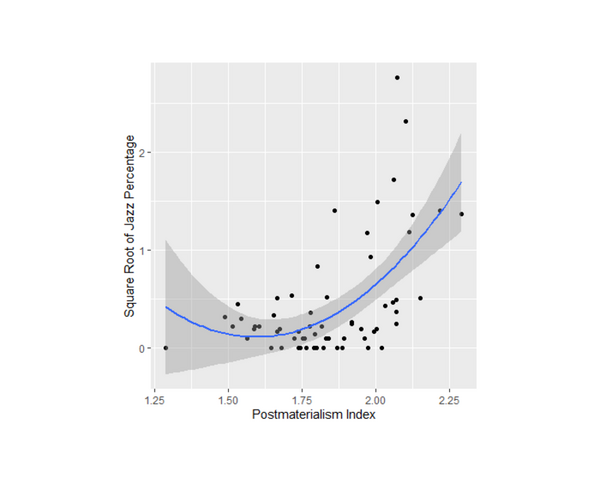
Jazz music is a unique American art form that has spread around the world. Iyer and Iyer study this spread through a computational sociology project examining how jazz popularity is correlated with postmaterialism (an ideology that values self-expression) and political activity.
Read More...Comparison of Perception of 2020 Election Security Threats Between Young and Old Voters
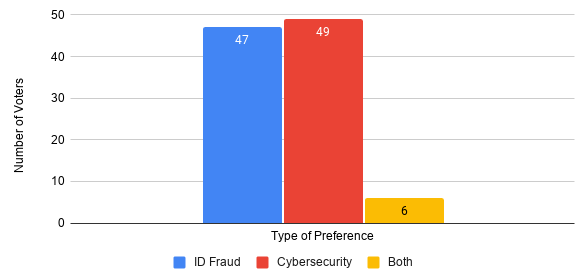
In this study, results from an extensive survey report college students' and senior citizens' voting concerns during the 2020 presidential election.
Read More...Legacy mercury, reservoir dynamics, and dredging effects on methylmercury in San Francisco Bay
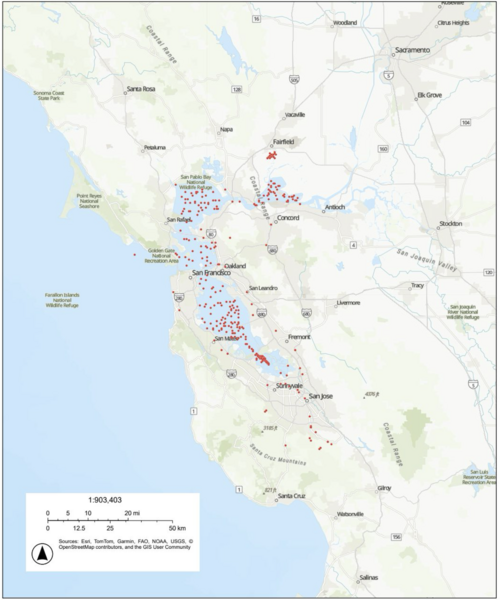
This study analyzes over two decades of monitoring data (1999-2022) to investigate how legacy mining, reservoir water releases, and dredging activities influence toxic methylmercury (MeHg) levels in San Francisco Bay. The findings reveal a significant delayed correlation between river flow and San Francisco Bay MeHg, and counter to the authors' hypothesis, a strong association between increased MeHg concentrations in the bay and both total annual dredging volume and beneficial sediment reuse / upland sediment disposal.
Read More...The Mount Laurel doctrine: A case study in housing affordability and the labor market in New Jersey
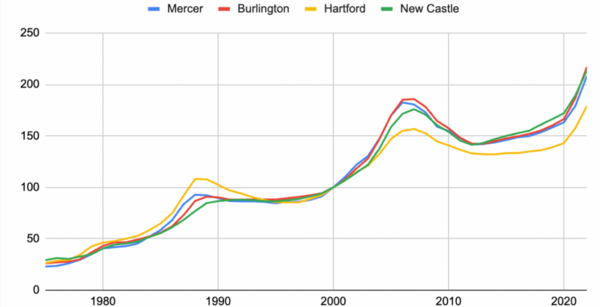
The authors explored the effects of the Mount Laurel Doctrine on housing affordability, unemployment rate, and civilian labor force in Burlington County, New Jersey compared to nearby counties.
Read More...Geographic Distribution of Scripps National Spelling Bee Spellers Resembles Geographic Distribution of Child Population in US States upon Implementation of the RSVBee “Wildcard” Program

The Scripps National Spelling Bee (SNSB) is an iconic academic competition for United States (US) schoolchildren, held annually since 1925. However, the sizes and geographic distributions of sponsored regions are uneven. One state may send more than twice as many spellers as another state, despite similar numbers in child population. In 2018, the SNSB introduced a wildcard program known as RSVBee, which allowed students to apply to compete as a national finalist, even if they did not win their regional spelling bee. In this study, the authors tested the hypothesis that the geographic distribution of SNSB national finalists more closely matched the child population of the US after RSVBee was implemented.
Read More...