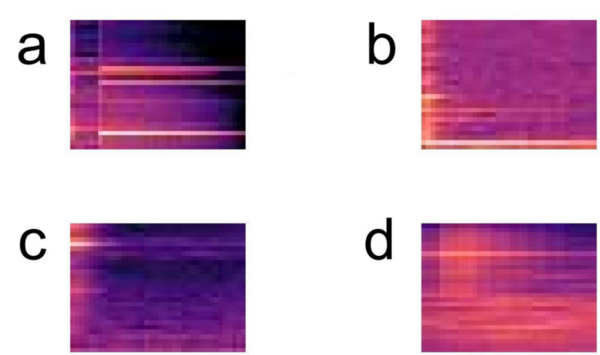
The authors test different machine learning algorithms to remove background noise from audio to help people with hearing loss differentiate between important sounds and distracting noise.
Read More...Using neural networks to detect and categorize sounds
The authors test different machine learning algorithms to remove background noise from audio to help people with hearing loss differentiate between important sounds and distracting noise.
Read More...Transfer Learning for Small and Different Datasets: Fine-Tuning A Pre-Trained Model Affects Performance
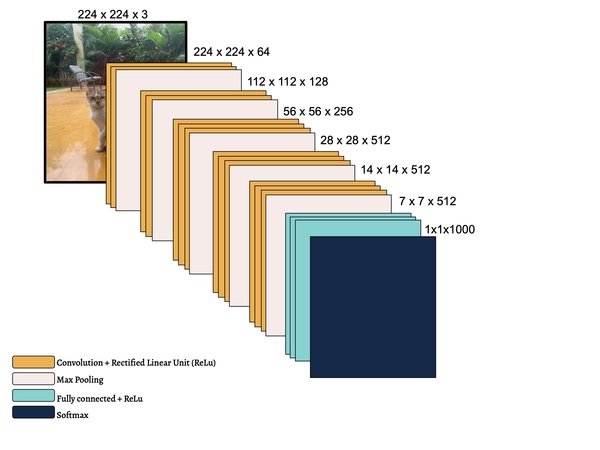
In this study, the authors seek to improve a machine learning algorithm used for image classification: identifying male and female images. In addition to fine-tuning the classification model, they investigate how accuracy is affected by their changes (an important task when developing and updating algorithms). To determine accuracy, a set of images is used to train the model and then a separate set of images is used for validation. They found that the validation accuracy was close to the training accuracy. This study contributes to the expanding areas of machine learning and its applications to image identification.
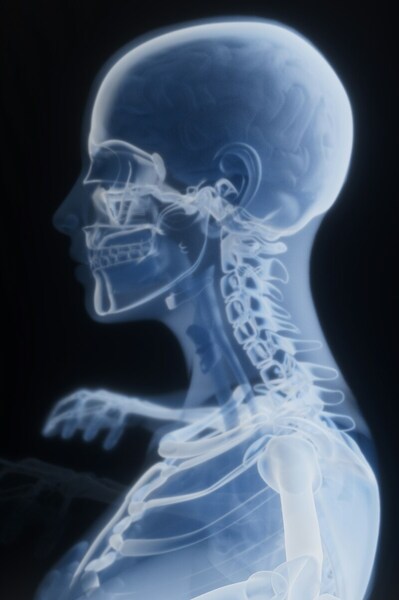
Read More...The effects of image manipulation on classification of cervical spondylosis X-ray images using deep learning
An explainable model for content moderation
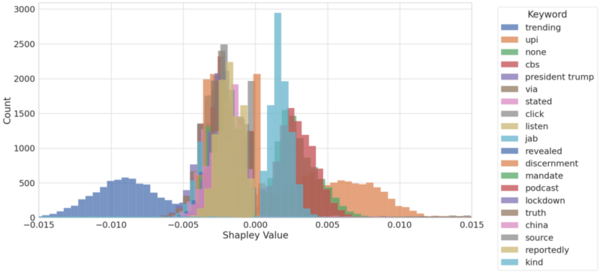
The authors looked at the ability of machine learning algorithms to interpret language given their increasing use in moderating content on social media. Using an explainable model they were able to achieve 81% accuracy in detecting fake vs. real news based on language of posts alone.
Read More...Evaluating need for adversarial training data given algorithmic defense methods against adversarial attacks
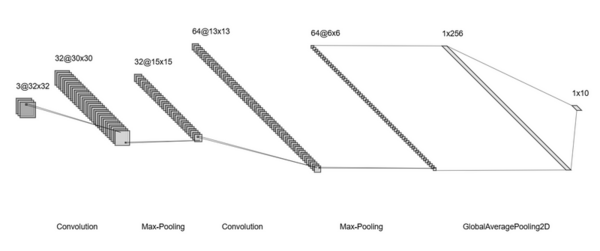
The purpose of this study was to determine the necessity of previous non-algorithmic attacks (Adversarial Training) in light of algorithmic defense methods (Gradient Masking and Defensive Distillation) against FGSM attacks. We found a significant increase in image classification accuracy from defense methods with the non-algorithmic defense method compared to ones without. By analyzing the significance with a McNemar test, we determined that the inclusion of non-algorithmic defense methods is still necessary in light of new algorithmic defense methods.
Read More...Transfer Learning with Convolutional Neural Network-Based Models for Skin Cancer Classification
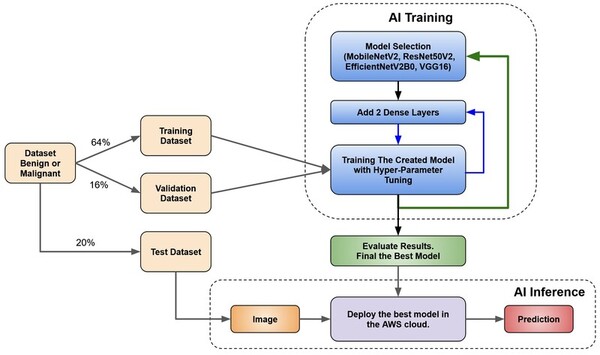
Skin cancer is a common and potentially deadly form of cancer. This study’s purpose was to develop an automated approach for early detection for skin cancer. We hypothesized that convolutional neural network-based models using transfer learning could accurately differentiate between benign and malignant moles using natural images of human skin.
Read More...DNA-SEnet: A convolutional neural network for classifying DNA-asthma associations

In this study, the authors developed a model named DNA Sequence Embedding Network (DNA-SEnet) to classify DNA-asthma associations using their genomic patterns.
Read More...Time-Efficient and Low-Cost Neural Network to detect plant disease on leaves and reduce food loss and waste
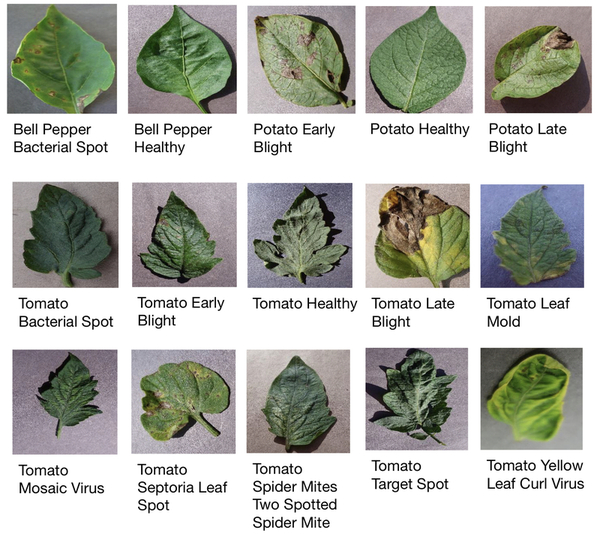
About 25% of the food grown never reaches consumers due to spoilage, and 11.5 billion pounds of produce from gardens are wasted every year. Current solutions involve farmers manually looking for and treating diseased crops. These methods of tending crops are neither time-efficient nor feasible. I used a convolutional neural network to identify signs of plant disease on leaves for garden owners and farmers.
Read More...Transfer learning and data augmentation in osteosarcoma cancer detection
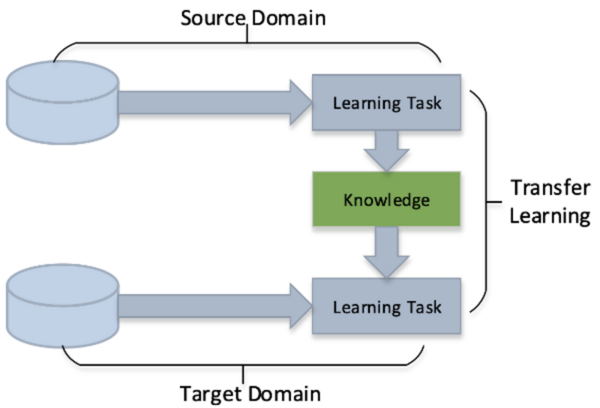
Osteosarcoma is a type of bone cancer that affects young adults and children. Early diagnosis of osteosarcoma is crucial to successful treatment. The current methods of diagnosis, which include imaging tests and biopsy, are time consuming and prone to human error. Hence, we used deep learning to extract patterns and detect osteosarcoma from histological images. We hypothesized that the combination of two different technologies (transfer learning and data augmentation) would improve the efficacy of osteosarcoma detection in histological images. The dataset used for the study consisted of histological images for osteosarcoma and was quite imbalanced as it contained very few images with tumors. Since transfer learning uses existing knowledge for the purpose of classification and detection, we hypothesized it would be proficient on such an imbalanced dataset. To further improve our learning, we used data augmentation to include variations in the dataset. We further evaluated the efficacy of different convolutional neural network models on this task. We obtained an accuracy of 91.18% using the transfer learning model MobileNetV2 as the base model with various geometric transformations, outperforming the state-of-the-art convolutional neural network based approach.
Read More...Advancements in glioma segmentation: comparing the U-Net and DeconvNet models
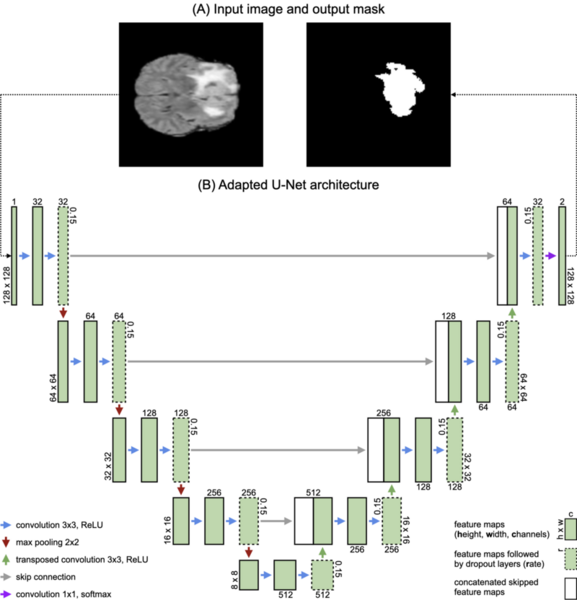
This study compares the performance of two deep learning models, U-Net and DeconvNet, for segmenting gliomas from MRI scans.
Read More...