Browse Articles

The Cilium- and Centrosome-Associated Protein CCDC11 Is Required for Cytokinesis via Midbody Recruitment of the ESCRT- III Membrane Scission Complex Subunit CHMP2A

Ahmed et al. | Mar 14, 2018

The Cilium- and Centrosome-Associated Protein CCDC11 Is Required for Cytokinesis via Midbody Recruitment of the ESCRT- III Membrane Scission Complex Subunit CHMP2A

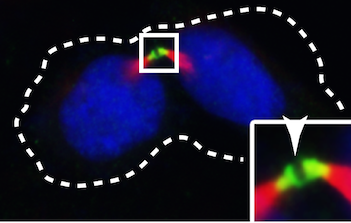
In order for cells to successfully multiply, a number of proteins are needed to correctly coordinate the replication and division process. In this study, students use fluorescence microscopy and molecular methods to study CCDC11, a protein critical in the formation of cilia. Interestingly, they uncover a new role for CCDC11, critical in the cell division across multiple human cell lines.

Read More...
Temperatures of 20°C Produce Increased Net Primary Production in Chlorella sp.

Biddinger et al. | Feb 25, 2020

Temperatures of 20°C Produce Increased Net Primary Production in <em>Chlorella sp.</em>

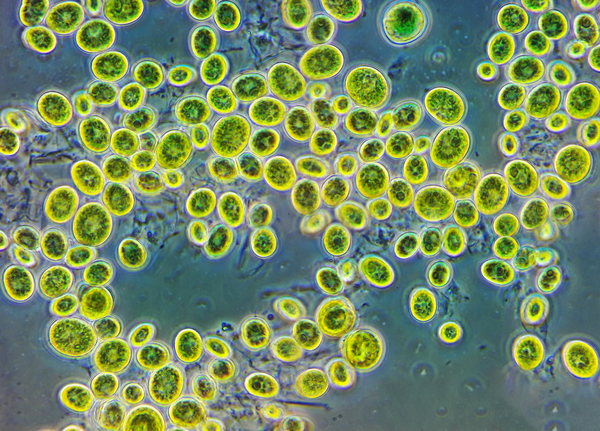
Chlorella sp. are unicellular green algae that use photosynthesis to reduce carbon dioxide into glucose. In this study, authors sought to determine the temperature that Chlorella sp. is maximally efficient at photosynthesis, and therefore removing the most carbon dioxide from the system. This activity could be harnessed to naturally remove carbon dioxide from the environment, fighting the effects of climate change.

Read More...

Paralyzing effects of CO2 and hypothermia on Madagascar hissing and dubia cockroaches

Gapon et al. | Dec 08, 2024

Paralyzing effects of CO<sub>2</sub> and hypothermia on Madagascar hissing and dubia cockroaches
Image credit: Jesper Aggergaard

Here the authors sought to find a more ethical and efficient way to temporary paralyze a cockroach by comparing the results of two methods. By comparing immobilization through immersion in cold water and exposure to a 100 % CO2 environment, they found that cockroaches could be immobilized and recovered significantly faster when exposed to CO2.

Read More...

Retinal biomarkers for the detection of neurological disease using deep learning

Kim et al. | Sep 04, 2026

Retinal biomarkers for the detection of neurological disease using deep learning

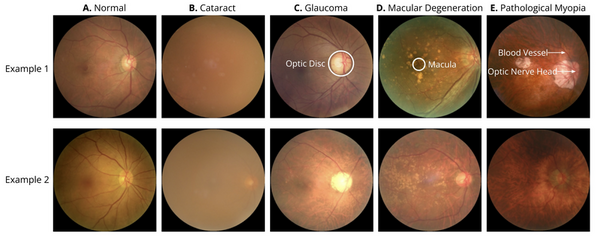
The authors looked at whether retinal features, specifically lens clarity, optic nerve cupping, and hyperreflective foci, can serve as biomarkers for neuro-ophthalmological diseases, which share pathological mechanisms with neurodegeneration and may indicate broader neurological risk. Using multimodal clinical data and machine learning, they investigated the potential of retinal imaging as a complementary diagnostic tool for more accurate and accessible detection of neurological disorders.

Read More...

Singlet oxygen production analysis of reduced berberine analogs via NMR spectroscopy

Su et al. | Feb 10, 2023

Singlet oxygen production analysis of reduced berberine analogs via NMR spectroscopy

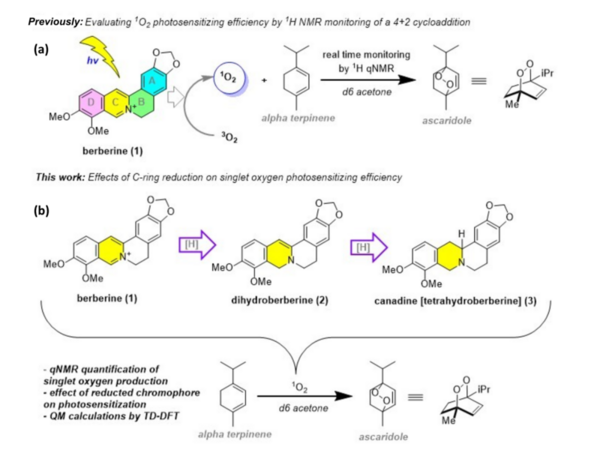
Berberine is a natural product isoquinoline alkaloid derived from plants of the genus Berberis. When exposed to photoirradiation, it produces singlet oxygen through photosensitization of triplet oxygen. Through qNMR analysis of 1H NMR spectra gathered through kinetic experiments, we were able to track the generation of a product between singlet oxygen and alpha terpinene, allowing us to quantitatively measure the photosensitizing properties of our scaffolds.

Read More...

Reactivity-informed design, synthesis, and Michael addition kinetics of C-ring andrographolide analogs

Zhou et al. | Nov 17, 2022

Reactivity-informed design, synthesis, and Michael addition kinetics of C-ring andrographolide analogs

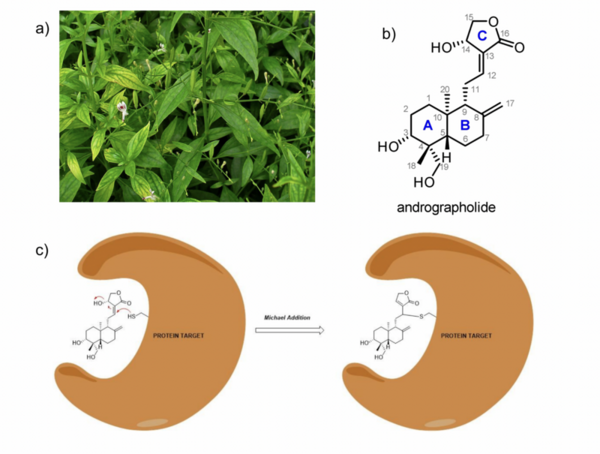
Here, based on the identification of androgapholide as a potential therapeutic treatment against cancer, Alzheimer's disease, diabetes, and multiple sclerosis, due to its ability to inhibit a signaling pathway in immune system function, the authors sought ways to optimize the natural product human systems by manipulating its chemical structure. Through the semisynthesis of a natural product along with computational studies, the authors developed an understanding of the kinetic mechanisms of andrographolide and semisynthetic analogs in the context of Michael additions.

Read More...