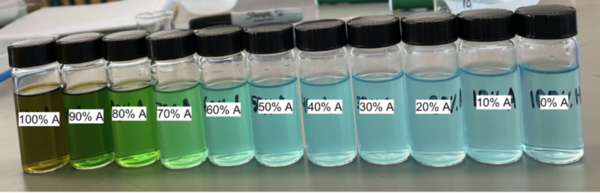
In this study, the authors investigate the effects of acetone on the color of copper chloride (CuCl2) solution, which has important implications for detecting copper in the environment.
Read More...A colorimetric investigation of copper(II) solutions
In this study, the authors investigate the effects of acetone on the color of copper chloride (CuCl2) solution, which has important implications for detecting copper in the environment.
Read More...Pediatric probiotic culture survival study in acidic pH using an in vitro model

In this study, the authors investigate the effects of acidity on the survival of commercial probiotic Lovebug bacterial strains.
Read More...Studying habitability of the exoplanents Kepler-504 b, Kepler-315 b, and Kepler-315 c

The authors explore how similar exoplanets are to Earth and whether they could be inhabited by humans and other living organisms.
Read More...Phospholipase A2 increases the sensitivity of doxorubicin induced cell death in 3D breast cancer cell models
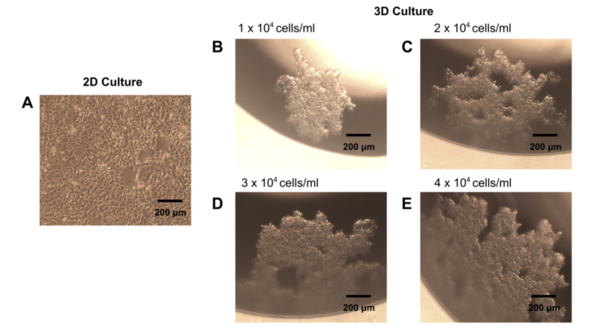
Inefficient penetration of cancer drugs into the interior of the three-dimensional (3D) tumor tissue limits drugs' delivery. The authors hypothesized that the addition of phospholipase A2 (PLA2) would increase the permeability of the drug doxorubicin for efficient drug penetration. They found that 1 mM PLA2 had the highest permeability. Increased efficiency in drug delivery would allow lower concentrations of drugs to be used, minimizing damage to normal cells.
Read More...Awareness of plastic pollution and adoption of green consumer lifestyles among students from high school

In this study, the authors test ways to increase knowledge of green consumerism amongst high school students. Their knowledge was measured based on the New Ecological Paradigm Scale.
Read More...The Cohesiveness of the Oscillating Belousov-Zhabotinsky Reaction
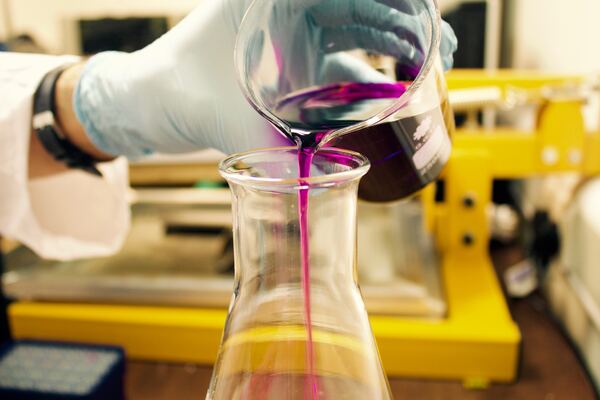
In this study the author undertakes a careful characterization of a special type of chemical reaction, called an oscillating Belousov-Zhabotinsky (or B-Z) reaction, which has a number of existing applications in biomedical engineering as well as the potential to be useful in future developments in other fields of science and engineering. Specifically, she uses experimental measurements in combination with computational analysis to investigate whether the reaction is cohesive – that is, whether the oscillations between chemical states will remain consistent or change over time as the reaction progresses. Her results indicate that the reaction is not cohesive, providing an important foundation for the development of future technologies using B-Z reactions.
Read More...Environmental, Social, and Governance (ESG) Standards and Financial Performance in Vietnam’s Media Sector
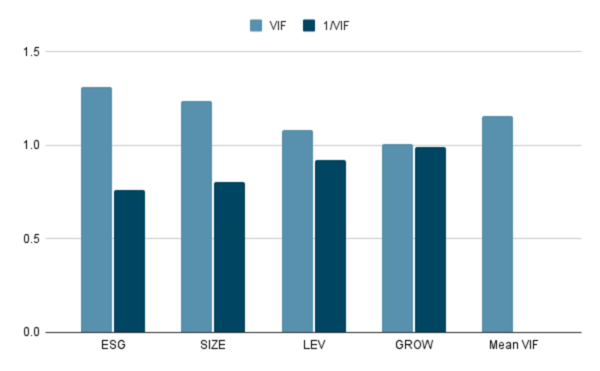
In this study, the authors examine the relationship between ESG (Environmental, Social, and Governance) factors on financial performance of Vietnamese media companies, as measured by ROA and ROE. They find that ESG is positively correlated with financial performance, as is sales growth. They also find that financial leverage is negatively correlated with ROA. Overall, this is a quality study, although the methods section requires more detail.
Read More...A comparative study of food labels in the United States and India: Adherence to Codex Alimentarius guidelines
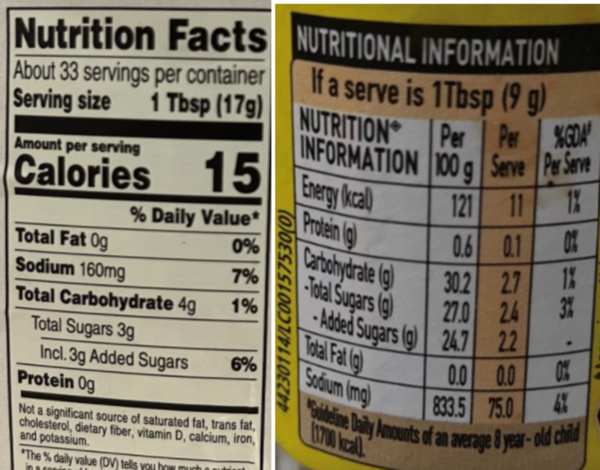
This study investigated how well food labels from 280 different brands across multiple food and drink categories in India and the US adhered to recommended nutritional labeling standards as outlined by the Codex Alimentarius.
Read More...Crystallization kinetics of vanillin thin films
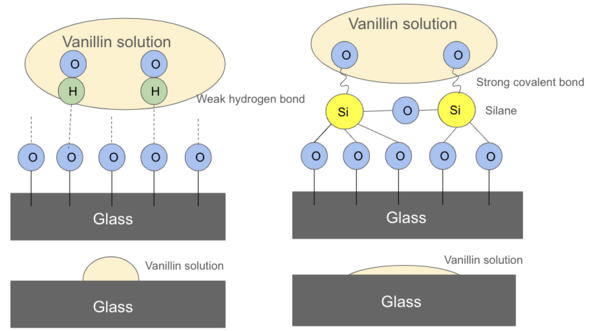
In this study, the authors investigate the crystallization kinetics of vanillin thin films from a solution or a melt, as well as how a silane coating on the glass surface affects these properties.
Read More...Gradient boosting with temporal feature extraction for modeling keystroke log data
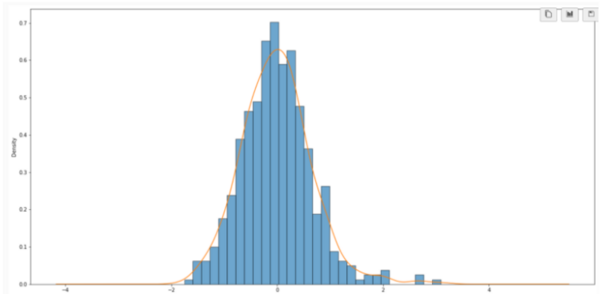
Although there has been great progress in the field of Natural language processing (NLP) over the last few years, particularly with the development of attention-based models, less research has contributed towards modeling keystroke log data. State of the art methods handle textual data directly and while this has produced excellent results, the time complexity and resource usage are quite high for such methods. Additionally, these methods fail to incorporate the actual writing process when assessing text and instead solely focus on the content. Therefore, we proposed a framework for modeling textual data using keystroke-based features. Such methods pay attention to how a document or response was written, rather than the final text that was produced. These features are vastly different from the kind of features extracted from raw text but reveal information that is otherwise hidden. We hypothesized that pairing efficient machine learning techniques with keystroke log information should produce results comparable to transformer techniques, models which pay more or less attention to the different components of a text sequence in a far quicker time. Transformer-based methods dominate the field of NLP currently due to the strong understanding they display of natural language. We showed that models trained on keystroke log data are capable of effectively evaluating the quality of writing and do it in a significantly shorter amount of time compared to traditional methods. This is significant as it provides a necessary fast and cheap alternative to increasingly larger and slower LLMs.
Read More...