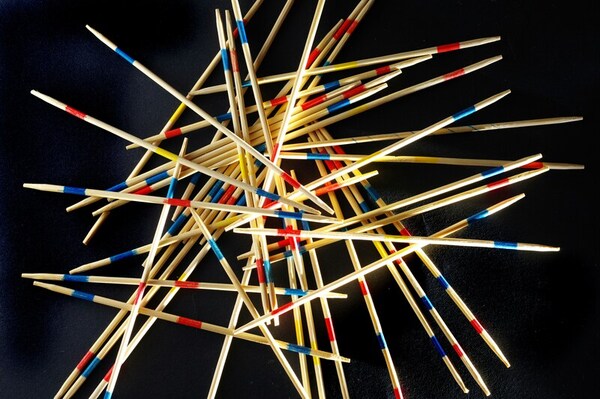
Here the authors investigated the impact of player ability versus starting positions in the game of Nim under imperfect play, hypothesizing that player skill becomes the primary determinant of outcomes as pile sizes grow. Through computational simulations and a mathematical model, they demonstrated that favorable starting positions lose their advantage over time and provide key insights to help improve reinforcement learning algorithms in abstract, complex decision-making environments.
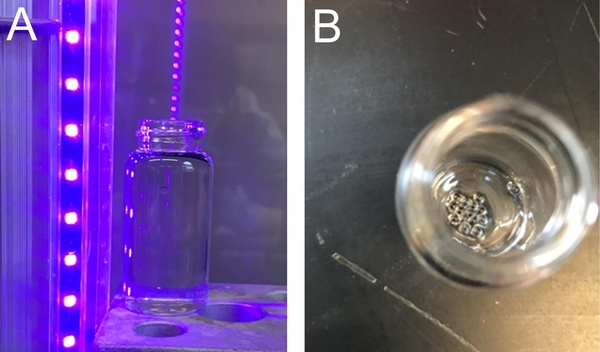
Superabsorbent beads are remarkable, used throughout our daily lives for various practical applications. These beads, as suggested by their name, possess a unique ability to absorb and retain large quantities of liquids. This characteristic of absorbency makes them essential throughout the medical field, agriculture, and other critical industries as well as in everyday products. To create these beads, the process of photopolymerization is fast growing in favor with distinct advantages of cost efficiency, speed, energy efficiency, and mindfulness towards the environment. In this article, researchers explore the pairing of cheap monomers with accessible equipment for creation of superabsorbent beads via the photopolymerization process. This research substantially demonstrates the successful application of photopolymerization in producing highly absorbent beads in a low-cost context, thereby expanding the accessibility of this process for creating superabsorbent beads in both research and practical applications.
In the United States, there are currently 17.8 million affected by atopic dermatitis (AD), commonly known as eczema. It is characterized by itching and skin inflammation. AD patients are at higher risk for infections, depression, cancer, and suicide. Genetics, environment, and stress are some of the causes of the disease. With the rise of personalized medicine and the acceptance of gene-editing technologies, AD-related variations need to be identified for treatment. Genome-wide association studies (GWAS) have associated the Filaggrin (FLG) gene with AD but have not identified specific problematic single nucleotide polymorphisms (SNPs). This research aimed to refine known SNPs of FLG for gene editing technologies to establish a causal link between specific SNPs and the diseases and to target the polymorphisms. The research utilized R and its Bioconductor packages to refine data from the National Center for Biotechnology Information's (NCBI's) Variation Viewer. The algorithm filtered the dataset by coding regions and conserved domains. The algorithm also removed synonymous variations and treated non-synonymous, frameshift, and nonsense separately. The non-synonymous variations were refined and ordered by the BLOSUM62 substitution matrix. Overall, the analysis removed 96.65% of data, which was redundant or not the focus of the research and ordered the remaining relevant data by impact. The code for the project can also be repurposed as a tool for other diseases. The research can help solve GWAS's imprecise identification challenge. This research is the first step in providing the refined databases required for gene-editing treatment.
There are two types of competing TV screens on the market, organic light emitting diode (OLED) and liquid crystal display (LCD). The better capability to exhibit black results in higher contrast images. Here, authors compared the ability of the two types of screens to show black in an environment eliminating external light.
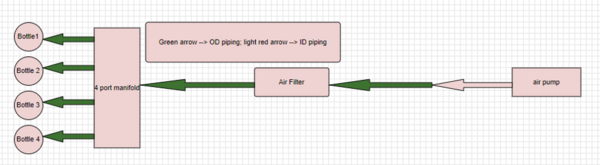
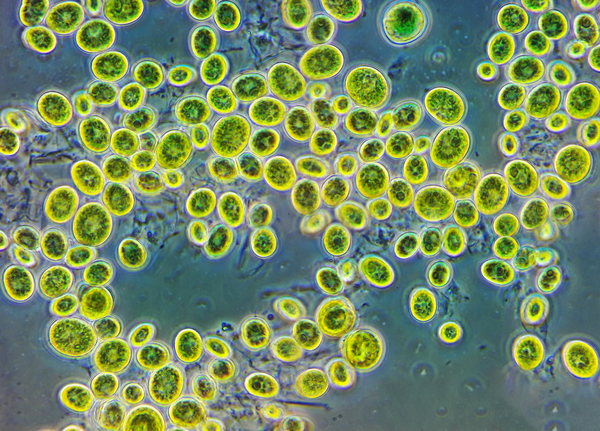
In this study, the authors investigate the effects of different algal growth media on algae's ability to perform carbon dioxide biofixation, or utilize carbon dioxide by fixing it into fatty acids within the cells. More specifically, carbon dioxide biofixation of Chlorella vulgaris was cultured in one of four media options and carbon dioxide was measured and compared to controls. The study results demonstrated that the use of media can enhance algae's capacity for biofixation and this has important implications for developing methods to reduce carbon dioxide in the environment.
Social media usage is predicted to impact teen well-being and emotional status. This study sought to assess the impact of teen technology usage on their social lives. Surveys of 8th and 9th graders were used to assess compare technology usage between males and females as well as and how social media usage impacts the perception of social environment at school.
Chlorella sp. are unicellular green algae that use photosynthesis to reduce carbon dioxide into glucose. In this study, authors sought to determine the temperature that Chlorella sp. is maximally efficient at photosynthesis, and therefore removing the most carbon dioxide from the system. This activity could be harnessed to naturally remove carbon dioxide from the environment, fighting the effects of climate change.
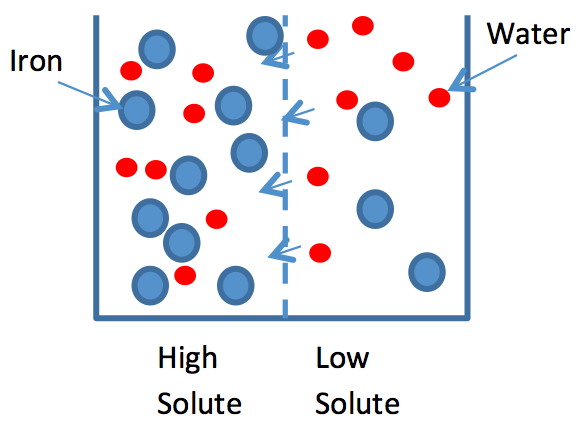
In this study, the authors investigate the effects of sodium levels on blood pressure, one of the most common medical problems worldwide. They used a simulated blood vessel constructed from dialysis tubing to carefully analyze pressure changes resulting from various levels of sodium in the external solution. They found that when the sodium concentration in the simulated blood vessel was higher than the external fluid, internal pressure increased, while the reverse was true when the sodium concentration was lower than in the surrounding environment. These results highlight the potential for sodium concentration to have a significant effect on blood pressure in humans by affecting the rate of osmosis across the boundaries of actual blood vessels.
Minerals such as iron are essential for life, but too much of a good thing can be poisonous. Here the authors investigate the effect of iron concentrations on the growth of an aquatic plant and find that supplementing small amounts of iron can help, but adding too much can be bad for the plant. These results should help inform decisions on allowable iron concentrations in the environment, aquatic farming, and even home aquariums.
Energy efficiency is becoming more important as we struggle to find better, more sustainable energy sources to power our planet; the car industry is no exception. In this article, the authors examine the effect of shape on automobile aerodynamics By finding the shape that makes cars less resistant to wind, and therefore more energy efficient, can help the automobile industry make better, more eco-friendly cars that are also cheaper to operate.