Browse Articles

Investigation of the correlation between trihalomethane concentrations and socioeconomic factors in NY State

Lee et al. | Aug 19, 2023

Investigation of the correlation between trihalomethane concentrations and socioeconomic factors in NY State

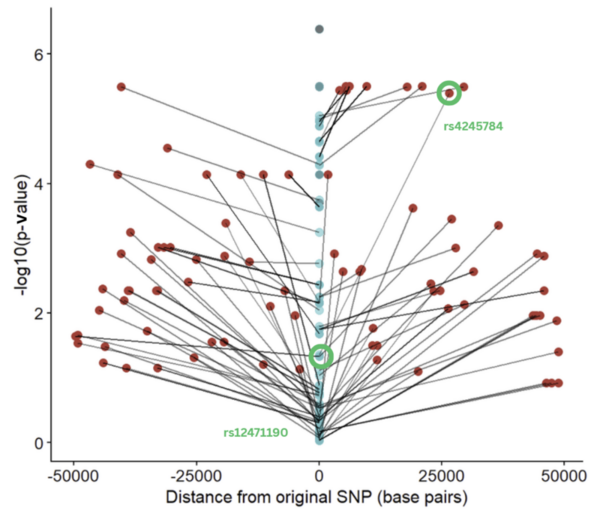
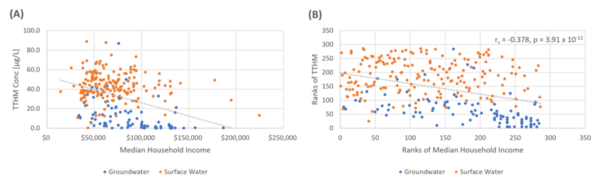
Trihalomethanes, probable human carcinogens, are commonly found disinfection by-products (DBPs) in public water systems (PWS). The authors investigated the correlation between trihalomethane concentrations and socioeconomic factors in New York State, finding a negative correlation between median household income and trihalomethane concentrations. The inverse association between trihalomethanes and household income may indicate socioeconomic disparity regarding drinking water quality and the need for improved efforts to assist small- and medium-sized community water systems to lower DBP levels in New York State.

Read More...


The effect of adverse childhood experiences on e-cigarette usage in people aged 18–30 in the US

Bloomer et al. | Oct 06, 2022

The effect of adverse childhood experiences on e-cigarette usage in people aged 18–30 in the US

Recently, e-cigarette usage has been increasing rapidly. Previous research has found that adverse
childhood experiences (ACEs) are correlated to cigarette usage. However, there is limited data exploring if ACEs affect vaping. Therefore, in this work, we investigated the effects of ACEs on e-cigarette usage and hypothesize that witnessing vaping in the house and facing ACEs would increase e-cigarette usage while education on the dangers of vaping would decrease e-cigarette usage. We found that different types of ACEs had different correlations with e-cigarette usage and that education on the dangers of vaping had no effect on e-cigarette usage.

Read More...

The effects of Helianthus Annuus on Amyotrophic Lateral Sclerosis using Drosophila Melanogaster

Srinivasan et al. | Oct 13, 2022

The effects of <em>Helianthus Annuus</em> on Amyotrophic Lateral Sclerosis using <em>Drosophila Melanogaster</em>

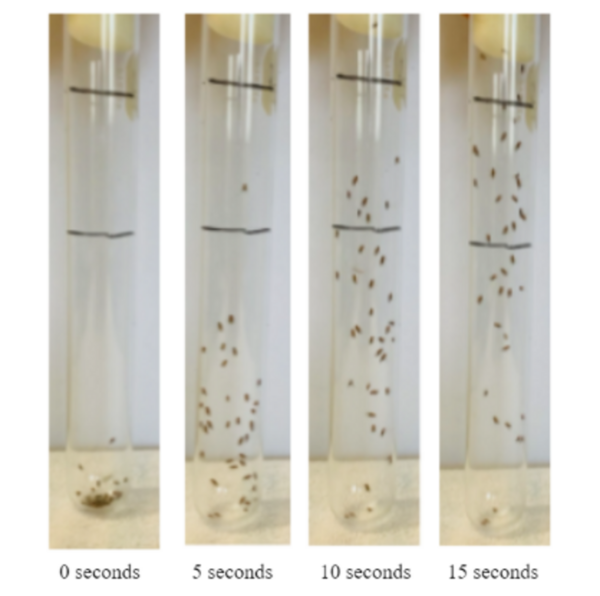
Amyotrophic lateral sclerosis (ALS) affects nearly 200,000 people worldwide and there is currently no cure. The purpose of the study was to determine if Helianthus annuus seeds helped reduce nerve degeneration and increase locomotion using Drosophila melanogaster as the model organism. Through this experiment, we found a general trend suggesting that H. annuus helped increase the mobility of the D. melanogaster suggesting it could be a viable supplement for patients with ALS.

Read More...