Browse Articles

Intra and interspecies control of bacterial growth through extracellular extracts

Howe et al. | Jun 07, 2024

Intra and interspecies control of bacterial growth through extracellular extracts

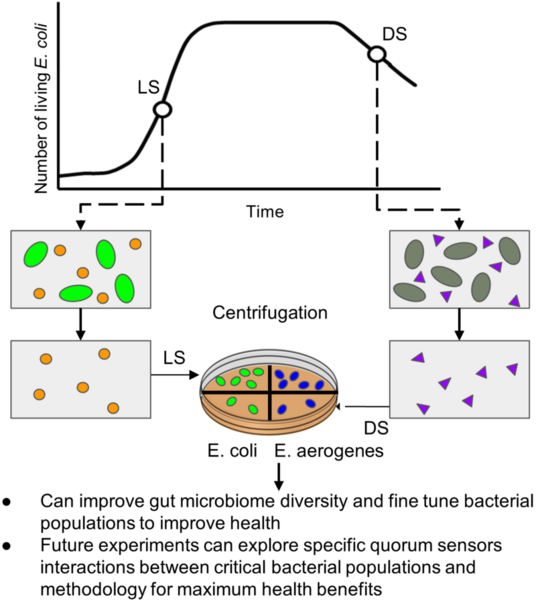
The study discusses the relationship between bacterial species and the human gut microbiome, emphasizing the role of quorum sensing molecules in bacterial communication and its implications for health. Authors investigated the impact of bacterial supernatants from Escherichia coli (E. coli) on the growth of new E. coli and Enterobacter aerogenes (E. aerogenes) cultures.

Read More...

Modeling and optimization of epidemiological control policies through reinforcement learning

Rao et al. | May 23, 2023

Modeling and optimization of epidemiological control policies through reinforcement learning

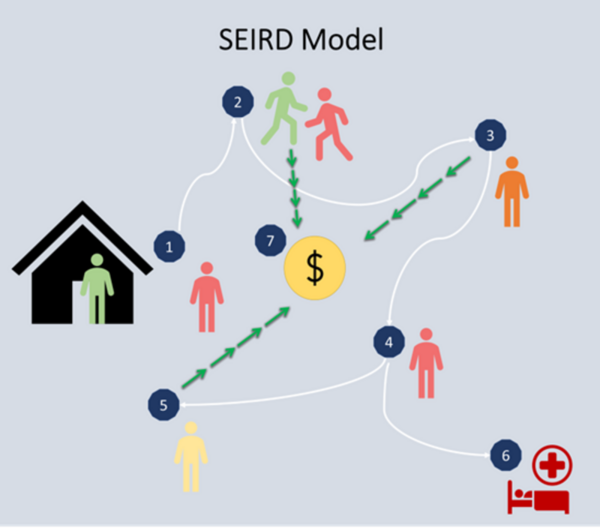
Pandemics involve the high transmission of a disease that impacts global and local health and economic patterns. Epidemiological models help propose pandemic control strategies based on non-pharmaceutical interventions such as social distancing, curfews, and lockdowns, reducing the economic impact of these restrictions. In this research, we utilized an epidemiological Susceptible, Exposed, Infected, Recovered, Deceased (SEIRD) model – a compartmental model for virtually simulating a pandemic day by day.

Read More...

Can the nucleotide content of a DNA sequence predict the sequence accessibility?

Balachandran et al. | Mar 10, 2023

Can the nucleotide content of a DNA sequence predict the sequence accessibility?
Image credit: Warren Umoh

Sequence accessibility is an important factor affecting gene expression. Sequence accessibility or openness impacts the likelihood that a gene is transcribed and translated into a protein and performs functions and manifests traits. There are many potential factors that affect the accessibility of a gene. In this study, our hypothesis was that the content of nucleotides in a genetic sequence predicts its accessibility. Using a machine learning linear regression model, we studied the relationship between nucleotide content and accessibility.

Read More...

Socio-economic and awareness correlates of physical activity of government school children in India

Nandivada et al. | Dec 11, 2022

Socio-economic and awareness correlates of physical activity of government school children in India

Here, based on the identified importance of physical activity in the development of young children, the authors investigated the effects of socioeconomic factors on the amount of physical activity of government-school children in India. They found significant differences between boys and girls, rural and urban, and children who were encouraged to exercise and those who were not. Overall, they suggest that their findings point to the important role of schools and communities in promoting healthy active lifestyles for developing children.

Read More...

Reactivity-informed design, synthesis, and Michael addition kinetics of C-ring andrographolide analogs

Zhou et al. | Nov 17, 2022

Reactivity-informed design, synthesis, and Michael addition kinetics of C-ring andrographolide analogs

Here, based on the identification of androgapholide as a potential therapeutic treatment against cancer, Alzheimer's disease, diabetes, and multiple sclerosis, due to its ability to inhibit a signaling pathway in immune system function, the authors sought ways to optimize the natural product human systems by manipulating its chemical structure. Through the semisynthesis of a natural product along with computational studies, the authors developed an understanding of the kinetic mechanisms of andrographolide and semisynthetic analogs in the context of Michael additions.

Read More...

The knowledge and perception of opioid abuse and its long-term effects among high schoolers

Shroff et al. | Nov 27, 2021

The knowledge and perception of opioid abuse and its long-term effects among high schoolers

Due to the susceptibility of adolescent age groups to opioid misuse, here the authors sought to determine if there was a difference in the perception and knowledge between 9th and 12th graders regarding the opioid crisis. An educational intervention trial was done with the 9th graders and surveys were used to identify its effects. Although the authors acknowledge a small sample size, their results suggest that their are gaps within the knowledge of adolescents in regards to opioid misuse and its long-term effects that could be addressed with further education.

Read More...