Browse Articles

On the Relationship Between Viscosity and Surface Tension

Wei et al. | Sep 16, 2014

On the Relationship Between Viscosity and Surface Tension

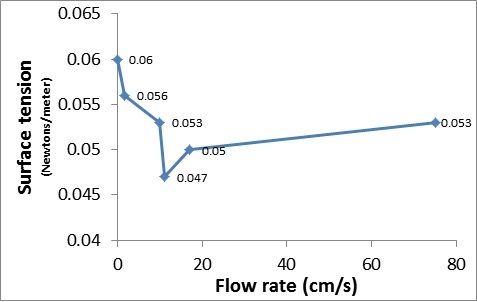
Surface tension and viscosity are both measures of how "sticky" a liquid is, but are they related? The authors here investigate the surface tension and viscosity of mixtures of water with different concentrations of agar agar, flour, or detergent. Surprisingly, they find that the least viscous mixtures had the strongest surface tensions, indicating that the two properties are not linked.

Read More...

What Can You See in the Dark? The Effects of Contrast, Light, and Age on Contrast Sensitivity in Low Light

Virostek et al. | Apr 25, 2014

What Can You See in the Dark? The Effects of Contrast, Light, and Age on Contrast Sensitivity in Low Light

Many of us take our vision for granted, but rarely do we measure how well we can see. In this study, the authors investigate the ability of people of different ages to read progressively fainter letters in dark light. They find that the ability to see in dim light drops drastically after age 30. The ability to read fainter letters worsens after age 30 as well. These findings should help inform lighting decisions everywhere from restaurants to road signs.

Read More...

Development of Two New Efficient Means of Wastewater Treatment

Bao et al. | Feb 06, 2014

Development of Two New Efficient Means of Wastewater Treatment

The water we use must be treated and cleaned before we release it back into the environment. Here, the authors investigate two new techniques for purifying dissolved impurities from waste water. Their findings may give rise to more cheaper and more efficient water treatment and help keep the planet greener.

Read More...

Effect of Collagen Gel Structure on Fibroblast Phenotype

Grace et al. | Nov 28, 2012

Effect of Collagen Gel Structure on Fibroblast Phenotype

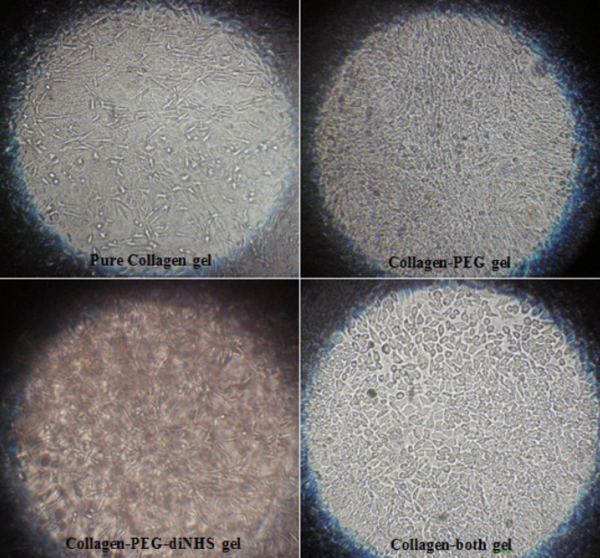
Environment affects the progression of life, especially at the cellular level. This study investigates multiple 3-dimensional growth environments, also known as scaffolds or hydrogels, and their effect on the growth of a type of cells called fibroblasts. These results suggest that a scaffold made of collagen and polyethylene glycol are favorable for cell growth. This research is useful for developing implantable devices to aid wound healing.

Read More...

Effectiveness of Biodegradable Plastic in Preventing Food Spoilage

Zhang et al. | Mar 20, 2012

Effectiveness of Biodegradable Plastic in Preventing Food Spoilage

Most people put little thought into the type of plastic wrap they use to store their leftovers. This study investigates the differences between biodegradable plastic wrap and non-biodegradable plastic wrap in their ability to prevent food spoilage. Does one work better than the other? Read more to find out!

Read More...

Retinal biomarkers for the detection of neurological disease using deep learning

Kim et al. | Sep 04, 2026

Retinal biomarkers for the detection of neurological disease using deep learning

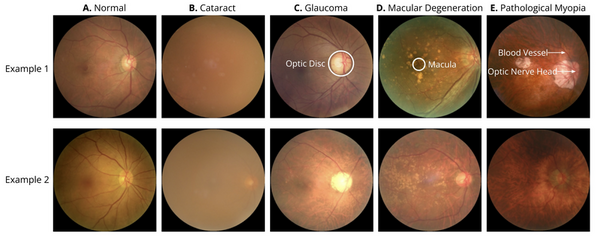
The authors looked at whether retinal features, specifically lens clarity, optic nerve cupping, and hyperreflective foci, can serve as biomarkers for neuro-ophthalmological diseases, which share pathological mechanisms with neurodegeneration and may indicate broader neurological risk. Using multimodal clinical data and machine learning, they investigated the potential of retinal imaging as a complementary diagnostic tool for more accurate and accessible detection of neurological disorders.

Read More...

Leveraging transfer learning with convolutional neural networks for cardiovascular disease detection

Chen et al. | May 25, 2026

Leveraging transfer learning with convolutional neural networks for cardiovascular disease detection
Image credit: Stephen Andrews

This study shows the efficacy of leveraging transfer learning, specifically from residual networks, to detect CVDs and possible signs of CVDs. The findings indicate that leveraging transfer learning from residual networks alongside medical professionals is a highly promising approach for CVD detection and diagnosis, warranting further investigation.

Read More...

Determining viability of image processing models for forensic analysis of hair for related individuals

Wang et al. | Feb 04, 2025

Determining viability of image processing models for forensic analysis of hair for related individuals
Image credit: Taylor Smith

Here, the authors used machine learning to analyze microscopic images of hair, quantifying various features to distinguish individuals, even within families where traditional DNA analysis is limited. The Discriminant Analysis (DA) model achieved the highest accuracy (88.89%) in identifying individuals, demonstrating its potential to improve the reliability of hair evidence in forensic investigations.

Read More...